Category
page 1Indo-Aryan peoples
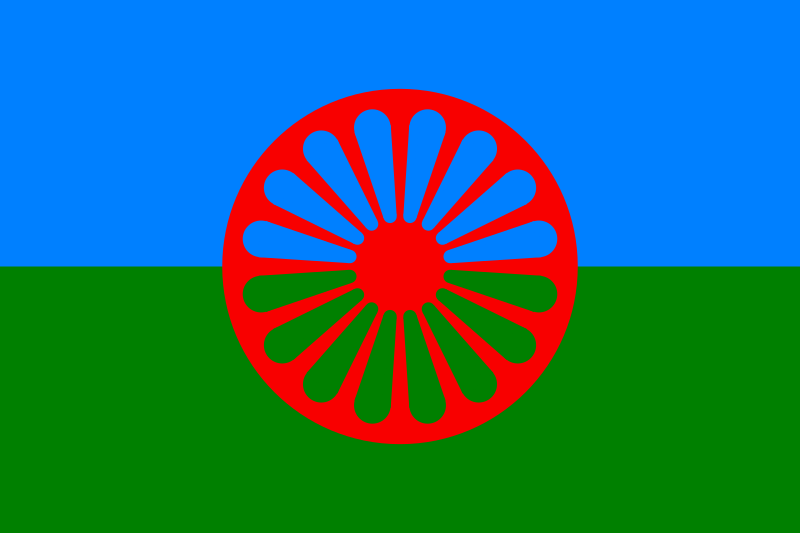
Romani people
Indo-Aryan ethnic group

Rohingya
ethnic group

Bengalis
Bengalis ( ), also rendered as endonym Bangalee, are an Indo-Aryan ethnolinguistic group originating from and culturally affiliated with the Bengal region of South Asia. The current population is divided between the sovereign country Bangladesh and the Indian regions of West Bengal, Tripura, Barak Valley of Assam, Andaman and Nicobar Islands, and parts of Meghalaya, Manipur and Jharkhand. Most speak Bengali, a classical language from the Indo-Aryan language family.

Mitanni
Mitanni or Mittani (–1260 BC), earlier called Ḫabigalbat in old Babylonian texts, ; Ḫanigalbat or Ḫani-Rabbat in Assyrian records, or Naharin in Egyptian and some Akkadian texts, was a Hurrian-speaking state in northern Syria and southeast Anatolia (modern-day Turkey) with Indo-Aryan linguistic and political influences. Since no histories, royal annals or chronicles have yet been found in its excavated sites, knowledge about Mitanni is sparse compared to the other powers in the area, and dependent on what its neighbours commented in their texts.

Sinhalese
ethnic group of Sri Lanka
%20with%20cities.png)
Punjabis
The Punjabis (Punjabi: ; ਪੰਜਾਬੀ ; romanised as Pañjābī) are an Indo-Aryan ethnolinguistic group associated with the Punjab region, comprising areas of northwestern India and eastern Pakistan. They generally speak Standard Punjabi or various Punjabi dialects on both sides.

Sindhis
Sindhis are an Indo-Aryan ethnic group originating from and native to Sindh, a region of present-day Pakistan, who share a common Sindhi culture, history, ancestry, and language. The historical homeland of Sindhis is bordered by southeastern Balochistan; the Bahawalpur region of Punjab; the Marwar region of Rajasthan; and the Kutch region of Gujarat.

Mahajanapada
The Mahājanapadas were sixteen kingdoms and aristocratic republics that existed in ancient India from the sixth to fourth centuries BCE, during the second urbanisation period.

Marathi people
Indo-Aryan ethnic group native to western India

Gujarati people
Indian ethnic group that is traditionally Gujarati-speaking

Indo-Aryan peoples
ethnic group
Anga Kingdom
Anga was an ancient Indo-Aryan tribe of eastern South Asia whose existence is attested during the Iron Age. The members of the Aṅga tribe were called the Āṅgeyas.

Bhil
Bhil or Bheel are various indigenous groups inhabiting western India, including parts of Rajasthan and Madhya Pradesh and in Sindh, Pakistan. Additionally they are also found in distant places such as Bengal and Tripura. Though they now speak the Bhili language, an Indo-Aryan language, the aboriginal language that the Bhil originally spoke is lost. Bhils are divided into a number of endogamous territorial divisions, which in turn have a number of clans and lineages.
Panchala
Panchala () was an ancient kingdom of northern India, located in the Ganges-Yamuna Doab of the Upper Gangetic plain which is identified as Kanyakubja or region around Kannauj. During Late Vedic times (c. 1100–500 BCE), it was one of the most powerful states of ancient India, closely allied with the Kuru kingdom. By the c. 5th century BCE, it had become an oligarchic confederacy, considered one of the solasa (sixteen) mahajanapadas (major states) of the Indian subcontinent. After being absorbed into the Mauryan Empire (322–185 BCE), Panchala regained its independence until it was annexed by the
Indo-Aryan migrations
theory of migrations of Indo-Aryan peoples into the Indian subcontinent
Chedi Kingdom
kingdom in ancient India
Surasena
The kingdom of Surasena () was an ancient Indian region corresponding to the present-day Braj region in Uttar Pradesh, with Mathura as its capital city. According to the Buddhist text Anguttara Nikaya, Surasena was one of the sixteen Mahajanapadas (lit. 'great realms') in the 6th century BCE. Also, it is mentioned in the Hindu epic poem Ramayana. The ancient Greek writers (e.g., Megasthenes) refer to the Sourasenoi and its cities, Methora and Cleisobra/Kleisobora .
Assamese people
ethnic group
Lhotshampa
Bhutanese people of Nepalese descent

Bihari people
Bihari () is a demonym given to the inhabitants of the Indian state of Bihar. Bihari people can be separated into three main Indo-Aryan ethnolinguistic groups: Bhojpuris, Maithils and Magahis. They are also further divided into a variety of hereditary caste groups.
In Bihar today, the Bihari identity is seen as secondary to caste/clan, linguistic and religious identity but nonetheless is a subset of the larger Indian identity. Biharis can be found throughout India, and in the neighbouring countries of Nepal, Pakistan and Bangladesh. During the Partition of India in 1947, many Bihari Muslims mi
Dom people
ethnic group with origins in the Indian subcontinent

Maldivians
Maldivians (, ) are an Indo-Aryan ethnic group and nation native to the Maldive Islands, constituting the Republic of Maldives and the island of Minicoy (within Lakshadweep, a union territory of India). They share a common ancestry, history, culture and language.
Odia people
ethnic group
Khas people
ethno-linguistic group
Marwari people
ethnic group that originated from Rajasthan, India

Dogra
Bhāratas
tribe mentioned in the Regveda
Lom people
ethnic group in Transcaucasia
Rajasthani people
The native inhabitants of Rajasthan region of India.
Vanga Kingdom
ancient Hindu kingdom in Eastern India
Braj
Braj, also known as Vraj, Vraja, Brij or Brijbhumi, is a region in India on both sides of the Yamuna river with its centre at Mathura-Vrindavan in Uttar Pradesh state encompassing the area which also includes Palwal, Ballabhgarh and Nuh in Haryana state, Deeg, Bharatpur, Karauli, and Dholpur in Rajasthan state and Morena District in Madhya Pradesh. Within Uttar Pradesh, it is very well demarcated culturally, the area stretches from the Mathura, Aligarh, Agra, Hathras and districts up to the Etawah district. Braj region is associated with Radha and Krishna who according to scriptures were born
Out of India theory
view that the Indo-Aryans are indigenous to India

Dardistan
thumb|Dardic languages by Georg Morgenstierne(Note: [[Nuristani languages such as Kamkata-vari (Kati), Kalasha-ala (Waigali), etc. are now separated)]]

Maithil
The Maithils (Devanagari: मैथिल), also known as Maithili people, are an Indo-Aryan cultural and ethno-linguistic group from the Indian subcontinent, who speak the Maithili language as their native language. They inhabit the Mithila region, which comprises Northern and Eastern Bihar and Northeastern Jharkhand in India & in Nepal constituting Madhesh Province in addition to some Terai districts of Bagmati and Koshi Provinces.
Kumauni people
Indian ethno-linguistic group
Konkani people
ethnic group from India

Maryannu
right|thumb|450px|Possible Maryannu from the Tomb of Userhet
The Maryannu were a caste of chariot-mounted hereditary warrior nobility that existed in many of the societies of the Ancient Near East during the Bronze Age, in particular between 1700 and 1200 BC. Maryannu is a Hurrianized Indo-Aryan word, formed by adding the Hurrian suffix -nni to the Indo-Aryan root márya, meaning "(young) man" or a "young warrior". Philologist Martin West suggested that the name Meriones, a character in Homeric epic, is "identical" to maryannu. Thus, Mērionēs would be the Homeric Greek version of the term, ref
Garhwali people
Indian ethno-linguistic group
Hindkowans
Hindkowans, also known as the Hindki, is a contemporary designation for speakers of the Hindko dialects of Lahnda who live among the neighbouring Pashtuns in Pakistan. The origins of the term refer merely to the speakers of Indo-Aryan languages rather than to any particular ethnic group. The term is not only applied to speakers of Hindko but also, sometimes, to the Saraiki-speakers in the districts of Dera Ghazi Khan, Mianwali, and Dera Ismail Khan, which border the Pashto-speaking areas.
Kutchi people
people from the Kutch district of the western Indian state of Gujarat
Sylheti
The Sylheti () or Sylhetis are an Indo-Aryan ethnocultural group, that are associated with the Sylhet region (Sylhet Division of Bangladesh and the Karimganj district of south Assam, India). There are strong diasporic communities in Barak Valley of Assam, India, North Tripura, Shillong, Meghalaya, and Hojai, Central Assam. Outside South Asia, there are significant numbers in the United Kingdom, the United States, and Canada.
Puru
tribe, or a confederation of tribes, mentioned many times in the Rigveda
Haryanvi people
The Haryanvis are an Indo-Aryan ethnolinguistic group native to Haryana in northern India. They speak Haryanvi and some Rajasthani languages such as Ahirwati, Mewati, and Bagri. The term Haryanvi has been used both in the ethnolinguistic sense and for someone from Haryana.
Khasas
Khasas (Sanskrit: खश, ) were an ancient Indian tribe and a late Janapada kingdom from Himalayan regions of northern Indian subcontinent mentioned in the various historical Indian inscriptions and ancient Indian Hindu and Tibetan literature. European sources described the Khasa tribe living in the Northwest Himalayas and the Roman geographer Pliny The Elder specifically described them as "Indian people". They were reported to have lived around Gandhara, Trigarta and Madra Kingdom as per the Mahabharata.
Bhojpuri people
Indo-Aryan ethno-linguistic group
Nagpuria people
Ethnolinguistic group consist of traditional speaker of Nagpuri language and native of western and Central Chotanagpur plateau
Bede people
nomadic group of Bengal
Narikurava
The Narikkuṟava are an indigenous group from the Indian state of Tamil Nadu.
Kalita
Hindu caste in Assam
Mal Paharia people
tribe of India
Sadan people
Indo-Aryan Ethino-linguistic groups of Jharkhand
Saurashtra people
an ethno-linguistic Hindu community of South India