Category
page 1Industrial processes

vacuum
thumb|300x300px|Vacuum pump and bell jar for vacuum experiments, used in science education during the early 20th century, on display in the Schulhistorische Sammlung ('School Historical Museum'), [[Bremerhaven, Germany]]

pasteurization
thumb|A 1912 Chicago Department of Health poster explains household pasteurization to mothers.

electrolysis
thumb|Illustration of a Hofmann voltameter|Hofmann electrolysis apparatus used in a school laboratory

3D printing
layer-by-layer additive process used to make a three-dimensional object

chemical industry
a sector of the economy that manufactures, processes, and sells chemicals
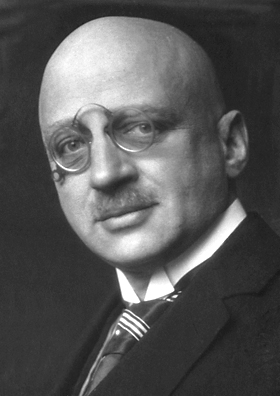
Haber-Bosch process
artificial nitrogen fixation process which is the main industrial procedure for the production of ammonia nowadays

pyrolysis
thumb|Burning pieces of wood, showing various stages of pyrolysis, followed by oxidative combustion

mass production
high-volume production of standardized products

hydrogenation
thumb|
Steps in the hydrogenation of a C=C double bond at a catalyst surface, for example Ni or Pt :
(1) The reactants are Adsorption|adsorbed on the catalyst surface and H2 dissociates.
(2) An H atom bonds to one C atom. The other C atom is still attached to the surface.
(3) A second C atom bonds to an H atom. The molecule leaves the surface.

fractional distillation
process of separation of a mixture into its component parts by evaporation and recondensation at controlled temperature and pressure

canning
thumb|Industrial canning machines used for mass-producing canned salmon in 1917
Canning is a method of food preservation in which food is processed and sealed in an airtight container (jars like Mason jars, and steel and tin cans). Canning provides a shelf life that typically ranges from one to five years, although under specific circumstances, it can be much longer. A freeze-dried canned product, such as canned dried lentils, could last as long as 30 years in an edible state.
carbon capture and storage
capture from industrial sources, transport, and geological burial of CO2

woodworking
thumb|upright=1.35|Wooden house with wooden furniture, spinning wheel, loom and various tools
right|thumb|Artists can use woodworking to create delicate sculptures.
Woodworking is the skill of making items from wood, and includes cabinetry, furniture making, wood carving, joinery, carpentry, and woodturning.

alkylation
thumb|upright=1.5|Typical route for alkylation of benzene with ethylene and ZSM-5 as a heterogeneous catalystAlkylation is a chemical reaction that entails transfer of an alkyl group. The alkyl group may be transferred as an alkyl carbocation, a free radical, a carbanion, or a carbene (or their equivalents). Alkylating agents are reagents for effecting alkylation. Alkyl groups can also be removed in a process known as dealkylation. Alkylating agents are often classified according to their nucleophilic or electrophilic character. In oil refining contexts, alkylation refers to a particular alkyl
refining
Refining is the process of purification of a (1) substance or a (2) form. The term is usually used of a natural resource that is almost in a usable form, but which is more useful in its pure form. For instance, most types of natural petroleum will burn straight from the ground, but it will burn poorly and quickly clog an engine with residues and by-products. The term is broad, and may include more drastic transformations, such as the reduction of ore to metal (for which see Refining (metallurgy)).

food processing
transformation of raw ingredients into food, or of food into other forms

sintering
thumb|Heat and compaction fuse small particles into a dense bulk
thumb|clinker (cement)|Clinker nodules produced by sintering
assembly line
manufacturing technology where an unfinished product is moved from workstation to workstation where work steps are performed or parts are added in sequence until the product is complete
flotation
method for the separation of mixtures in process engineering

abrasive blasting
thumb|upright|Sandblasting a stone wall
thumb|Diesel powered compressor used as an air supply for sandblasting
thumb|right|A Pitting corrosion|corrosion pit on the outside wall of a pipeline at a [[coating defect before and after abrasive blasting]]
polishing
Polishing is the process of creating a smooth and shiny surface by rubbing it or by applying a chemical treatment, leaving a clean surface with a significant specular reflection (still limited by the index of refraction of the material according to the Fresnel equations). In some materials (such as metals, glasses, black or transparent stones), polishing is also able to reduce diffuse reflection to minimal values.

ingredient
thumb|Ingredients for short rib soup
Chemical vapor deposition
process used to make thin films for semiconductors or surface coating
ceramic engineering
branch of engineering concerned with the development, production, and application of ceramic and ceramic products
Hall–Héroult process
aluminium smelting process
Ostwald process
chemical process for producing nitric acid from ammonia and oxygen
Czochralski process
method of crystal growth
work hardening
strengthening of a metal by plastic deformation
chemical process
method or means of somehow changing one or more chemicals or chemical compounds
production process
process of producing goods
sol-gel process
condensation of monomers or oligomers dispersed in a colloidal solution (sol) into a biphasic aqueous polymeric network (gel)
Leblanc process
early industrial process for producing sodium carbonate from salt
leaching
extraction of some soluble substances from a solid materials into a liquid
Ziegler–Natta catalyst
a catalyst used in the synthesis of polymers of 1-alkenes
process
A process is a series or set of activities that interact to produce a result; it may occur once-only or be recurrent or periodic.
Kolbe–Schmitt reaction
carboxylation chemical reaction
solar furnace
furnace that uses solar thermal energy

tinning
right|thumb|Tin layer on the inside of a tin can
Tinning is the process of thinly coating sheets of wrought iron or steel with tin, and the resulting product is known as tinplate. The term is also widely used for the different process of coating a metal with solder before soldering.

tinplate
thumb|A worker Pickling (metal)|pickling tin in a tin factory in South Wales during World War I
thumb|A worker removes tin plates from an annealing stand in a South Wales factory during World War I
Tinplate consists of sheets of steel coated with a thin layer of tin to impede rusting. Before the advent of cheap mild steel, the backing metal (known as "") was wrought iron. While once more widely used, the primary use of tinplate now is the manufacture of tin cans.
Kroll process
Pyrometallurgical industrial process
process control
automation systems using control theory and physical industrial control systems to maintain the output of a specific process within a desired range
spray drying
method of producing a dry powder from a liquid or slurry by rapidly drying with a hot gas
vacuum distillation
distillation performed under reduced pressure, which allows the purification of compounds not readily distilled at ambient pressures or simply to save time or energy
automated guided vehicle
type of industrial mobile robot

reflux
thumb|right|The reflux system in a typical industrial distillation column
Reflux is a technique involving the condensation of vapors and the return of this condensate to the system from which it originated. It is used in industrial and laboratory distillations. It is also used in chemistry to supply energy to reactions over a long period of time.
isoelectric focusing
technique for separating different molecules by differences in their isoelectric point; a type of zone electrophoresis
float glass
material; type of glass
olefin metathesis
redistribution of olefinic (alkene) bonds

plating
thumb|Barel plating method(Japan)
Plating is a finishing process in which a metal is deposited on a surface. Plating has been done for hundreds of years; it is also critical for modern technology. Plating is used to decorate objects, for corrosion inhibition, to improve solderability, to harden, to improve wearability, to reduce friction, to improve paint adhesion, to alter conductivity, to improve IR reflectivity, for radiation shielding, and for other purposes. Jewelry typically uses plating to give a silver or gold finish.
electrospinning
thumb|336x336px|Taylor cone formation and the main forces acting on the solution, adapted from .
Vapor-compression refrigeration
refrigeration process
liquid air
air that has been condensed into a liquid
Hoffmann kiln
series of batch process kilns
blow molding
manufacturing process

perforation
right|thumb|300px|A partial image of a sheet of US Postage stamps, 1940 issue, featuring perforations
liquefaction of gases
physical conversion of a gas into a liquid state (condensation)
crystal bar process
Process for the commercial production of pure titanium and zirconium

miniaturization
thumb|Battery chargers for successive generations of Apple Inc.|Apple's [[iPod]]
dry ice blasting
cryogenic surface cleaning method

antifoaming agent
thumb|right|250px|Dosage of defoamer
A defoamer or an anti-foaming agent is a chemical additive that reduces and hinders the formation of foam in industrial process liquids. The terms anti-foam agent and defoamer are often used interchangeably. Strictly speaking, defoamers eliminate existing foam and anti-foamers prevent the formation of further foam. Commonly used agents are insoluble oils, polydimethylsiloxanes and other silicones, certain alcohols, stearates and glycols. The additive is used to prevent formation of foam or is added to break a foam already formed.