Category
page 1Inner Asia

Mongolia
Mongolia is a landlocked country in the East Asia region. It is bordered by Russia to the north and China to the south, and covers an area of , making it the 18th-largest country in the world and the second largest landlocked country after Kazakhstan, as well as the largest landlocked country that does not border an inland sea. With a population of 3.5 million, Mongolia is the world's most sparsely populated sovereign state, excluding partially unrecognized Western Sahara. The country constitutes a significant portion of the Mongolian Plateau, and its natural environment is characterized

Tibet
thumb|Greater Tibet regions and claims

Xinjiang
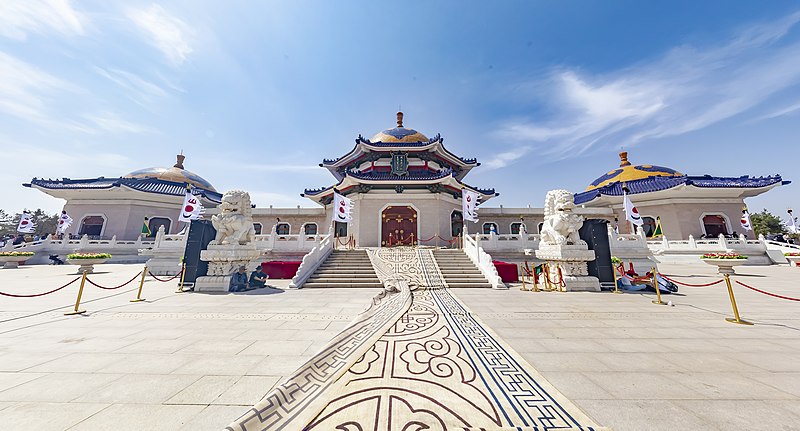
Inner Mongolia
autonomous region of China

Amur Oblast
federal subject of Russia, oblast of Russia

Gansu
Gansu is a province in Northwestern China. Its capital and largest city is Lanzhou, in the southeastern part of the province. The seventh-largest administrative district by area at , Gansu lies between the Tibetan and Loess plateaus and borders Xinjiang and Qinghai to the west, Sichuan to the south, Shaanxi to the east, and Inner Mongolia, Ningxia and Mongolia's Govi-Altai Province to the north. The Yellow River passes through the southern part of the province. Part of Gansu's territory is located in the Gobi Desert. The Qilian mountains are located in the south of the Province.

Primorsky Krai
federal subject of Russia, krai of Russia

Qinghai
Qinghai is an inland province in Northwestern China. It is the largest province of China (excluding autonomous regions) by area and has the third-smallest population, with its capital and largest city being Xining.

Khabarovsk Krai
federal subject of Russia

Manchuria
Manchuria is a historical region in Northeast Asia encompassing the entirety of present-day Northeast China and parts of the modern-day Russian Far East south of the Uda River and the Tukuringra-Dzhagdy ranges. The exact geographical extent varies depending on the definition: in the narrow sense, the area constituted by three Chinese provinces of Heilongjiang, Jilin, and Liaoning as well as the eastern Inner Mongolian prefectures of Hulunbuir, Hinggan, Tongliao, and Chifeng; in a broader sense, historical Manchuria includes those regions plus the Amur river basin, parts of which were ceded to

Rouran Khaganate
state established by proto-Mongols, from the late 4th century until the middle 6th century

Dzungar Khanate
Oirat Mongolian Khanate based in Dzungaria from 1634–1758, referred as the Last great Nomadic empire

Northeast China
geographic region of China including Heilongjiang, Jilin, and Liaoning

Xianbei
The Xianbei (Mongolian:Сүнбэ; ; ) were an ancient nomadic people in northern East Asia who developed a distinct cultural and political identity by the 1st century BC. They inhabited regions spanning parts of present-day northeastern China, Inner Mongolia, and the eastern Eurasian steppe. Several Xianbei groups formed ruling regimes, with early political center around present-day Datong in Shanxi. The Xianbei were likely not of a single ethnicity, but rather a multilingual, multi-ethnic confederation consisting of mainly Proto-Mongols (who spoke either pre-Proto-Mongolic, or Para-Mongolic langu
Outer Mongolia
historical region
Northern Yuan dynasty
former empire in East Asia
Western Regions
referred to the regions west of Yumen Pass, most often Central Asia (e.g. Altishahr or the Tarim Basin in southern Xinjiang), ancient China (during the Han and Tang dynasties)
Russian Manchuria
region in Russia
Northeast China Plain
plain in China
Inner Asia
historical region over time
nomadic empire
non-sedentary polity
Yeniseian people
ethnic grouping in Siberia
Lifan Yuan
an agency in the government of the Qing dynasty which supervised the Qing Empire's frontier, Inner Asia regions such as its Mongolian dependencies and oversaw the appointments of Ambans in Tibet.
Yujiulü Mugulü
Mugulü () was a legendary warrior and chieftain in the Mongolian Plateau during the period when it was under the rule of tribes and peoples originating from the fragmentation of the failed and crumbling Xianbei confederation. The term "Mongol" is a likely derivation from his name.
Western China
geographical and cultural region in China
Serindia
The term Serindia combines Seres (China) and India to refer to the part of Asia also known as Xinjiang, Chinese Turkestan or High Asia. The term was popularized by Western archeologists seeking cultural connections to South Asia.
Northern Silk Road
historic trade route in Asia
Qing dynasty in Inner Asia
historical territories of the Manchu-led Qing empire
Inner Manchuria