Category
page 1Investiture Controversy

Gregory VII
Pope of the Catholic Church from 1073 to 1085

Henry I of England
King of England from 1100 to 1135 (1068–1135)
.jpg)
excommunication
thumb|Fanciful 16th-century fresco in the Sala Regia (Vatican)|Sala Regia, by [[Giorgio Vasari, depicting Pope Gregory IX excommunicating Frederick II. Since few details were provided to the artist, Vasari chose to paint an excommunication scene generically. In the traditional excommunication procedure, the pope and his priests would hurl burning candles on the ground and stamp them out. The painter however here chose to show the pope personally stepping on the emperor.]]
Excommunication is an institutional act of religious censure used to deprive, suspend, or limit membership in a religious c

Callixtus II
Pope from 1119 to 1124

Paschal II
Head of the Catholic Church from 1099 to 1118

Henry IV
Holy Roman Emperor from 1084 to 1105

Investiture controversy
conflict between church and state in medieval Europe over the ability to appoint local church officials

Henry V
King of Germany and Holy Roman Emperor, the fourth and last ruler of the Salian dynasty
simony
Simony () is the act of selling church offices and roles or sacred things. It is named after Simon Magus, who is described in the Acts of the Apostles as having offered two disciples of Jesus payment in exchange for their empowering him to impart the power of the Holy Spirit to anyone on whom he would place his hands. The term extends to other forms of trafficking for money in "spiritual things".

College of Cardinals
body of all cardinals of the Catholic Church

separation of church and state
principle to separate religious and civil institutions
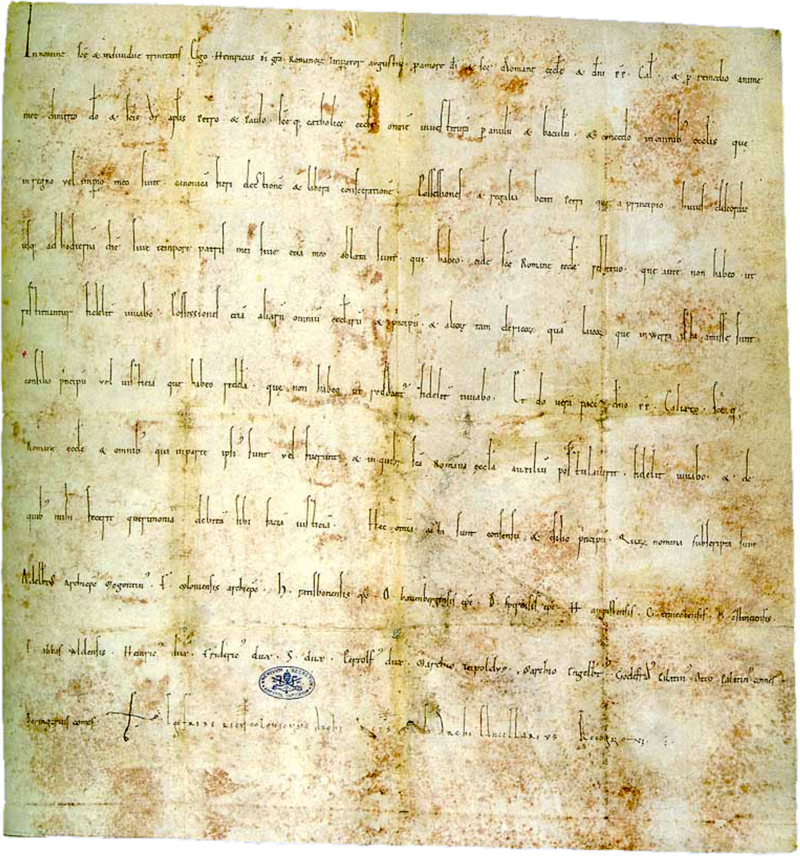
Concordat of Worms
agreement between Pope Calixtus II and Holy Roman Emperor Henry V on September 23, 1122 near the city of Worms
Matilda of Tuscany
Canossian dynasty countess of Tuscany (c.1046–1115)
Donation of Constantine
forged Roman imperial decree by which the emperor Constantine supposedly donated Rome and surrounding territory to the Pope
divine right of kings
political and religious doctrine of the legitimacy of monarchs
First Council of the Lateran
Roman Catholic synod of 1123

investiture
Investiture (from the Latin preposition in and verb vestire, "dress" from vestis "robe") is a formal installation ceremony that a person undergoes, often to mark or celebrate their taking up membership in—or leadership of—a Christian religious institute, an order of chivalry (which may include knighthoods, damehoods, or other honours), or a governmental leadership role or office.
Norman conquest of southern Italy
historical event in the European Middle Ages
Road to Canossa
1076 ritual submission of Emperor Henry IV
Gregorian Reform
series of papal reforms in the 11th century
Canon law of the Catholic Church
canon law of the Catholic Church
Dictatus papae
text concerning statements of powers arrogated to the pope
Rudolf of Rheinfelden
Duke of Swabia from 1057 to 1079
Donation of Pepin
document providing a legal basis for the erection of the Papal States, which extended the temporal rule of the Popes beyond the duchy of Rome
.jpg)
De Monarchia
thumb|Monarchia (1700-50s)
In nomine Domini
decretal regarding papal election
Herman I, Count of Salm
Count of Salm; German anti-king
Anselm of Lucca
Catholic cardinal and saint
Sack of Rome
1084 by the Normans under Robert Guiscard
Battle of Langensalza
1075 victory of Henry IV over Saxon nobles
Gebhard (III) of Constance
Bishop of Constance
Wezilo
Wezilo, died 1088, was Archbishop of Mainz from 1084 to 1088. He was a leading supporter of the Holy Roman Emperor Henry IV in the Investiture Controversy, and of antipope Clement III.
clerical celibacy
requirement in certain religions that some or all members of the clergy be unmarried

Guido da Velate
Archbishop of Milan
imperial church system
governance policy in the early Holy Roman Empire
Odo of Cambrai
French bishop
Golden Bull of 1213
Saxon revolt of 1077–1088
Civil war in the Holy Roman Empire
Sieghard von Aquileia
German bishop
Synod of Worms
ecclesiastical synod convened by Henry IV
Gottschalk of Aachen
Monk and hymn writer
Werner von Steußlingen
German archbishop
Lay abbot
Layman given the revenues of an abbey