Category
page 1Islam in China

Uyghurs
The Uyghurs, alternatively spelled Uighurs, Uygurs or Uigurs, are a Turkic ethnic group originating from and culturally affiliated with the general region of Central Asia and East Asia. They speak the Uyghur language, which is a Karluk Turkic language sharing the same origin with the Uzbek language, descended from the Karakhanid language and Chagatai language. The Uyghurs are recognized as the titular nationality of the Xinjiang Uyghur Autonomous Region in Northwest China. They are one of China's 55 officially recognized ethnic minorities.

East Turkestan
loosely defined region in Central Asia

Sa'd ibn Abi Waqqas
Muslim general (c. 595 – 674)

Dongxiang people
Ethnic group muslim Mongolia minority in china
Islam in China
overview of the role of Islam and Muslims in China
East Turkestan independence movement
political and social Uyghur movement for the independence of Oriental Turkestan, in Xinjiang, autonomous province of China
Ospan Batyr
Kazakh militant (1899–1951)
Sini
Calligraphic style used in China for the Arabic script

Jamal ad-Din
Persian astrologer in the court of Kublai Khan
Fragrant Concubine
Chinese imperial consort
women's mosque
women-led or women-only mosque
khoja
Persian title

Noor Deen Mi Guangjiang
expert in Islamic calligraphy
Jahriyya
Jahriyya (also spelled Jahrīya or Jahriyah) is a menhuan (Sufi order) in China, commonly called the New Teaching (Xinjiao). Founded in the 1760s by Ma Mingxin, it was active in the late 18th and 19th centuries in what was then Gansu Province (also including parts of today's Qinghai and Ningxia), when its followers were involved in a number of conflicts with other Muslim groups and in several rebellions against China's ruling Qing dynasty.
Meshrep
A meshrep (Uyghur: wikt:مەشرەپ|, ; , lit. "harvest festival") is a traditional male Uyghur gathering that typically includes "poetry, music, dance, and conversation within a structural context". Meshreps typically include music of the muqam variety and ad-hoc tribunals on moral questions. Meshrep are usually held in mosques, public gathering sites, the courtyard of one of the members' family home.
Xinjiang Wars
series of armed conflicts within the 20th Century in Western China
Khufiyya
Khufiyya (; borrowed as ) is a tariqa (Sufi order) of Chinese Islam. It was the first tariqa to be established in China and, along with the Jahriyya, Qadiriyya, and Kubrawiyyah, is acknowledged as one of the four orders of Chinese Sufism.
Islam in Tibet
Yeheidie'erding
'''Yeheidie'erding (, ? – 1312), also known as Amir al-Din' (, Amīr al-Dīn''), was a Muslim architect who helped design and led the construction of the capital of the Yuan dynasty, Khanbaliq, located in present-day Beijing, the current capital of the People's Republic of China. According to Cary Y. Liu interpretation of the Ma-ho-ma-sha Stele inscription, either Amir al-Din's ancestors came from the Western Regions, although originating from Arabia, or that he directly came from Arabia.
Yihewani
Yihewani (), or Ikhwan (), (also known as al-Ikhwan al-Muslimun, which means Muslim Brotherhood, not to be confused with the Middle Eastern Muslim Brotherhood, or Ahl al-Sunni) is an Islamic sect in China. Its adherents are called Sunnaiti. It is of the Hanafi school, one of the four major schools of Sunni Islam. It is also referred to as "New Teaching" () or "Latest Teaching" (). Yihewani, together with Gedimu and Xidaotang, make up the three major sects of Islam in China. In 1937, it divided into two groups.
Han Kitab
Collection of Chinese texts synthesizing Islam and Confucianism
Gongbei
Hui minority islam shrine in China
Gedimu
thumb|The minaret of the [[Great Mosque of Xi'an in the Chinese province of Shaanxi, one of the largest mosques in China.]]
Gedimu () or Qadim () is the earliest school of Islam in China. It is a Hanafi, non-Sufi school of the Sunni tradition. Its supporters are centered on local mosques, which function as relatively independent units.
Menhuan
Menhuan () is a term used by the Hui and Uyghur Muslim populations of China to indicate a Chinese Ṣūfī ṭarīḳa ("order" or "saintly lineage"). The leaders of a menhuan, which usually are Ṣūfī Muslim murs̲h̲id ("masters") or walī ("saints"), form a chain of spiritual successors over the ages, known in Arabic as silsilah, which goes back to the order's founder in China (e.g., Ma Laichi or Ma Mingxin), and beyond, toward his teachers in Arabia. One of Dillon's main sources is:
Ramadan ibn Alauddin
yuan darughachi (governor) of Luchuan Prefecture in Rongzhou, Guangxi Province
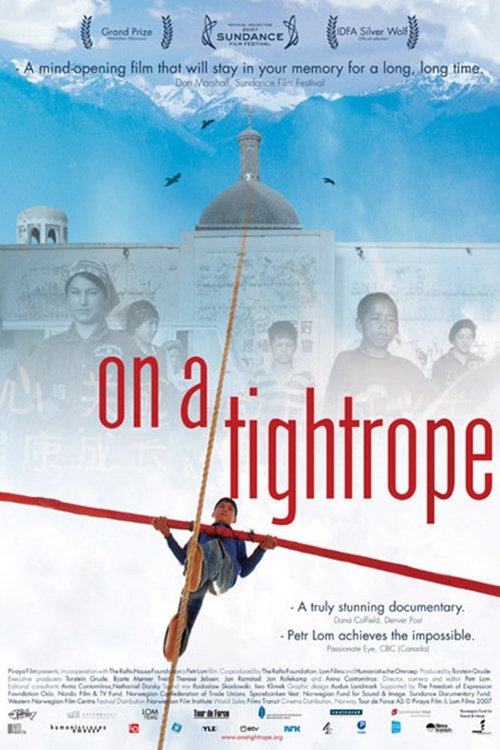
On a Tightrope
2006 film
Xidaotang
thumb|Machang Mosque in Linxia, [[Gansu, is a mosque of the Xidaotang sect.]]
Xidaotang (, "Hall of the Western Dao," i.e. Islam) - originally called Jinxingtang , the "Gold Star Hall"; also called the Hanxue pai , the "Han Studies Sect" - is a Sino-Islamic religious body/special economic community centered in Gansu province. The Xidaotang is mainly distributed in Lintan and Hezheng County in Gansu, and also has followers in Qinghai, Xinjiang, and Sichuan.