Category
page 1Islam-related controversies

Crusades
thumb|upright=1.35|14th-century miniature of the Battle of Dorylaeum (1147), a [[Second Crusade battle, from the ''Estoire d'Eracles''|alt=Medieval illustration of a battle during the Second Crusade]]

Islamic State
Salafi jihadist militant Sunni Islamist group

Al-Qaeda
Al-Qaeda is a pan-Islamist militant organization led by Sunni Islamist jihadists who self-identify as a vanguard spearheading a global Islamist revolution to unite the Muslim world under a supra-national Islamic caliphate. Its membership is mostly composed of Arabs but also includes people from other ethnic groups. Al-Qaeda has mounted attacks on civilian and military targets of the U.S. and its allies; such as the 1998 U.S. embassy bombings, the USS Cole bombing, and the September 11 attacks. It has been designated a terrorist organization by the United Nations and over two dozen countries ar

Taliban
The Taliban, officially known as the Islamic Movement of Taliban, also referring to themselves by their state name, the Islamic Emirate of Afghanistan, is an Afghan political and militant organization with an ideology comprising elements of the Deobandi movement of Islamic fundamentalism and Pashtun nationalism. It ruled approximately 90% of Afghanistan from 1996 to 2001, before it was overthrown by an American-led invasion after the September 11 attacks carried out by the Taliban's ally al-Qaeda. Following a 20-year insurgency and the departure of coalition forces, the Taliban recaptured Kabu

Islamism
Islamism is a range of religious and political ideological movements that believe that Islam should influence political systems. Its proponents believe Islam is innately political, and that Islam as a political system is superior to communism, liberal democracy, capitalism, and other alternatives in achieving a just, successful society. The advocates of Islamism, also known as "al-Islamiyyun", are usually affiliated with Islamic institutions or social mobilization movements, emphasizing the implementation of sharia, pan-Islamic political unity, and the creation of Islamic states.

Israeli–Palestinian conflict
ongoing military and political conflict in the Levant

burqa
thumb|Women wearing burqas in Afghanistan

niqab
A niqāb, niqab, or niqaab (; ), also known as a ruband () or rubandah (), is a long garment worn by some Muslim women, in order to cover their entire body and face, excluding their eyes. It is an interpretation in Islam of the concept of hijab, and is worn in public and in all other places where a woman may encounter non-mahram men. Most prevalent in the Arabian Peninsula, the niqab is a controversial clothing item in many parts of the world, including in some Muslim-majority countries.
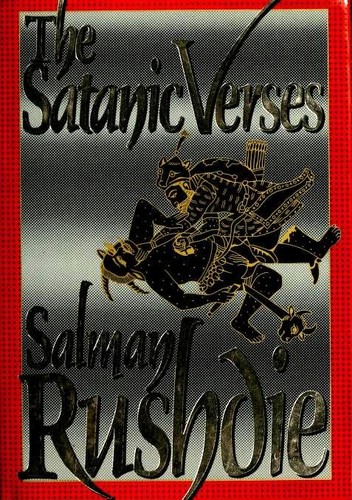
The Satanic Verses
1988 novel by Salman Rushdie

The Passion of the Christ
The Passion of the Christ is a 2004 American epic biblical drama film co-produced and directed by Mel Gibson from a screenplay he wrote with Benedict Fitzgerald. It is the first installment of The Passion of the Christ film series. The film stars Jim Caviezel as Jesus, Maia Morgenstern as his mother Mary, and Monica Bellucci as Mary Magdalene. It depicts the arrest, trial and crucifixion of Jesus, largely according to the canonical gospels as well as additional accounts such as the purported mystical visions by Anne Catherine Emmerich and the Friday of Sorrows.
Al-Shabaab
Horn of Africa-based Islamist movement affiliated with al-Qaeda

Mirza Ghulam Ahmad
Indian religious leader (1835–1908)
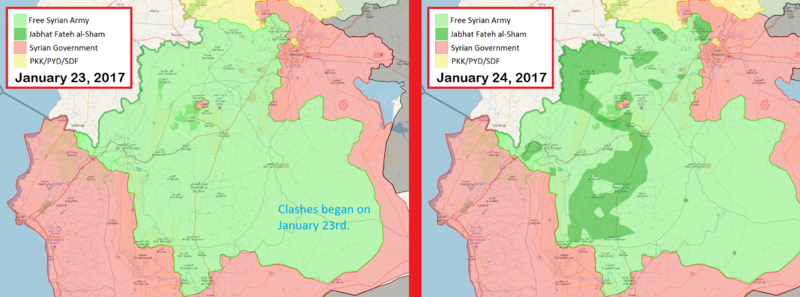
Al-Nusra Front
Syrian islamist organization
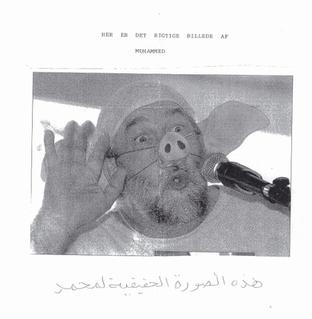
Jyllands-Posten Muhammad cartoons controversy
controversy relating to the publication of depictions of the Islamic prophet Muhammad

Noah
2014 film directed by Darren Aronofsky

Lightyear
2022 animated film by Angus MacLane

Islamic terrorism
set of terrorist acts or campaign committed by individuals or groups who profess or claim to profess Islamic or Islamist motivations or goals
Islamic fundamentalism
ideology, which equals 'return to Islam'

taqiyya
In Islam, taqiyya () is a concept that refers to a Muslim concealing their faith or religious identity to protect themselves from danger. Although the term stems mainly from discrimination against the minority Shiite tradition, it is also considered a legitimate practice under certain conditions in Sunni sources. The practice of concealing one's beliefs has existed since the early days of Islam; early Muslims did so to avoid persecution or violence by non-Muslim governments or individuals.
criticism of Islam
historical and current criticism of the Islamic religion, its teachings, actions, omissions, structure, nature or founders
Anwar al-Awlaqi
American-Yemeni imam and suspected Islamist extremist (1971–2011)
Eurabia
conspiracy theory

Jihadism
Jihadism is a neologism for modern, armed militant Islamic movements that seek to establish states based on Islamic principles. In a narrower sense, it refers to the belief that armed confrontation is an efficient and theologically legitimate method of socio-political change towards an Islamic system of governance. The term "jihadism" has been applied to various Islamic extremist or Islamist individuals and organizations with militant ideologies based on the classical Islamic notion of lesser jihad.
blood libel
rumor that Jews killed Christians to use blood in ceremonies
Islamic feminism
form of feminist discourse concerned with the role of women in Islam; aims for the full equality of all Muslims, regardless of gender, in public and private life; advocates for women's rights, gender equality, and social justice grounded in Islam
Abu Sayyaf
Jihadist militant group in the southwestern Philippines

Gospel of Barnabas
pseudepigraphical gospel written in the Late Middle Ages
star and crescent
symbol
Pakistani Taliban
islamist militant organization operating along the Durand Line
Jemaah Islamiyah
Southeast Asian salafist yihadist organization
Abu Lu'lu'a
Persian sasanian soldier, murder of caliph Omar
Satanic Verses
utterances mistaken for Islamic revelation
Islamic views on slavery
body of Islamic thought about slavery

Islamofascism
Islamofascism is a portmanteau of the words fascism and Islamism or Islamic fundamentalism, which advocate authoritarianism and violent extremism to establish an Islamic state, in addition to promoting offensive Jihad. For example, Qutbism has been characterized as an Islamofascist and Islamic terrorist ideology.
Guidance Patrol
Islamic religious police in Iran
Maurice Bucaille
French physician and author (1920–1998)
sex segregation
separation of people according to their sex
Islamic extremism
extreme or radical form of Islam
Q62084250
1995 song
Kata'ib Hezbollah
Shia Islamist militant group based in Iraq
Rojava Revolution
military and political conflict in northern Syria
reactions to Innocence of Muslims
protests and attacks occurring in response to a trailer for the film Innocence of Muslims, beginning on September 11, 2012
Islamic religious police
enforcement agency
Basuki Tjahaja Purnama
Former Governor of Jakarta, Vice Governor of Jakarta
racial profiling
suspecting, targeting or discriminating against someone due to ethnicity, religion, or nationality, rather than on individual suspicion or evidence
2011–2015 Saudi Arabian protests
Arab Spring protests in Saudi Arabia
Sıla Şahin
Turkish-German actor (born 1985)
Ibn Rushd-Goethe mosque
mosque in Germany
Asia Bibi blasphemy case
criminal case

Tatbir
thumb|10th of Muharram, 19th-century painting by Fausto Zonaro
Tatbir () is a form of self-flagellation rituals practiced by some Shia Muslims in commemoration of the killing of Imam Husayn ibn Ali and his partisans in the Battle of Karbala by forces of the second Umayyad caliph Yazid I ().
Ikhtilaf
Ikhtilāf () is an Islamic scholarly religious disagreement, and is hence the opposite of ijma.
criticism of Muhammad
secular and theological arguments against the prophecy of Muhammad
Everybody Draw Mohammed Day
action day
Muhammad Baqir Majlisi
Iranian Twelver Shi'a cleric (c.1627 – 1699)
New Order
term used for period of Indonesian history under President Suharto 1966-1998
circumcision in Islam
male circumcision carried out as an Islamic rite

Mihna
thumb|right|300px|Map of the Mihna and events associated with itThe Mihna () was a period of religious persecution instituted by the Abbasid caliph al-Ma'mun in 833 in which Sunni scholars were punished, imprisoned, or even killed unless they conformed to Mu'tazilite doctrine. The policy lasted for eighteen years (833–851) as it continued through the reigns of al-Ma'mun's immediate successors, al-Mu'tasim and al-Wathiq, and four years of al-Mutawakkil who reversed it in 851.
Salafi jihadism
transnational Sunni Islamist religious-political ideology
takfiri
Takfiri is an Arabic and Islamic term denoting a Muslim who excommunicates one of their coreligionists—i.e., who accuses another Muslim of being an apostate, or , 'one who turns back'.
history of slavery in the Muslim world
history of slavery in Islamic lands