Category
page 1Italian-language operas

Aida
Aida (or Aïda, ) is a tragic opera in four acts by Giuseppe Verdi to an Italian libretto by Antonio Ghislanzoni. Set in the Old Kingdom of Egypt, it was commissioned by Cairo's Khedivial Opera House and had its première there on 24 December 1871, in a performance conducted by Giovanni Bottesini. Today the work holds a central place in the operatic canon, receiving performances every year around the world. At New York's Metropolitan Opera alone, Aida has been sung more than 1,100 times since 1886. Ghislanzoni's scheme follows a scenario often attributed to the French Egyptologist Auguste Mariet

La traviata
opera by Giuseppe Verdi

Madama Butterfly
opera by Giacomo Puccini
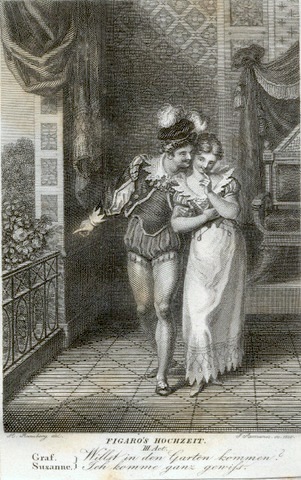
The Marriage of Figaro
opera by Wolfgang Amadeus Mozart

Tosca
Tosca is an opera in three acts by Giacomo Puccini to an Italian libretto by Luigi Illica and Giuseppe Giacosa. It premiered at the Teatro Costanzi in Rome on 14 January 1900. The work, based on Victorien Sardou's 1887 French-language dramatic play, La Tosca, is a melodramatic piece set in Rome in June 1800, with the Kingdom of Naples's control of Rome threatened by Napoleon's invasion of Italy. It contains depictions of torture, murder, and suicide, as well as some of Puccini's best-known lyrical arias.

Don Giovanni
opera by Wolfgang Amadeus Mozart

Rigoletto
Rigoletto is an opera in three acts by Giuseppe Verdi. The Italian libretto was written by Francesco Maria Piave based on the 1832 play ''Le roi s'amuse'' by Victor Hugo. Despite serious initial problems with the Austrian censors who had control over northern Italian theatres at the time, the opera had a triumphant premiere at La Fenice in Venice on 11 March 1851.

Nabucco
Nabucco (; short for Nabucodonosor , i.e. "Nebuchadnezzar") is an Italian-language opera in four acts composed in 1841 by Giuseppe Verdi to an Italian libretto by Temistocle Solera. The libretto is based on the biblical books of 2 Kings, Jeremiah, Lamentations, and Daniel, and on the 1836 play by Auguste Anicet-Bourgeois and Francis Cornu. However, Antonio Cortese's ballet adaptation of the play (with its necessary simplifications), given at La Scala in 1836, was a more important source for Solera than the play itself. Under its original name of Nabucodonosor, the opera was first performed at

Turandot
thumb|Libretto, 1926
Turandot ( ; see below) is an opera in three acts by Giacomo Puccini to a libretto in Italian by Giuseppe Adami and Renato Simoni. Puccini died in 1924, and his opera was left unfinished. The music was completed by Franco Alfano and premiered on 25 April 1926, almost a year and a half after Puccini's death.
The opera is set in China and follows the Prince Calaf, who falls in love with the cold-hearted Princess Turandot. In order to win her hand in marriage, a suitor must solve three riddles, with a wrong answer resulting in his execution. Calaf passes the test, but Turando

The Barber of Seville
1816 opera by Gioachino Rossini

La bohème
opera by Giacomo Puccini

Così fan tutte
Italian-language opera buffa by W. A. Mozart

Il trovatore
opera by Giuseppe Verdi

Cavalleria rusticana
opera by Pietro Mascagni

Pagliacci
Pagliacci (; literal translation, 'Clowns') is an Italian opera in a prologue and two acts, with music and libretto by Ruggero Leoncavallo. The opera tells the tale of Canio, actor and leader of a commedia dell'arte theatrical company, who murders his wife Nedda and her lover Silvio on stage during a performance. Canio portrays on stage the character of Pagliaccio (Pierrot), while Nedda portays Pierrot's unfaithful lover Columbina.

Otello
Otello () is an opera in four acts by Giuseppe Verdi to an Italian libretto by Arrigo Boito, based on Shakespeare's play Othello. It was Verdi's penultimate opera, first performed at the Teatro alla Scala, Milan, on 5 February 1887.

Don Carlos
opera by Giuseppe Verdi

Falstaff
1893 opera by Giuseppe Verdi

Un ballo in maschera
opera by Giuseppe Verdi

La forza del destino
opera by Giuseppe Verdi

Manon Lescaut
opera by Giacomo Puccini

Lucia di Lammermoor
opera by Gaetano Donizetti
Norma
opera by Vincenzo Bellini
L'elisir d'amore
opera by Gaetano Donizetti
Simon Boccanegra
opera by Giuseppe Verdi
Macbeth
opera by Giuseppe Verdi
Orfeo ed Euridice
opera by Christoph Willibald Gluck
Gianni Schicchi
comic opera in one act by Giacomo Puccini

Idomeneo
'''' (Italian for Idomeneus, King of Crete, or, Ilia and Idamante; usually referred to simply as Idomeneo, K. 366) is an Italian-language opera seria by Wolfgang Amadeus Mozart. The libretto was adapted by Giambattista Varesco from a French text by Antoine Danchet, based on a 1705 play by Crébillion père, which had been set to music by André Campra as Idoménée'' in 1712. Mozart and Varesco were commissioned in 1780 by Karl Theodor, Elector of Bavaria for a court carnival. He probably chose the subject, though it may have been Mozart. The work premiered on 29 January 1781 at the Cuvilliés Theat

L'Orfeo
'''''L'Orfeo (SV 318) (), or La favola d'Orfeo''' , is a late Renaissance/early Baroque favola in musica'', or opera, by Claudio Monteverdi, with a libretto by Alessandro Striggio. It is based on the Greek legend of Orpheus, and tells the story of his descent to Hades and his fruitless attempt to bring his dead bride Eurydice back to the living world. It was written in 1607 for a court performance during the annual Carnival at Mantua. While Jacopo Peri's Dafne is generally recognised as the first work in the opera genre, and the earliest surviving opera is Peri's Euridice, ''L'Orfeo'' is the e
La clemenza di Tito
opera by Wolfgang Amadeus Mozart

Ernani
Ernani is an operatic dramma lirico in four acts by Giuseppe Verdi to an Italian libretto by Francesco Maria Piave, based on the 1830 play Hernani by Victor Hugo.
Don Pasquale
opera by Gaetano Donizetti
La Cenerentola
opera by Gioachino Rossini
Rinaldo
opera by George Frideric Handel
Attila
opera by Giuseppe Verdi
L'italiana in Algeri
opera by Gioacchino Rossini
Giovanna d'Arco
opera by Giuseppe Verdi
Luisa Miller
opera by Giuseppe Verdi
I Lombardi alla prima crociata
opera by Giuseppe Verdi
La fanciulla del West
opera by Giacomo Puccini
La sonnambula
opera by Vincenzo Bellini
Anna Bolena
opera by Gaetano Donizetti
La gazza ladra
opera semiseria by Gioacchino Rossini
Giulio Cesare in Egitto
1724 opera by George Frideric Handel
Oberto, conte di San Bonifacio
opera by Giuseppe Verdi
Le Villi
opera by Giacomo Puccini
Edgar
opera by Giacomo Puccini
La serva padrona
opera by Giovanni Battista Pergolesi
I puritani
opera by Vincenzo Bellini
Il tabarro
opera by Giacomo Puccini
I due Foscari
opera by Giuseppe Verdi

Alcina
Alcina (HWV 34) is a 1735 opera by George Frideric Handel. Handel used the libretto of ''L'isola di Alcina'', a work set to music in 1728 in Rome by Riccardo Broschi, which he had acquired a year later during his travels in Italy. Partly altered for better conformity, the story was originally taken from Ludovico Ariosto's epic poem Orlando furioso (like those of the Handel operas Orlando and Ariodante). The opera contains several musical sequences with opportunity for dance: these were composed for dancer Marie Sallé.
Un giorno di regno
opera by Giuseppe Verdi
L'incoronazione di Poppea
opera by Claudio Monteverdi

Semiramide
Semiramide () is an opera in two acts by Gioachino Rossini.
The libretto by Gaetano Rossi is based on Voltaire's tragedy Semiramis, which in turn was based on the legend of Semiramis of Assyria. The opera was first performed at La Fenice in Venice on 3 February 1823.
Andrea Chénier
opera composed by Umberto Giordano

Serse
thumb|upright=1.2|Title page of the libretto, London 1738
Serse (; English title: Xerxes; HWV 40) is an opera seria in three acts by George Frideric Handel. It was first performed in London on 15 April 1738. The Italian libretto was adapted by an unknown hand from that by Silvio Stampiglia (1664–1725) for an earlier opera of the same name by Giovanni Bononcini in 1694. Stampiglia's libretto was itself based on one by Nicolò Minato (ca.1627–1698) that was set by Francesco Cavalli in 1654. The opera is set in Persia (modern-day Iran) about 470 BC and is very loosely based upon Xerxes I of Persia
La Gioconda
dramma lirico in four acts by Amilcare Ponchielli
Mitridate, re di Ponto
Opera seria by Mozart