Category
page 1ITU-T X Series Recommendations
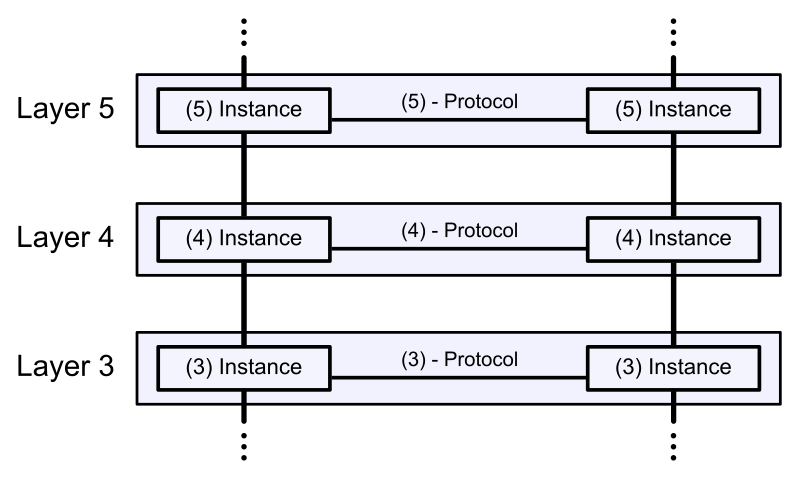
OSI model
model with 7 layers to describe communication systems

X.25
X.25 is an ITU-T standard protocol suite for packet-switched data communication in wide area networks (WAN). It was originally defined by the International Telegraph and Telephone Consultative Committee (CCITT, now ITU-T) in a series of drafts and finalized in a publication known as The Orange Book in 1976.

X.509
In cryptography, X.509 is an International Telecommunication Union (ITU) standard defining the format of public key certificates. X.509 certificates are used in many Internet protocols, including TLS/SSL, which is the basis for HTTPS, the secure protocol for browsing the web. They are also used in offline applications, like electronic signatures.
Abstract Syntax Notation One
Abstract Syntax Notation One (ASN.1) is a standard interface description language (IDL) for defining data structures that can be serialized and deserialized in a cross-platform way. It is broadly used in telecommunications and computer networking, and especially in cryptography.
X.400
X.400 is a suite of ITU-T recommendations that define the ITU-T Message Handling System (MHS).
X.21
thumb|X.21 adaptor for a Japanese NEC PC-98.
X.21, also referred to as X21, is an interface specification for differential communications introduced in the mid-1970s by the CCITT, now ITU-T. X.21 was the first digital signaling interface developed. The connector specification is defined by the ISO document 4903.
X.75
X.75 is an International Telecommunication Union (ITU) (formerly CCITT) standard specifying the interface for interconnecting two X.25 networks.
RM-ODP
thumb|320px|The RM-ODP view model, which provides five generic and complementary viewpoints on the system and its environment.
Reference Model of Open Distributed Processing (RM-ODP) is a reference model in computer science, which provides a co-ordinating framework for the standardization of open distributed processing (ODP). It supports distribution, interworking, platform and technology independence, and portability, together with an enterprise architecture framework for the specification of ODP systems.
Security service
security architecture for the interconnection of open systems