Category
page 1Jams and jellies

agar
thumb|Green tea-flavored yōkan, a popular Japanese red bean jelly made from agar
thumb|A blood agar plate used to culture bacteria and diagnose infection
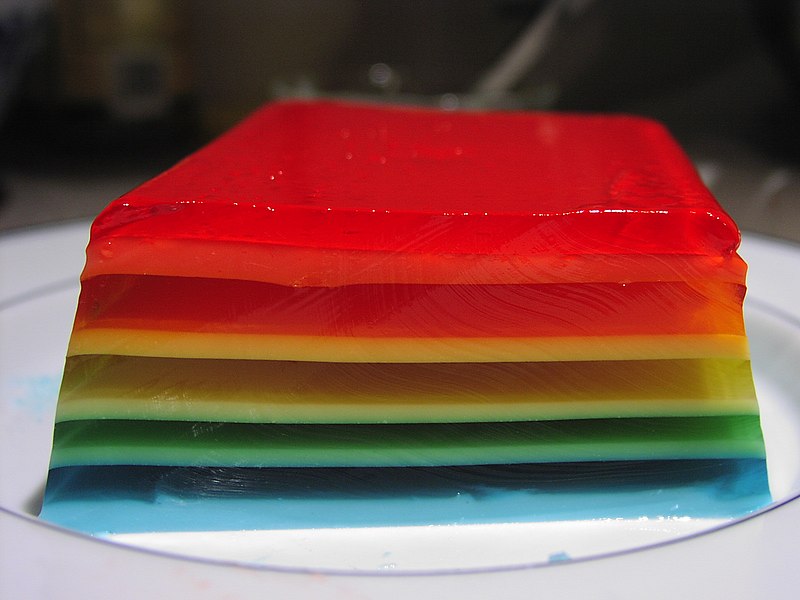
gelatin dessert
dessert made with gelatin

Amorphophallus konjac
species of plant

yōkan
is a wagashi made of red bean paste, agar, and sugar. It is usually sold in a block form, and eaten in slices. There are two main types: neri yōkan and mizu yōkan. means "water", and indicates that it is made with more water than usual. Mizu yōkan is usually chilled and eaten in the summer, however in Fukui prefecture it is customarily eaten in winter.
grass jelly
jelly-like dessert eaten in East Asia
quince cheese
fruit preserve made from quince pulp
coconut jam
jam made from a base of coconut milk, eggs and sugar
peanut butter and jelly sandwich
peanut butter and jelly (or jam) sandwich (PB&J) consists of peanut butter and fruit preserves (usually grape or strawberry jelly) spread on bread
nata de coco
Chewy, translucent, jelly-like food produced by the fermentation of coconut water
lingonberry jam
traditional fruit preserve in Scandinavian cuisine
.jpg)
confit
thumb|upright=1.35|Duck confit
Confit (, ; ) (from the French word confire, literally "to preserve") is any type of food that is cooked slowly over a long period as a method of preservation.
fruit curd
dessert spread and topping
fruit preserves
preparations of fruits
almond tofu
Chinese dessert also popular in Hong Kong, Hong Kong, Taiwan, Japan, Malaysia and Singapore
cranberry sauce
sauce or relish made from cranberries
coffee jelly
jelly dessert flavored with coffee and sugar
slatko
Slatko (; ; ; meaning "sweet") is a thin fruit preserve made of fruit or rose petals in Bulgarian, Macedonian, and Serbian cuisine. Almost any kind of fruit can be used, including wild strawberry, blueberry, plum or cherry.
fruit butter
type of spread
coconut bar
white, chilled, gelatinous southern Chinese dessert

jellied eels
traditional English dish
sirop de Liège
Belgian jam or jelly-like spread made of evaporated fruit juices
Eggplant jam
Turkish jam
Dotorimuk
Dotori-muk () or acorn jelly is a Korean dish. It is a jelly made from acorn starch. Although "muk" means "jelly", when used without qualifiers, it usually refers to dotori-muk. The practice of making dotori-muk originated in mountainous areas of ancient Korea, when abundant oak trees produced enough acorns each autumn to become a viable source of food. Dotori-muk does not spoil easily, so it was used as a lunch food when traveling a long way.
strawberry jam
jam made from strawberries
Beer jam
jam made from beer
Hitlerszalonna
thumb|A slab of modern sütésálló lekvár
'''''' (Hungarian for 'Hitler bacon'), known in the modern day as '''''' ('ovenproof jam'), is a dense fruit jam that originated in the Kingdom of Hungary during World War II. It was sold in brick shaped blocks held in a piece of paper, and was sliced like . Soldiers kept it in a case and it could be cooked with other foods. In the modern day, is often sold in small portion cups. The term itself is considered slang and defined as something like 'tough fruit'.
jokpyeon
Jokpyeon () is a dish in Korean cuisine prepared by boiling cow's trotters and other cuts with high collagen content, such as cow's head, skin, tail and pig's head in water for a long time, so that the stewing liquid sets to form a jelly-like substance when cooled. The dish largely depends on cow's trotters, which explains its name that consists of jok (; "foot") and pyeon (; "tteok"). Jokpyeon is sometimes classified as muk, a Korean jelly category made from grain starch, due to the similar appearance and characteristics.
cheong
any of various sweetened foods in Korean cuisine
tomato jam
jam made from tomatos
Bonne Maman
brand of French food company Andros