Category
page 1Kalpana Chawla
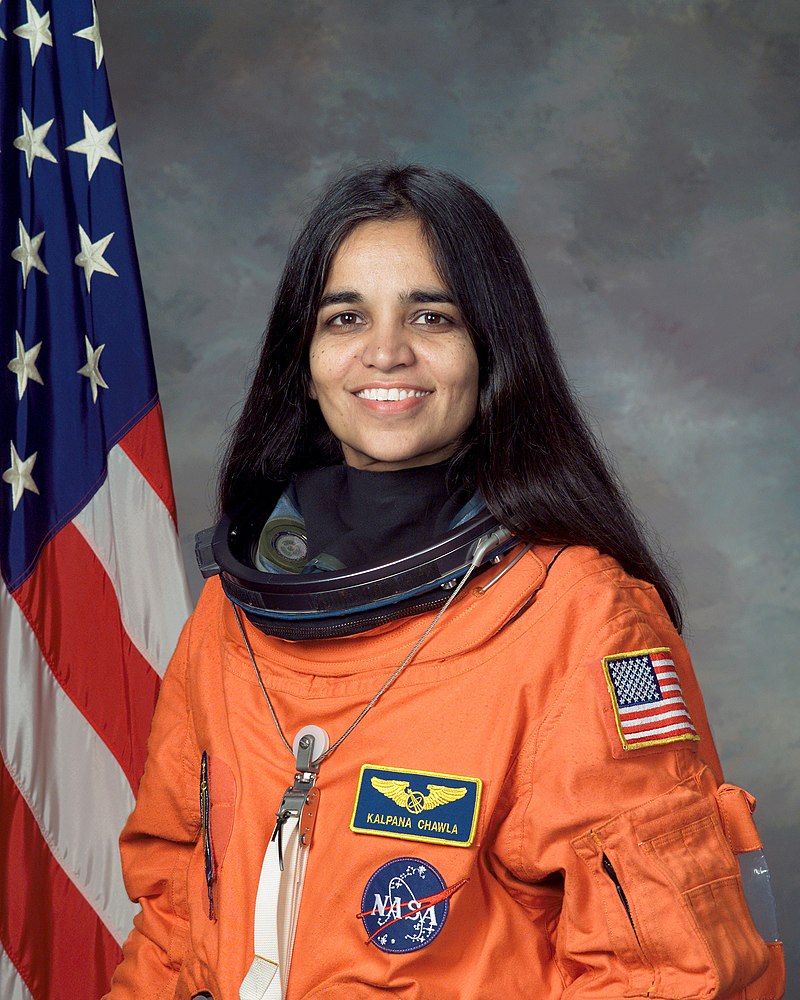
Kalpana Chawla
American astronaut

Space Shuttle Columbia disaster
On February 1, 2003, Space Shuttle Columbia disintegrated as it re-entered the atmosphere over Texas and Louisiana, killing all seven astronauts on board. It was the second of two Space Shuttle missions to end in disaster, after the loss of Challenger and crew in 1986.

STS-107
STS-107 was the 113th flight of the Space Shuttle program, and the 28th and final flight of Space Shuttle Columbia. The mission ended on February 1, 2003, with the Space Shuttle Columbia disaster, in which all seven crew members were killed in the re-entry on the Earth's atmosphere; the shuttle was destroyed along with most of its scientific payloads.

STS-87
STS-87 was a Space Shuttle mission launched from Launch Complex 39B of the Kennedy Space Center on 19 November 1997. It was the 88th flight of the Space Shuttle and the 24th flight of Columbia. The mission goals were to conduct experiments using the United States Microgravity Payload (USMP-4), conduct two EVAs, and deploy the SPARTAN-201 experiment. This mission marked the first time an EVA was performed from Columbia. EVAs from Columbia were originally planned for STS-5 in 1982 and STS-80 in 1996, but were canceled due to spacesuit and airlock problems, respectively. It also marked the first
51826 Kalpanachawla
asteroid
Kalpana-1
Kalpana-1 was the first dedicated meteorological satellite launched by the Indian Space Research Organisation using Polar Satellite Launch Vehicle on 12 September 2002. The satellite is three-axis stabilized and is powered by solar panels, getting up to of power. The METSAT bus was used as the basis for the Chandrayaan lunar orbiter mission of 2008.
Columbia Hills
range of low hills inside Gusev crater on Mars
Space Mirror Memorial
architectural structure
NASA Astronaut Group 15
group of pilots and missions specialists that together formed the astronaut group 15