AI overview
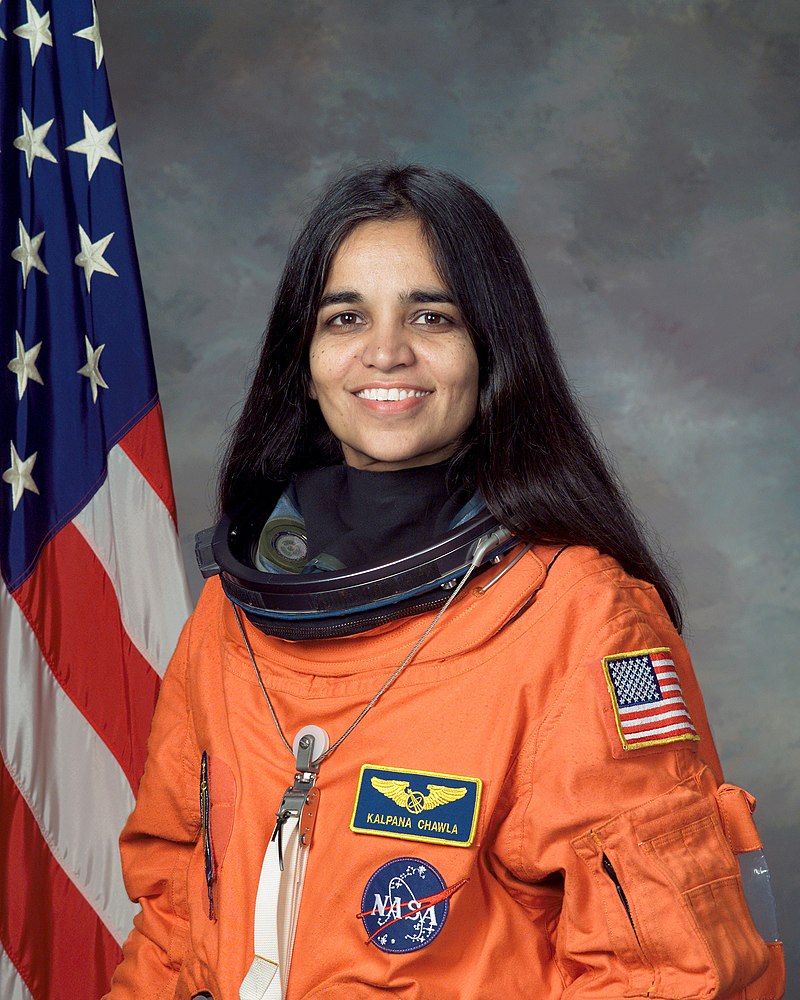
Kalpana Chawla was an American astronaut who represented the possibilities for immigrants and women in space exploration. She matters because she broke barriers in a field dominated by men and remains an inspiration for diverse participation in science and space careers.
AI-generated from the Wikipedia summary — may contain errors.
Person · Open Library
- Works
- 3
Top works
- Kalpana Chawla in Switzerland
- Aerodynamic optimization studies on advanced architecture computers
- Numerical simulation of a powered-lift landing, tracking flow features using overset grids, and simulation of high lift devices on a fighter-lift-and-control wing
via Open Library + Wikidata
Listeners · Last.fm
- Listeners
- 2
- Total plays
- 4
<a href="https://www.last.fm/music/Kalpana+Chawla">Read more on Last.fm</a>
Recent publications · Crossref
5 total works indexed
- SMOTE: Synthetic Minority Over-sampling Technique
· 2002 · cited 25,413x
Article
Kalpana Chawla (/ˌkɑːlpənə ˈtʃɑːvlə/; March 17, 1962 – February 1, 2003) was an Indian-American astronaut and aerospace engineer who was the first woman of Indian origin to fly to space. Chawla expressed an interest in aerospace engineering from an early age and took engineering classes at Dayal Singh College and Punjab Engineering College in India. She then traveled to the United States, where she earned her MSc and PhD, becoming a naturalized United States citizen in the early 1990s.
She first flew on the Space Shuttle Columbia in 1997 as a mission specialist and robotic arm operator aboard STS-87. Her role in the flight caused some controversy due to the failed deployment of the Shuttle-Pointed Autonomous Research Tool for Astronomy ("Spartan") module. Chawla's second flight was in 2003 on STS-107, the final flight of Columbia. She was one of the seven crew members who died in the Space Shuttle Columbia disaster when the spacecraft disintegrated during its descent back to Earth's atmosphere on February 1, 2003.