Category
page 1KLOV game ID not in Wikidata

joystick
right|thumb|Possible elements of a video game joystick: 1. stick, 2. base, 3. trigger, 4. extra buttons, 5. autofire switch, 6. throttle, 7. #Hat switch|hat switch (POV hat), 8. suction cups.

multiplayer video game
video game where multiple players can play together

platform game
thumb|SuperTux is a platformer inspired by [[Super Mario Bros.]]

third-person shooter
type of action video game where player can see the avatar on-screen in a third-person view
racing video game
video game genre featuring a competition of speed between vehicles, animals or people
fighting game
video game genre
.jpg)
mecha
thumb| Kuratas, a mecha made by [[Suidobashi Heavy Industry at the Maker Faire Tokyo (2012)]]
In science fiction, or mechs are giant robots or machines, either depicted as piloted or sentient and are typically humanoid walking vehicles. The term was first used in Japanese after shortening the English loanword or , but the meaning in Japanese is more inclusive, meaning any mechanism in general, and or 'giant robot' is the narrower term referring to robots.
stealth game
video game genre
video game controller
device used with games or entertainment systems

Taito
is a Japanese video game and entertainment company based in Shinjuku, Tokyo. It specializes in video games, toys, and amusement arcades. The company was founded by Ukrainian businessman Michael Kogan in 1953 as the importing vodka, vending machines, and jukeboxes into Japan. It began production of video games in 1973. In 2005, Taito was purchased by Square Enix, becoming a wholly owned subsidiary by 2006.

chiptune
Chiptune, also called 8-bit music (although not all chiptune is 8-bit), is a style of electronic music, and its associated subculture, made using the programmable sound generator (PSG) sound chips or synthesizers in vintage arcade machines, computers and video game consoles. The term is commonly used to refer to tracker format music using extremely basic and small samples that an old computer or console could produce (this is the original meaning of the term), as well as music that combines PSG sounds with modern musical styles.
shoot 'em up
subgenre of shooter game
sports video game
video game genre
video game music
soundtrack or background music accompanying video games
interactive film
video game genre
side-scrolling video game
video game genre
deathmatch
game mode where Kills or Frags Are maked as points
quick time event
video game mechanic

Zilog
Zilog, Inc, previously stylized as ZiLOG, is an American manufacturer of microprocessors, microcontrollers, and application-specific embedded system-on-chip (SoC) products.

d-pad
thumb|D-pad on the original NES controller, which was recognized with an Emmy award
The D-pad (short for directional pad) is a compact input method developed for video games, designed to translate thumb movement into directional control through a flat, cross-shaped surface that rests on four internal switches. Each switch corresponds to a cardinal direction (up, down, left, and right), while diagonal inputs engage two switches simultaneously, enabling eight-directional control at 45-degree intervals. Beneath the center, a pivot mechanism tilts the pad, preventing all four switches from being p

2.5D
2.5D (basic pronunciation two-and-a-half dimensional, two-point-five-d) perspective refers to gameplay or movement in a video game or virtual reality environment that is restricted to a two-dimensional (2D) plane with little to no access to a third dimension in a space that otherwise appears to be three-dimensional and is often simulated and rendered in a 3D digital environment.
haptic technology
any form of interaction involving touch
first-person view
graphical perspective
arcade game
coin-operated entertainment machine typically installed in public businesses
light gun
pointing device

mini-map
thumb|A mini-map (bottom right corner) as seen in Warzone 2100
A mini-map or minimap is a miniature map HUD element that is often placed at a screen corner in video games to help players in orienting themselves within the game world. They are often only a small portion of the screen and must be selective in what details they display. Elements included on mini-maps vary by video game genre, but most minimaps feature at least one or more of the following: the position of the player character, allied units, structures, enemies, objectives, and surrounding terrain.
Lone Wolf and Cub
Japanese manga series

scrolling
thumb|Parallax scrolling
In computer displays, filmmaking, television production, video games and other kinetic displays, scrolling is sliding text, images or video across a monitor or display, vertically or horizontally. "Scrolling," as such, does not change the layout of the text or pictures but moves (pans or tilts) the user's view across what is apparently a larger image that is not wholly seen. A common television and movie special effect is to scroll credits, while leaving the background stationary. Scrolling may take place completely without user intervention (as in film credits) or, on
sim racing
video game genre

Whac-A-Mole
Whac-A-Mole is a Japanese arcade game that was created in 1975 by the amusements manufacturer TOGO in Japan, where it was originally known as or .
Art of Fighting
video game series
space flight simulation game
genre of flight simulator video games
Golden age of arcade video games
significant era in early video games history
Nintendo VS. System
arcade system by Nintendo
snake video game
video game genre
light-gun shooter
video game genre

Beatmania
(styled as beatmania) is a rhythm video game developed and distributed by Japanese game developer Konami and first released in December 1997. It contributed largely to the boom of music games in 1998, and the series expanded not only with arcade sequels, but also moved to home consoles and other portable devices, achieving a million unit sales. The Bemani line of music games from Konami is named after the series, was first adopted in the arcade release of Beatmania 3rdMix and kept ever since. The series came to an end with the last game being Beatmania The Final, released in 2002.
Tomohiro Nishikado
Japanese video game designer, creator of the video game "Space Invaders" (born 1944)

Dona Bailey
American video game programmer

combat flight simulator game
video game genre
flight simulation video game
video games which are designed to simulate flight and generally let the player pilot a plane or other aircraft
Marvel vs. Capcom
series of crossover fighting games
active shutter 3D system
technique of displaying stereoscopic 3D images
isometric view
type of video game graphics and video game perspective
motion controller
type of input device that translates its movement through space to input for a computer system
video games in Japan
overview about video games in Japan
Beatmania IIDX
video game series
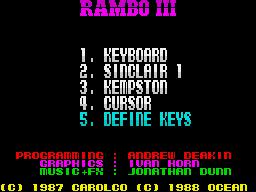
Rambo III
1989 video game by Ocean Software
list of Taito games
Wikimedia list article
list of maze video games
Wikimedia list article
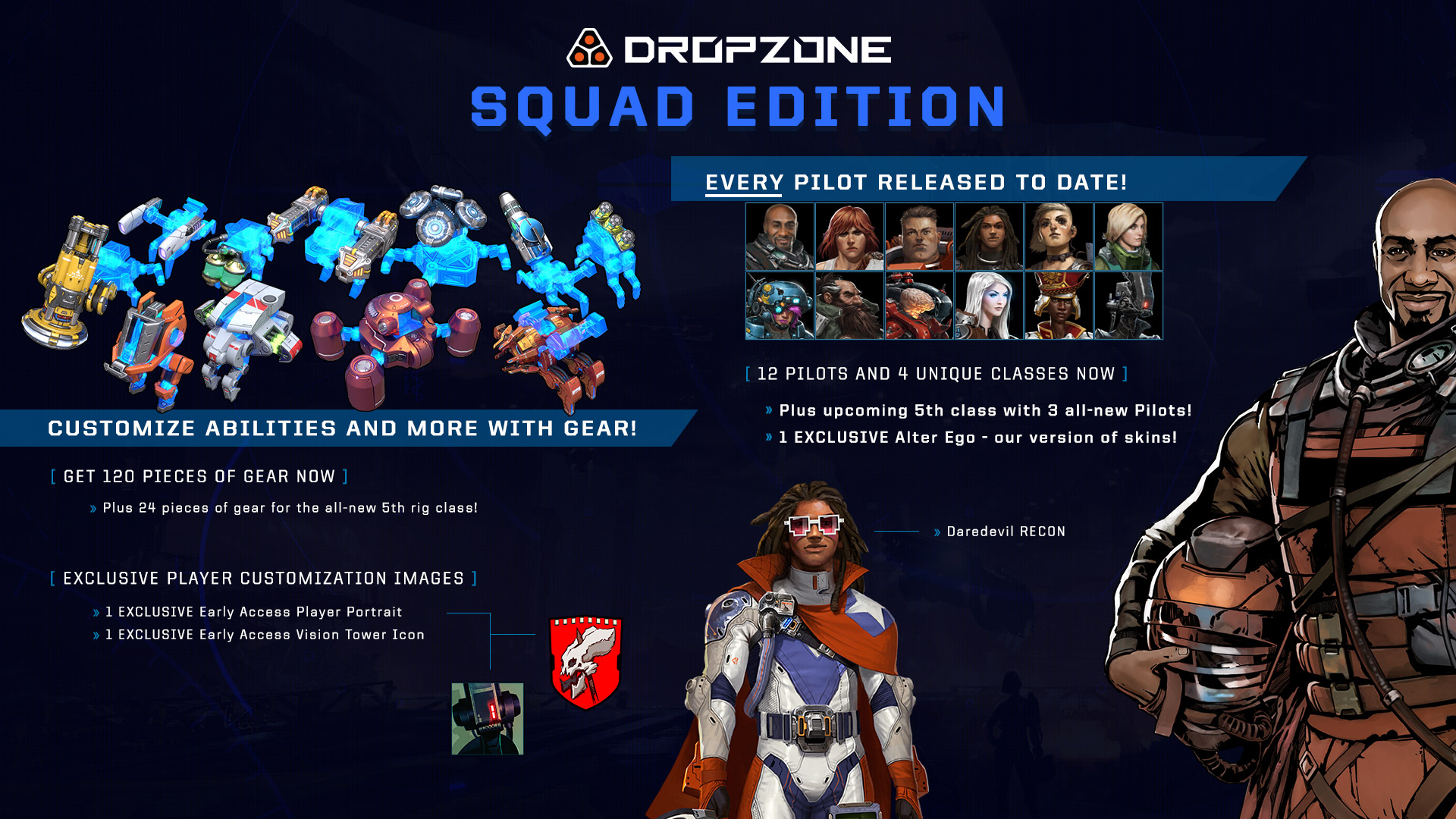
Dropzone
Dropzone is a horizontally scrolling shooter developed by Archer Maclean (under the name Arena Graphics) for Atari 8-bit computers and published in 1984 by U.S. Gold. It was ported to the Commodore 64, and later released for the Nintendo Entertainment System, Game Boy, Game Gear, and Game Boy Color. Ports for Master System and Sega Genesis were also announced, but never released.

MagMax
is a 1985 horizontally scrolling shooter video game developed and published by Nichibutsu for arcades. It was ported to the Nintendo Entertainment System, released in Japan on March 19, 1986, and by FCI in North America in October 1988. The game was also ported to the Commodore 64, ZX Spectrum, and Amstrad CPC by Ocean Software and released on their Imagine label in 1987.
lunar lander
video game genre, where the player must portion a limited amount of fuel to land on the moon without crashing
Cruis'n
'''''Cruis'n''' is a series of racing video games created by Eugene Jarvis and owned by Nintendo. Midway Games published various installments under license from Nintendo. The series distinguishes itself from other racing games with its over-the-top presentation and fast-paced gameplay, featuring a wide variety of vehicles and tracks based on a number of real world locations. The series debuted in North American and European arcades in 1994 with the release of Cruis'n USA'', which, along with Rare's Killer Instinct, was advertised as running on Nintendo's Ultra 64 hardware. Two sequels followed
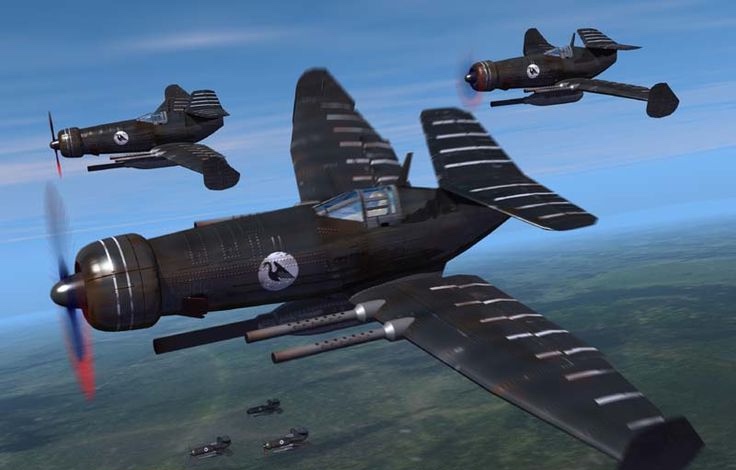
Crimson Skies
2000 video game

Capcom Fighting Evolution
2004 video game

WWF Royal Rumble
2000 video game
destructible environment
feature of video games
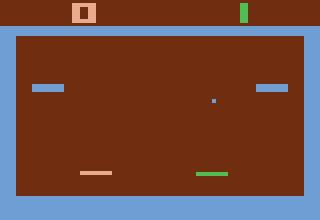
Video Olympics
1977 sports video game
electro-mechanical game
type of arcade game