Category
page 1Korean inventions

Hangul
The Korean alphabet is the modern writing system for the Korean language. It has gone by a variety of names, such as ' in North Korea, Hangul internationally, and ' in South Korea. The script's original name was ''''''.
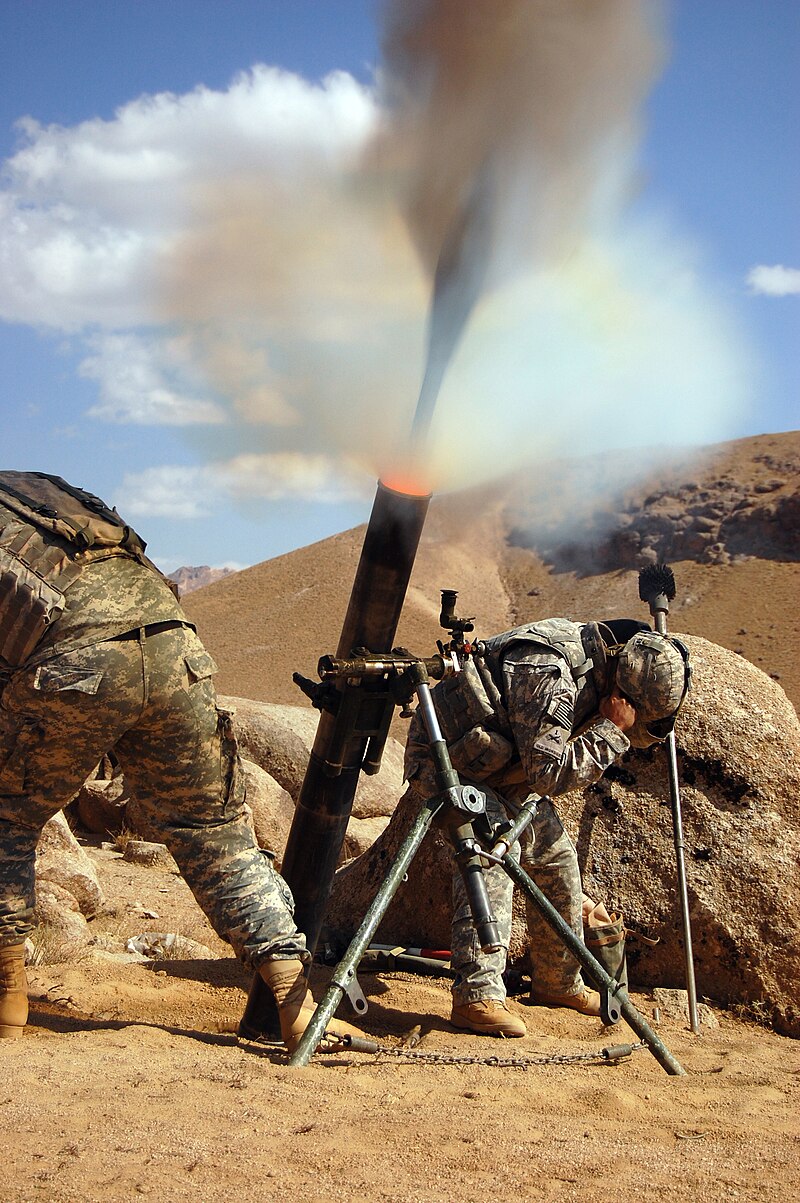
mortar
artillery weapon that launches explosive projectiles at high angles

Internet censorship
control or suppression of what can be accessed, published, or viewed on the Internet
turtle ship
ship type
.jpg)
doenjang
Doenjang () or soybean paste is a type of fermented bean paste made of soybean and brine used in Korean cuisine. It is also a byproduct of soup soy sauce production. It is sometimes used as a relish.

ondol
thumbnail|400px|An illustration of the system

Hwacha
The hwacha or '''''hwach'a''''' () was a fifteenth-century Korean weapons platform capable of performing both the multiple rocket launcher or a volley gun roles. The overall design resembled a wooden cart with a launch pad attached; depending on the specific version and type, it could fire up to 200 singijeon (rocket-powered) arrows, or several dozen iron-headed arrows or bolts out of gun barrels. The term was also used to refer to other war wagon- or cart-based artillery in later periods, such as that developed by Byeon Yijung in the 1590s.
Korean paper
traditional handmade paper from Korea
.jpg)
vinylon
thumb|North Korean men wearing uniforms made from vinylon
Vinylon, also known as Vinalon (more common in Korean sources), is a synthetic fiber produced from reaction between polyvinyl alcohol (PVA) fiber and formaldehyde. Chemically it is polyvinyl formal (PVF). Vinylon was first developed in Japan in 1939 by , Ri Sung-gi, and H. Kawakami. In North Korea, Ri Sung-gi found a route to produce PVA from domestic anthracite (black coal) and limestone as raw materials. Trial production began in 1954 and in 1961 the massive "Vinylon City" was built in Hamhung, North Korea. Vinylon's widespread usage
%20for%20korea(kt).jpg)
WiBro
thumb|WiBro modem KWD-B2800 (sold by KT, produced by Modacom)

gakgung
The Korean Bow ( hanja: , or horn bow) is a water buffalo horn-based composite reflex bow, standardized centuries ago from a variety of similar weapons in earlier use. Due to its long use by Koreans, it is also known as Guk Gung ( hanja: , or national bow). The Korean bow utilizes a thumb draw and therefore employing the use of a thumb ring is quite common. The Korean thumb ring is somewhat different from the Manchu, Mongol, or the Turkic thumb rings, as it comes in two styles, male and female. Male thumb rings are shaped with a small protrusion that sticks out that the bowstring hooks behind
Cold War (1947–1953)
first phase of the Cold War
Singijeon
T-money
T-money (; RR: timeoni) is a rechargeable series of smart cards and other "smart" devices used for paying transportation fares in South Korea. T-money can also be used in lieu of cash or credit cards in some convenience stores and other businesses. The T-money System has been implemented and is being operated by T-money Co., Ltd of which 34.4% owned by Seoul Metropolitan Government, 31.85% owned by LG CNS, and 15.73% owned by Credit Card Union.
Cheugugi
thumb|A ''ch'ŭgugi at Jang Yeong-sil Science Garden in [[Busan]]
'''Ch'ŭgugi''' () were rain gauges invented and used during the Joseon dynasty of Korea. They were invented and supplied to each provincial office during the reign of King Sejong the Great. As of 2010, only one ch'ŭgugi remains, known as the Geumyeong Cheugugi (), which literally means "ch'ŭgugi'' installed on the provincial office's yard." It is designated as National Treasure #561 of Korea and was installed in the provincial office of Gongju city, 1837 by King Yeongjo. In addition, the official measure of rainfall by ''ch'ŭgugi
Gwangsanghui
REDIRECT List of janggi variants