Category
page 1Landers (spacecraft)

InSight
The Interior Exploration using Seismic Investigations, Geodesy and Heat Transport (InSight) mission was a robotic lander designed to study the deep interior of the planet Mars. It was manufactured by Lockheed Martin Space, was managed by NASA's Jet Propulsion Laboratory (JPL), and two of its three scientific instruments were built by European agencies. InSight confirmed "marsquakes" on the planet and thus a still active interior.
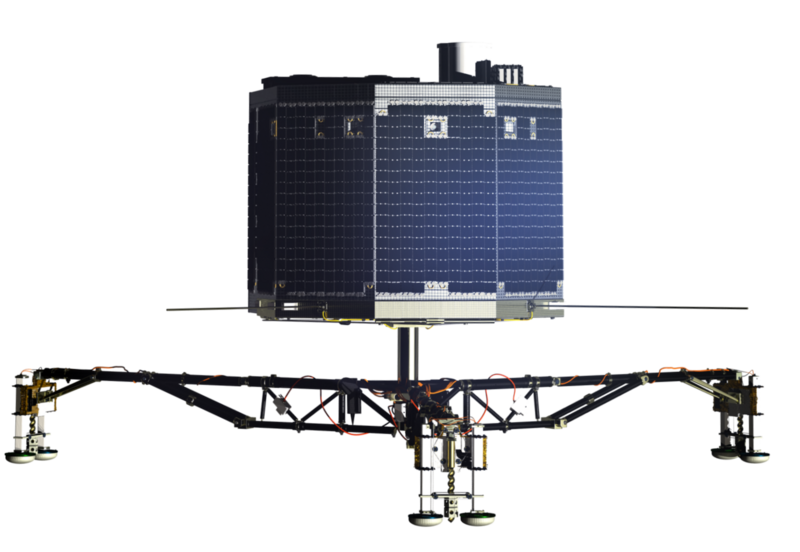
Philae
robotic European Space Agency lander that accompanied the Rosetta spacecraft
Hayabusa2
is an asteroid sample-return mission operated by the Japanese state space agency JAXA. It is a successor to the Hayabusa mission, which returned asteroid samples for the first time in June 2010. Hayabusa2 was launched on 3 December 2014 and rendezvoused in space with near-Earth asteroid 162173 Ryugu on 27 June 2018. It surveyed the asteroid for a year and a half and took samples. It left the asteroid in November 2019 and returned the samples to Earth on 5 December 2020 UTC. Its mission has now been extended through at least 2031, when it will rendezvous with the small, rapidly-rotating asteroi
lander
spacecraft which descends toward and comes to rest on the surface of an astronomical body
Mars rover
space exploration vehicle designed to move across the surface of Mars

Hayabusa
was a robotic spacecraft developed by the Japan Aerospace Exploration Agency (JAXA) to return a sample of material from a small near-Earth asteroid named 25143 Itokawa to Earth for further analysis.
Hayabusa, formerly known as MUSES-C for Mu Space Engineering Spacecraft C, was launched on 9 May 2003 and rendezvoused with Itokawa in mid-September 2005. After arriving at Itokawa, Hayabusa studied the asteroid's shape, spin, topography, color, composition, density, and history. In November 2005, it landed on the asteroid and collected samples in the form of tiny grains of asteroidal material, whi

Beresheet
Beresheet (, Bərēšīṯ, ; Book of Genesis) was a demonstrator of a small robotic lunar lander and lunar probe operated by SpaceIL and Israel Aerospace Industries. Its aims included inspiring youth and promoting careers in science, technology, engineering, and mathematics (STEM), and landing its magnetometer, time capsule, and laser retroreflector on the Moon. The lander's gyroscopes failed on 11 April 2019 causing the main engine to shut off, which resulted in the lander crashing on the Moon. Its final resting position is 32.5956°N, 19.3496°E.
lunar rover
space exploration vehicle (rover) designed to move across the surface of the Moon
Blue Ghost Mission 1
American private spacecraft which landed on the Moon in 2025
Schiaparelli EDM lander
ExoMars 2016 lander module
lunar lander
spacecraft intended to land on the surface of the Moon
Martian Moons Exploration
JAXA-led mission to robotically explore and sample Mars' moons
Europa Lander
proposed spacecraft concept by NASA for a lander for Jupiter's moon Europa
Hakuto-R M1
failed Japanese private lunar landing mission
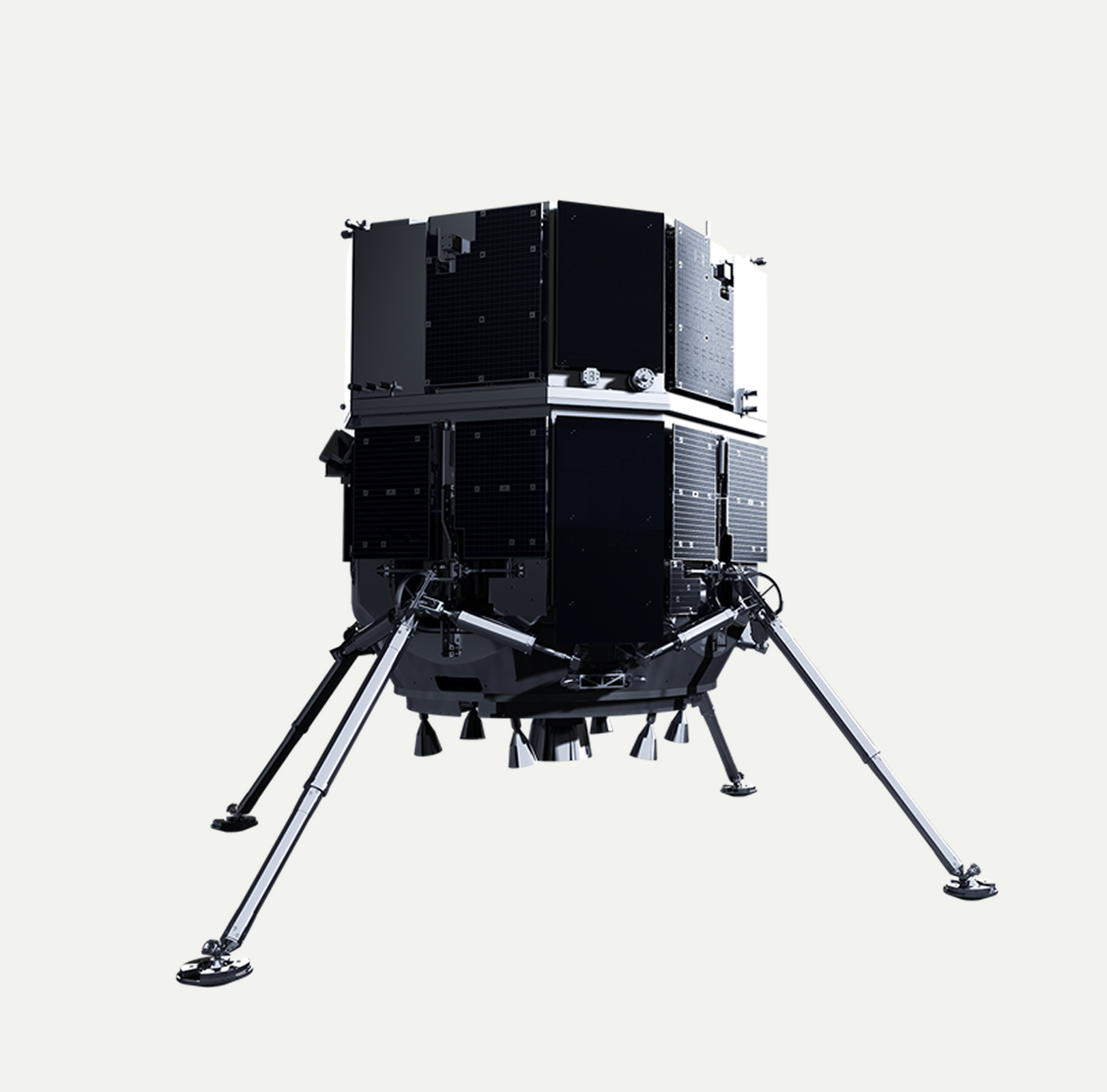
Hakuto-R M2
failed Japanese private lunar landing mission
Beresheet 2
planned Israeli/UAE lunar mission
lunar module
lunar lander designed for human spaceflight

Triton Hopper
Proposed NASA Triton lander space probe
ExoMars 2018 surface platform
The 'ExoMars Kazachok (; formerly ExoMars 2020 Surface Platform') was a planned robotic Mars lander led by Roscosmos, part of the ExoMars 2022 joint mission with the European Space Agency. Kazachok translates as "Little Cossack", and is also the name of an East Slavic folk dance.
list of landings on extraterrestrial bodies
Wikimedia list article
Micro-Nano Experimental Robot Vehicle for Asteroid
series of asteroid rovers by JAXA
Argonaut
European Space Agency lunar lander