Category
page 1Language articles with old speaker data

Occitan
Romance language of Western Europe

Slavic
subfamily of Indo-European languages

Volapük
Volapük (; , 'Language of the World', or ) is a constructed language created in 1879 and 1880 by Johann Martin Schleyer, a Roman Catholic priest in Baden, Germany. Notable as the first major constructed international auxiliary language, it primarily drew from Germanic languages. Its grammar is inspired largely by German, although it was heavily regularized by Schleyer, while its lexicon is rooted mostly in English, with additional influence from German, the Romance languages, and Russian. Despite some roots remaining recognizable, many words were altered beyond recognition, as Schleyer sought

Crimean Tatar
Turkic language spoken in Crimea

Indo-Aryan
branch of the Indo-Iranian languages in the Indo-European language family

Low German
West Germanic language spoken mainly in northern Germany and the eastern part of the Netherlands
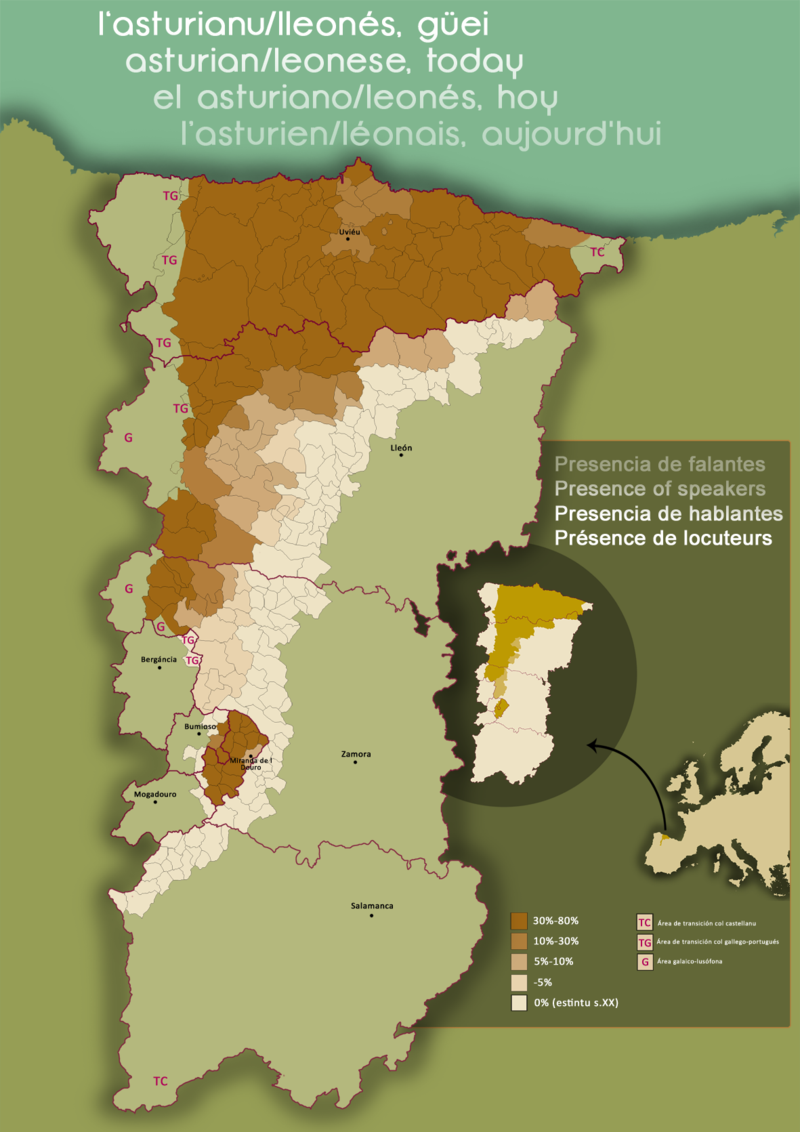
Asturian
Romance language of the West Iberian group

Sámi
group of Uralic languages spoken by the Sámi people in northern Europe
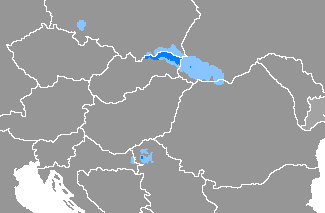
Rusyn
East Slavic language spoken by Carpathian Rusyns, Lemkos, Boykos, and Hutsuls

Konkani
Indo-Aryan language spoken in India

Klingon
constructed language created for Star Trek

Kongo
Bantu language spoken in Angola, Congo Brazzaville and Congo Kinshasa

Monégasque
Gallo-Italic language or dialect spoken in Monaco
Extremaduran
Romance language spoken in Spain

Ripuarian
German dialect group

Mon
Austroasiatic language spoken by the Mon in Myanmar and Thailand

Chavacano
Chavacano or Chabacano () is a group of Spanish-based creole language varieties spoken in the Philippines. The variety spoken in Zamboanga City, located in the southern Philippine island group of Mindanao, has the highest concentration of speakers. Other currently existing varieties are found in Cavite City and Ternate, located in the Cavite province on the island of Luzon. Chavacano is the only Spanish-based creole in Asia. The 2020 Census of Population and Housing counted 106,000 households generally speaking Chavacano.

Provençal
dialect of the Occitan language

Aranese
Occitan language dialect

Ojibwe
Central Algonquian language
Lakota
Siouan language spoken by the Lakota people of the Sioux tribes

Livvi-Karelian
Finno-Ugric language
Bats
language of the Bats people, a Caucasian minority group, and is part of the Nakh family of Caucasian languages
Garifuna
member of the Arawakan language family, spoken in Central America, especially in Honduras, Guatemala, Belize, and Nicaragua, also within the USA
Burgenland Croatian
subdialect
Burgundian
Oïl language spoken in Burgundy and particularly in the Morvan area of the region
Carib
highly endangered South American language, spoken by the Kalina people (Caribs)
Lampungese
Lampungic language spoken predominantly by the Lampung ethnic group native to Lampung, Indonesia
Southern Kurdish
variety of Kurdish comprising several dialects of Northwestern Iranian languages spoken in the south of Kurdistan (in upper Mesopotamia, to the west of Iran and east of Iraq)
Fuzhou dialect
Min Chinese dialect in Fujian
Griko
dialect of Italiot Greek
Miyako
language
Kerinci
Western Sumatran language of Kerinci people originating from Kerinci region in Sumatra
Abanyom
language of the Ekoid subfamily of Niger–Congo
Gutnish
Gutnish ( ), or rarely Gutnic ( or ), is a North Germanic language spoken sporadically on the islands of Gotland and Fårö. The different dialects of Gutnish, while stemming from the Old Gutnish () variety of Old Norse, are sometimes considered part of modern Swedish. Gutnish exists in two variants, Mainland Gutnish (Storlandsgutamål or Storlandsmål), mostly spoken in the southern and southeastern portion of Gotland, where the dialect of Lau became the standard form on the Main Island (Lau Gutnish → Laumål), and Fårö Gutnish (Gutnish: Faroymal; ), spoken on the island of Fårö. UNESCO defines Gu
Lokono
language spoken by the Lokono people
Cocos Malay
dialect under the Betawic family language spoken in Cocos Islands, Australia
Zande
language spoken central Africa, main language of the Zande language family
Balearic
dialects of Catalan in the Balearic islands
Farefare
language in West Africa
Jarawa
language of India
Makonde
Bantu language of southeast Tanzania and northern Mozambique
Judeo-Moroccan
Judeo-Arabic variety of Morocco
Finnish Kalo
language
Central Asian Arabic
variety of Arabic spoken in Afghanistan, Tajikistan, and Uzbekistan
Musi
Malayic variety spoken in southern Sumatera
Bonan
language
Tundra Yukaghir
language
Achang
language
Ewondo
language
Rushani
Pamir language of Afghanistan and Tajikistan
Acadian French
French variety of Maritime eastern Canada
Lorraine Franconian
set of Germanic dialects spoken in Moselle (France
Palembang
Malayic variety spoken in southern Sumatra
Ghotuo
Edoid language spoken in Nigeria
Chokwe
Bantu language spoken by the Chokwe people
Kuna
language
Magar
language
Iu Mien
language
Indus Kohistani
Dardic language spoken in Kohistan District, Pakistan