Category
page 1Languages without ISO 639-3 code but with Linguist List code
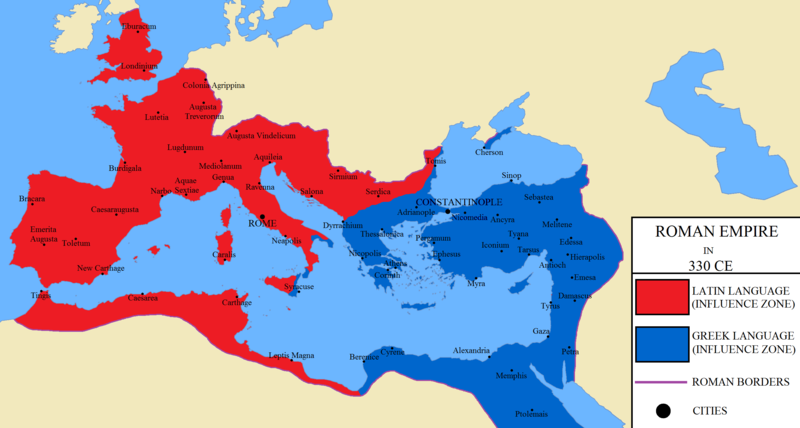
Vulgar Latin
non-standard Latin variety spoken by the people of Ancient Rome

Cimmerians
The Cimmerians were an ancient Eastern Iranic equestrian nomadic people originating in the Pontic–Caspian steppe, part of whom subsequently migrated into West Asia. Although the Cimmerians were culturally Scythian, they were ethnically distinct from the Scythians proper, to whom the Cimmerians were related and who displaced and replaced the Cimmerians.

Na'vi
constructed science-fiction language

Ruthenian
historical Slavic language, ancestor of Belarusian, Rusyn, and Ukrainian; official, literary and spoken language of the Grand Duchy of Lithuania, Moldavian principality and East Slavic voivodeships of the Polish-Lithuanian Commonwealth
Classical Latin
high-prestige form of the Latin language in the Roman Republic and Empire
Proto-Norse
progenitor of the North Germanic languages
Yola
extinct Germanic language
medieval Latin
form of Latin used in the Middle Ages
Merya
extinct language
Russenorsk
Russenorsk (; , ; English: Russo-Norwegian) is an extinct dual-source "restricted pidgin" language formerly used in the Arctic, which combined elements of Russian and Norwegian. Russenorsk originated from Russian traders from Kola (north-western Russia) and Norwegian fishermen from Tromsø (northern Norway). It was used extensively in Northern Norway for about 150 years in the Pomor trade. Russenorsk is important as a test case for theories concerning pidgin languages since it was used far away from most of the other documented pidgins of the world.

Galician–Portuguese
Galician–Portuguese ( or ; or ), also known as Old Galician–Portuguese, Galaic-Portuguese, or (in contexts focused on one of the modern languages) Old Galician, Old Portuguese, Medieval Galician or Medieval Portuguese, was a West Iberian Romance language spoken in the Middle Ages, in the northwest area of the Iberian Peninsula. It is both the ancestor language and historical period of development of modern Galician, Fala, Portuguese and Eonavian languages which maintain a high degree of mutual intelligibility.
Ammonite
extinct Canaanite dialect
Muromian
extinct language formerly spoken by the Muromian tribe
Meshcherian
extinct language in Russia territory
Old Latin
period of the Latin language
Gutnish
Gutnish ( ), or rarely Gutnic ( or ), is a North Germanic language spoken sporadically on the islands of Gotland and Fårö. The different dialects of Gutnish, while stemming from the Old Gutnish () variety of Old Norse, are sometimes considered part of modern Swedish. Gutnish exists in two variants, Mainland Gutnish (Storlandsgutamål or Storlandsmål), mostly spoken in the southern and southeastern portion of Gotland, where the dialect of Lau became the standard form on the Main Island (Lau Gutnish → Laumål), and Fårö Gutnish (Gutnish: Faroymal; ), spoken on the island of Fårö. UNESCO defines Gu
Common Brittonic
ancient Celtic language of Britain, ancestor to Welsh, Cornish, Breton and Cumbric
Old Gutnish
extinct language
Tuscan
Italo-Dalmatian variety mainly spoken in the central Italy
Basque-Icelandic pidgin
pidgin spoken in Iceland in the 17th century
Nabataean Aramaic
extinct language
Rushani
Pamir language of Afghanistan and Tajikistan
African Romance
extinct Romance language
Scanian
dialect
Old Swedish
North Germanic language
Paisachi
Paishachi or Paisaci () is a largely unattested literary language of the middle kingdoms of India mentioned in Prakrit and Sanskrit grammars of antiquity. It is generally grouped with the Prakrits, with which it shares some linguistic similarities, but is still not considered a spoken Prakrit by the grammarians because it was purely a literary language, and because of its archaicism.
Old Anatolian Turkish
form of the Turkish language spoken in Anatolia from the 11th to 15th centuries

Yamasee
The Yamasees (also spelled Yamassees, Yemasees or Yemassees) were a multiethnic confederation of Native Americans who lived in the coastal region of present-day northern coastal Georgia near the Savannah River and later in northeastern Florida. The Yamasees engaged in revolts and wars with other Native groups and Europeans living in North America, specifically from Florida to North Carolina.
Wenrohronon
The Wenrohronon or Wenro people were an Indigenous peoples of the Northeastern Woodlands, historically from western New York and possibly northern Pennsylvania.
Paeonian
extinct Indo-European language
Ch’olti’
extinct language
Himyaritic
extinct language
Old Polish
extinct West Slavic language
Koibal
dialect of Kamassian language
Barranquenho
Barranquenho () is a Romance linguistic variety spoken in the Portuguese town of Barrancos, near the Spanish border. It is a mixed language, and can be considered either a variety of Portuguese (Alentejan Portuguese) heavily influenced by the Spanish dialects of neighbouring areas in Spain in Extremadura and Andalusia (especially those from Encinasola and Rosal de la Frontera), or a Spanish dialect (Extremaduran / Andalusian) heavily influenced by Portuguese.
Gutian
extinct unclassified language of the Near East
Yurumanguí
Yurumanguí language

Safaitic
Safaitic ( Al-Ṣafāʾiyyah) is a variety of the South Semitic scripts that was used by the Arabs in southern Syria and northern Jordan in the Ḥarrah region, to carve rock inscriptions in various dialects of Old Arabic and Ancient North Arabian. The Safaitic script is a member of the Ancient North Arabian (ANA) sub-grouping of the South Semitic script family, the genetic unity of which has yet to be demonstrated.
Pasto
language

Algonquian–Basque pidgin
pidgin language last attested in 1710, in Canada

Tequesta
thumb|A bronze statue of a Tequesta warrior and his family on the Brickell Avenue Bridge, Miami, created by [[Manuel Carbonell.]]
The Tequesta, also Tekesta, Tegesta, Chequesta, Vizcaynos, were a Native American tribe on the Southeastern Atlantic coast of Florida. They had infrequent contact with Europeans and had largely migrated by the middle of the 18th century.
Deir Alla Inscription
ancient inscription relating visions of the seer of the gods Bala'am, son of Be'or
Sonqori
language
Fergana Kipchaks
extinct Turkic language
Jämtlandic
group of closely related dialects spoken in the Swedish province of Jämtland
Yerevan dialect
dialect of the Armenian language spoken in Yerevan
Svorsk
Svorsk () or Svorska () is a portmanteau of svensk(a) 'Swedish' and norsk(a) 'Norwegian' to describe a mixture of the Swedish and Norwegian languages. It could be translated as Sworwegian in English.
Guale
Guale was a historic Native American chiefdom of Mississippian culture peoples located along the coast of present-day Georgia and the Sea Islands. Spanish Florida established its Roman Catholic missionary system in the chiefdom in the late 16th century.
Congaree people
ethnic group
Nunivak Cup'ig
language
Maipure
language
Duit
extinct Chibcha language, spoken by the Muisca of present-day Boyacá, Colombia
Nabataean Arabic
language
Appalousa
The Opelousa (also Appalousa) were an Indigenous people of the Southeastern Woodlands in Louisiana. They lived near present-day Opelousas, Louisiana, west of the lower Mississippi River, in the 18th century. At various times, they allied with the neighboring Atakapa and Chitimacha peoples.
Betoi
language
Sarawak Malay
Malaysian Malay dialect
Jumano people
The Jumanos were a tribe or several tribes, who inhabited a large area of western Texas, New Mexico, and northern Mexico, especially near the Junta de los Rios region with its large settled Indigenous population. They lived in the Big Bend area in the mountain and basin region. Spanish explorers first recorded encounters with the Jumano in 1581. Later expeditions noted them in a broad area of the Southwest and the Southern Plains.
Cape Fear Indians
Native American tribe
Huetar
extinct Chibchan language of Costa Rica
Itsari
Dargin language