Category
page 1Late Bronze Age collapse

Troy
Troy (; /; ) or Ilion (; ) was an ancient city located in present-day Çanakkale, Turkey. It is best known as the setting for the Greek myth of the Trojan War. The archaeological site is open to the public as a tourist destination, and was added to the UNESCO World Heritage list in 1998.
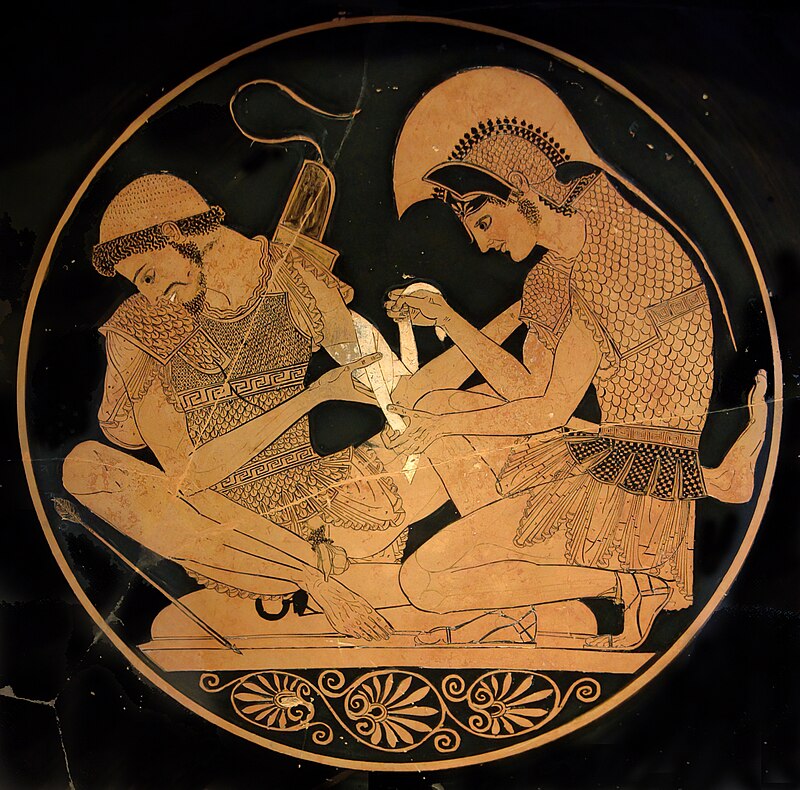
Trojan War
legendary war in Greek mythology
.jpg)
Mycenae
Mycenae ( ; or , Mykē̂nai or Mykḗnē) is an archaeological site near Mykines in Argolis, north-eastern Peloponnese, Greece. It is located about south-west of Athens; north of Argos; and south of Corinth. The site is inland from the Saronic Gulf and built upon a hill rising above sea level.

Miletus
Miletus () was an influential ancient Greek city on the western coast of Anatolia, near the mouth of the Maeander River in present day Turkey. Renowned in antiquity for its wealth, maritime power, and extensive network of colonies, Miletus was a major center of trade, culture, and innovation from the Bronze Age through the Roman period. The city played a foundational role in the development of early Greek philosophy and science, serving as the home of the Milesian school with thinkers such as Thales, Anaximander, and Anaximenes.

Hattusa
Hattusa, also Hattuşa, Ḫattuša, Hattusas, or Hattusha, was the capital of the Hittite Empire in the late Bronze Age during two distinct periods. Its ruins lie near modern Boğazkale, Turkey (originally Boğazköy) within the great loop of the Kızılırmak River (Hittite: Marashantiya; Greek: Halys).

Ugarit
Ugarit (; , ủgrt /ʾUgarītu/) was an ancient Levantine coastal city located in what is today northern Syria. The site, with its corpus of ancient cuneiform texts, was discovered in 1928. The texts were written in a previously unknown Northwest Semitic tongue—the Ugaritic language. Archaeological excavations of Ugarit show evidence of occupation since the 8th millennium BC. Research has focused on the late Bronze Age levels; relatively little is known about earlier occupation. The ongoing archaeological investigation of Ugarit has proven to be invaluable to the study of the Bronze Age in the eas

Sea Peoples
purported historical ethnic group

Ramesses III
Egyptian pharaoh of the 20th dynasty

Greek Dark Ages
period of time in ancient Greece
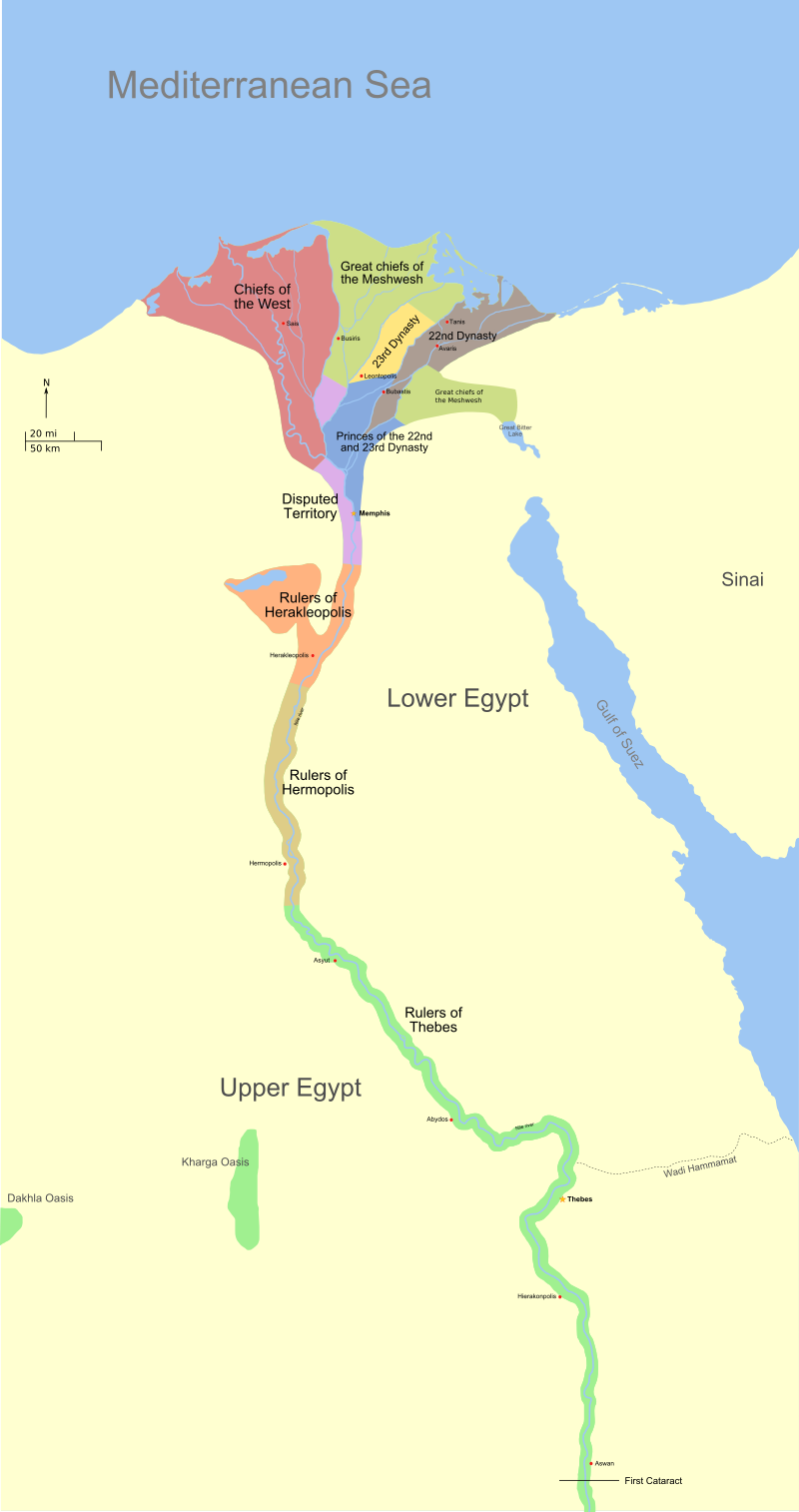
Third Intermediate Period of Egypt
period of Ancient Egypt (1069-664 BCE)

Twentieth Dynasty of Egypt
Period from 1189 to 1077 BCE

Tiglath-Pileser I
King of Assyria during the Middle Assyrian period

Nebuchadnezzar I
King of Babylon
Bronze Age collapse
collapse of several civilizations at the end of the bronze age
%20at%20Thebes%2C%20Egypt.%2019th%20Dynasty.%20The%20Petrie%20Museum%20of%20Egyptian%20Archaeology%2C%20London.jpg)
Twosret
Tausret, also spelled Tawosret or Twosret (d. 1188 BC) was the last known ruler and the final pharaoh of the Nineteenth Dynasty of Egypt.
Suppiluliuma II
Hittite king
Merneptah Stele
memorial plaque by Merneptah who ruled Egypt between 1213 and 1203 BC
Kaskians
The Kaska (also Kaška, later Tabalian Kasku and Gasga) were a loosely affiliated Bronze Age non-Indo-European tribal people, who spoke the unclassified Kaskian language and lived in mountainous East Pontic Anatolia, known from Hittite sources. They lived in the mountainous region between the core Hittite region in eastern Anatolia and the Black Sea, and are cited as the reason that the later Hittite Empire never extended northward to that area. They are sometimes identified with the Caucones known from Greek records.
Dorian invasion
legendary ancient invasion of southern Greece

Luwians
The Luwians (also known as Luvians) were an ancient people in Anatolia who spoke the Luwian language. During the Bronze Age, Luwians formed part of the population of the Hittite Empire and adjoining states such as Kizzuwatna. During the Hittite New Kingdom, Luwian replaced Hittite as the empire's dominant language. In the early Iron Age, a number of Luwian-speaking Neo-Hittite states arose in northern Syria. The Luwians are known largely from their language, and it is unclear to what extent they formed a unified cultural or political group.
Neo-Hittite states
successor states of the Hittite empire in the ancient Near East

Alashiya
thumb|right|300px|Map of the Ancient Near East around 1400 BC
Alashiya ( Alašiya [a-la-ši-ia]; ẢLṮY; Linear B: 𐀀𐀨𐀯𐀍 Alasios [a-ra-si-jo]; Hieratic "'irs3"), also spelled Alasiya, also known as the Kingdom of Alashiya, was a state which existed in the Middle and Late Bronze Ages, and was situated somewhere in the Eastern Mediterranean. It was a major source of goods, especially copper, for ancient Egypt and other states in the Ancient Near East. It is referred to in a number of surviving texts, however its exact location still remains a subject of academic debate and a matter of speculation

Shutruk-Nahhunte
thumb|Babylonian stele taken to Susa by Shutruk-Nakhunte, with his image (left) added.
Shutruk-Nakhunte (sometimes Nahhunte) was king of Elam from about 1184 to 1155 BC (middle chronology), and the second king of the Shutrukid Dynasty.
Middle Assyrian Empire
period in the history of Assyria after the fall of the Old Assyrian Empire in the 1300s BC

Shattuara II
Mitanni King

Wilusa
thumb|385x385px|Map of Bronze Age [[Near East depicting the location of Wilusa in Northwest Anatolia.]]
Tarḫuntašša
Tarḫuntašša ( and : ) was a Bronze Age city in south-central Anatolia (modern-day Turkey) mentioned in contemporary documents. Its location is unknown. The city was the capital of the Hittite Empire for a time and later became a regional power in its own right. The kingdom controlled by the city is known by the same name and its approximate borders are known from texts.
Palace of Nestor
archaeological site, part of ancient Pylos
Battle of the Delta
battle between Egypt under Ramses III and the Sea Peoples

Aigeira
Aigeira () (, or Αἴγειρα, ) is a town and a former municipality in northeastern Achaea, West Greece, Greece. Since the 2011 local government reform it has been a municipal unit of the Aigialeia municipality, with an area of 103.646 km2. The municipal unit stretches from the Gulf of Corinth, where the town of Aigeira is located, to the mountains in the south. The town of Aigeira is southeast of Aigio, northwest of Corinth and east of Patras.
Ninurta-nadin-shumi
Ninurta-nādin-šumi, inscribed mdMAŠ-na-din-MU or dNIN.IB-SUM-MU, “Ninurta (is) giver of progeny,” 1127–1122 BC, was the 3rd king of the 2nd dynasty of Isin and 4th dynasty of Babylon. He reigned for seven years, contemporaneously with Aššur-reš-iši, c. 1133 to 1115 BC, the Assyrian king with whom he clashed.
Zababa-shuma-iddina
Zababa-šuma-iddina was the 35th and next to last king of the Kassite or 3rd dynasty of Babylon, who reigned for just one year, c. 1158 BC. He was without apparent ties to the royal family and there is uncertainty concerning the circumstances of his coming to power.
Battle of Djahy
ancient battle between Egypt and the Sea Peoples
Ammurapi
Ammurapi (; ) was the last Bronze Age ruler and king (c. 1215 to 1180 BC) of the ancient Syrian city of Ugarit. Ammurapi was a contemporary of the Hittite King Suppiluliuma II.
Deir Alla
city in Balqa Governorate, Jordan
Seha River Land
kingdom in West-Anatolia

Iklaina
Iklaina () is a historic village in the municipal unit of Pylos, Messenia, Greece. The settlement, which is situated in low hills approximately northeast of Pylos, stands upon the remains of a Late Bronze Age (ca. 1600-1100 BC) city. An archaeological site has been surveyed and excavated there by the Athens Archaeological Society and the University of Missouri–St. Louis under the direction of Michael Cosmopoulos. Finds include an early Mycenaean palace, giant terrace walls, murals, an advanced drainage system, and a clay tablet dating from between 1450 and 1350 B.C. that features an early exam
Hutelutush-Inshushinak
Hutelutush-Inshushinak, son of Shilhak-Inshushinak I, was an Elamite king belonging to the Shutrukid dynasty, ruling c. 1120–1100 BC. During the reign of Hutelutush-Inshushinak, Elam was heavily raided by king Nabu-kudurri-usur I of Babylon's Second Dynasty of Isin.
Enkomi
archaeological site in Cyprus
Battle of Mount Tabor
battle described in the biblical book of Judges
Kokkinokremos
thumb|Excavation at Pyla-Kokkinokremos in 2015
Pyla-Kokkinokremos () (red cliff) was a Late Bronze Age settlement on Cyprus, which was abandoned after a brief occupation.
Nichoria
Nichoria () is a site in Messenia, on a ridgetop near modern Rizomylos, at the northwestern corner of the Messenian Gulf. From the Middle to Late Bronze Age it cultivated olive and terebinth for export. During the Helladic period it was part of the Mycenaean civilisation.