
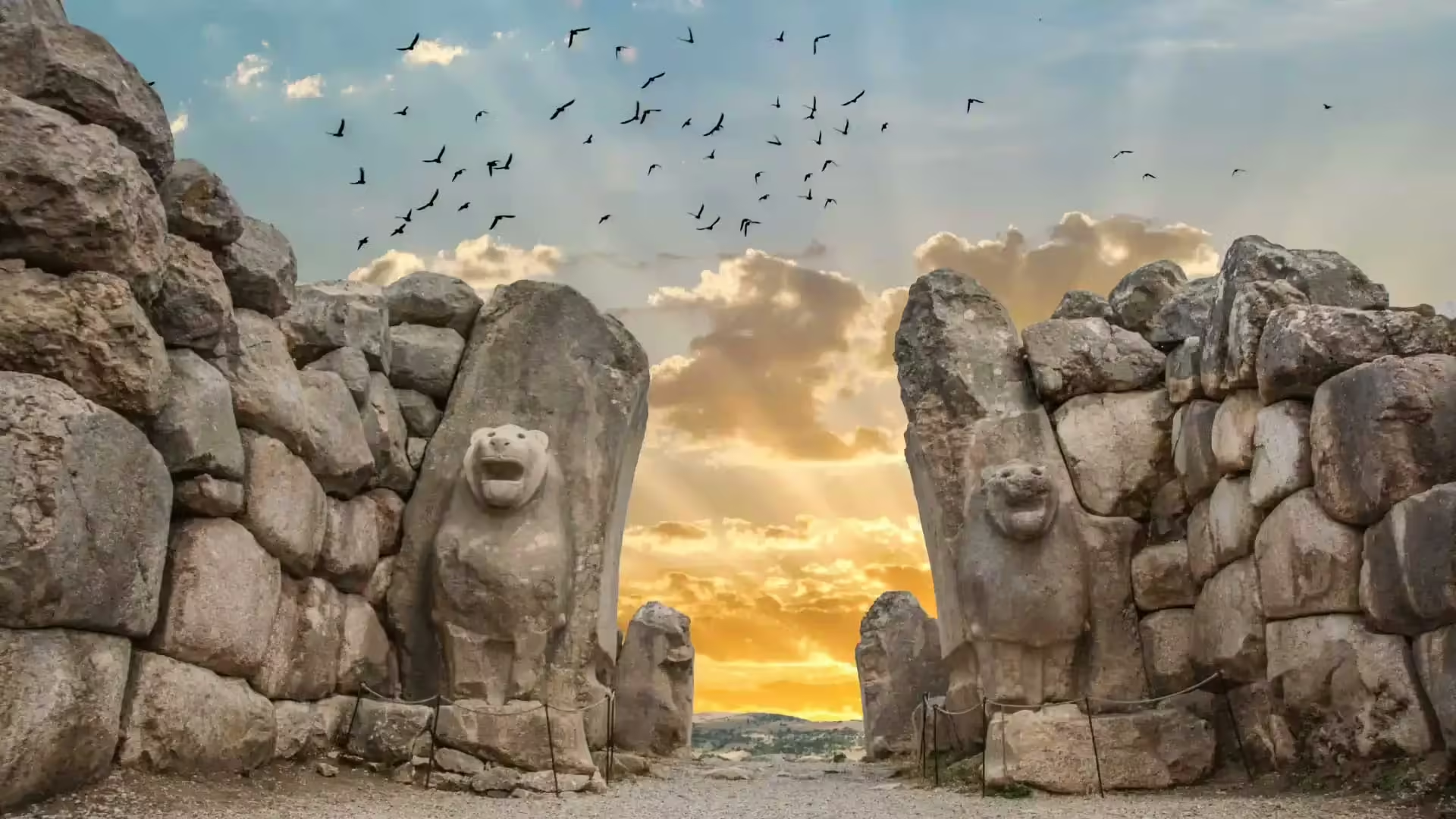
File:Lion_Gate,_Hattusa_13_(cropped).jpg · Wikimedia Commons · See Wikimedia Commons
Hattusa
Sign in to saveAlso known as Hattusas, Hattusha, Hattuşa, Ḫattuša
Hattusa, also Hattuşa, Ḫattuša, Hattusas, or Hattusha, was the capital of the Hittite Empire in the late Bronze Age during two distinct periods. Its ruins lie near modern Boğazkale, Turkey (originally Boğazköy) within the great loop of the Kızılırmak River (Hittite: Marashantiya; Greek: Halys).
Hattusa was the capital city of the Hittite Empire during the late Bronze Age, and its remains can be found near the modern Turkish town of Boğazkale within a bend of the Kızılırmak River. The city is historically significant as the center of power for one of the ancient world's major civilizations, and studying its ruins has provided valuable insights into Hittite culture and the Bronze Age Mediterranean world.
AI-generated from the Wikipedia summary — may contain errors.
Key facts
- Ancient site.native_name
- Hattuşaş (Turkish)
- Ancient site.image
- Lion Gate, Hattusa 13 (cropped).jpg
- Ancient site.caption
- The Lion Gate in the south-west
- Ancient site.map_type
- Turkey
- Ancient site.map_size
- 285
- Ancient site.relief
- yes
- Ancient site.location
- Near Boğazkale, Çorum Province, Turkey
- Ancient site.region
- Anatolia
- Ancient site.type
- Settlement
- Ancient site.built
- 6th millennium BC
- Ancient site.epochs
- Bronze Age
- Ancient site.cultures
- Hittite
- Ancient site.condition
- In ruins
- UNESCO World Heritage Site.child
- yes
- UNESCO World Heritage Site.Official_name
- Hattusha: the Hittite Capital
- UNESCO World Heritage Site.ID
- 377
- UNESCO World Heritage Site.Year
- 1986
- UNESCO World Heritage Site.Criteria
- Cultural: i, ii, iii, iv
via Wikipedia infobox
Described at
Hattusha - Turecko - PlaceMania
Chetiti: Záhadný národ, ktorý unikal histórii, až do nedávnych objavov v Anatolii.
placemania.sk →O Chetitoch sa v Starom zákone hovorí ako o úctyhodných sokoch Izraelitov a ich Boha. Predsa sa však až do 19. storočia mohli historici opierať len o niekoľko týchto biblických zmienok o starobylom národe. Zdalo sa, že unikali pozornosti akýchkoľvek starovekých zapisovateľov histórie a z ich rozľahlého impéria na Strednom východe a v Stredozemí neostal ani len úlomok keramiky. Keďže Chetiti zmizli prakticky bez stopy, neustále panovali pochybnosti o tom, či tento národ vôbec niekedy jestvoval. Napokon, ako by mohli ľudia, o ktorých sa hovorilo jedným dychom spolu s Babylončanmi a Asýrčanmi, len tak zmiznúť z povrchu zeme? Neboli len výsledkom nesprávnej interpretácie starobylých textov? Len nešikovným pochybením starovekého pisára, ktorému sa pošmyklo pero či dláto? Prípad chetitského impéria sa však znovu vynoril v roku 1799, keď Napoleonovi vojaci objavili v Egypte Rosettskú dosku. Tá bola kľúčom k rozlúšteniu egyptských hieroglyfov a ukázalo sa, že egyptské texty sú plné zmienok o ich rozporoch s Chetitmi. Záznamy opisovali aj jednu mimoriadne dramatickú bitku medzi armádami egyptského kráľa Ramessa II. a chetitského kráľa Muvatalliša II. Odohrala sa okolo roku 1279 pred n. l. na hraniciach súčasnej Sýrie a Libanonu. Aj keď bola egyptská verzia udalostí zrejme zaujatá, niet pochýb o tom, že Chetiti boli pokrokový a silný národ, ktorého kráľovstvo zaberalo rozsiahlu oblasť Stredného a Blízkeho východu. A pretože naďalej nejestvovali žiadne hmatateľné dôkazy o ich existencii, celý príbeh bol ešte oveľa záhadnejší. Našťastie sa v roku 1834 francúzsky architekt a archeológ Charles Texier rozhodol podniknúť expedíciu do Anatólie v Turecku. Približne 160 kilometrov od súčasného hlavného mesta Turecka Ankary odkryl monumentálne ruiny kedysi obrovského mesta Boğazkale spolu s menšími pozostatkami chrámu alebo svätyne o približne kilometer a pol ďalej v Yazilikayi. Texier však zomrel skôr, než vyšla najavo plná dôležitosť jeho objavu. V nasledujúcich desaťročiach naďalej pokračovali práce na lokalite, až napokon nemecký archeológ Hugo Winckler konečne s určitosťou identifikoval ruiny ako mesto Hattusha, dovtedy len domnelé stredisko Chetitskej ríše. Vo vrcholnom období zaberal Hattusha plochu 165 hektárov a bol jedným z najväčších hlavných miest starovekého sveta. Pozostával zo staršieho dolného mesta, ktorému dominovala kráľovská akropola, paláce a najsvätejší Chrám boha počasia alebo boha búrky, a z novšieho horného mesta, ktoré malo podľa neskorších vykopávok samo najmenej dvadsaťšesť ďalších svätýň. Chetiti neboli len silno nábožensky založení, ale aj vzdelaní. Dosvedčuje to objav z konca 19. storočia, pri ktorom sa v Hattusha našli tisícky hlinených doštičiek s hieroglyfickým písmom, ktoré sa síce podobalo na klinové písmo používané Asýrčanmi, Babylončanmi a Peržanmi, ale až dovtedy bolo úplne neznáme. Keď sa písmo podarilo rozlúštiť, všetky tieto dokumenty poskytli bádateľom podrobný prehľad o živote a fungovaní Chetitskej ríše a jej vzťahoch s odvekými nepriateľmi, napríklad s Egypťanmi. Neprezradili však, ako a prečo Hattusha upadla, a čo sa stalo s jeho kedysi mocnými obyvateľmi. Zakladateľ projektu PlaceMania.sk a zodpovedá za jeho obsah, technické fungovanie a dlhodobý rozvoj. Cestovné zápisky na webe vychádzajú z vlastnej skúsenosti z ciest; faktografické záznamy o miestach vznikajú kombináciou verejných zdrojov, automatizovaného spracovania dát a redakčného overovania. Zameriava sa na netradičné lokality, ich historický a geografický kontext a menej známe súvislosti. Things to do near Hattusha, Archaeological site of Hattusha (UNESCO), Hattuša, Ḫattuša, Chattušaš, Hattuszasz, Хаттуса, حتوساس, Pamiatka, Historické miesto, Historická pamiatka, Boğazkale, Çorum, Turkey, Türkiye, Turecko. Find tours, guided tours, local activities, attractions, tickets, excursions, sightseeing, day trips and travel experiences nearby. Coordinates: 40.0154873, 34.6170327. Obdobie vlády Alexandra Veľkého (336-323 pred n. l.) znamenalo
Excerpt from a page describing this subject · 21,158 chars · not written by Vinony
Wikidata facts
- Instance of
- archaeological site
- Country
- Turkey
- Area
- 261
- Official website
- muze.gov.tr/muze-detay?SectionId=BGO01&DistId=MRK
- Image
- Lion Gate, Hattusa 01.jpg
Show 6 more facts
- described by source
- Oxford Classical Dictionary
- Commons category
- Hattusa
- dissolved, abolished or demolished date
- 1200-01-01
- Commons gallery
- Hattusa
- located in/on physical feature
- Central Anatolia Region
- described at URL
- www.placemania.sk/svetova-zaujimavost/hattusha
Sources (3)
via Wikidata · CC0
~14 min read
Encyclopedic overview
8 sectionsContents
- History
- Archaeology
- Cuneiform royal archives
- Sphinxes
- See also
- References
- Further reading
- External links
Hattusa, also Hattuşa, Ḫattuša, Hattusas, or Hattusha, was the capital of the Hittite Empire in the late Bronze Age during two distinct periods. Its ruins lie near modern Boğazkale, Turkey (originally Boğazköy) within the great loop of the Kızılırmak River (Hittite: Marashantiya; Greek: Halys).
French archeologist Charles Texier brought attention to the ruins after his visit in 1834. Over the following century, sporadic exploration occurred, involving different archaeologists. The German Oriental Society and the German Archaeological Institute began systematic excavations in the early 20th century, which continue to this day. Hattusa was added to the UNESCO World Heritage Site list in 1986.
Excerpted from Wikipedia’s “Hattusa” article, available under the CC BY-SA 4.0 licence.
Gallery (34)
On the map
3 mapped locations
Available in 68 languages
- Español
- Français
- Deutsch
- 中文
- 日本語
- Русский
- Português
- Italiano
- العربية
- Albanian
- Amharic
- Armenian
- Azerbaijani
- Bahasa Indonesia
- Bangla
- Bashkir
- Basque
- Belarusian
Show 49 more
- Bosnian
- Breton
- Bulgarian
- Catalan
- Central Kurdish
- Croatian
- Czech
- Danish
- Egyptian Arabic
- Esperanto
- Faroese
- Finnish
- Galician
- Georgian
- Greek
- Hebrew
- Hungarian
- Javanese
- Kazakh
- Kotava
- Kurdish
- Kyrgyz
- Latvian
- Lithuanian
- Macedonian
- Malay
- Maltese
- Nederlands
- Nepali
- Norwegian
- Norwegian Nynorsk
- Occitan
- Polski
- Romanian
- Scots
- Serbian
- Serbian (Latin)
- Slovak
- Slovenian
- Svenska
- Tamil
- Tiếng Việt
- Türkçe
- Ukrainian
- Urdu
- Uzbek
- Wu Chinese
- فارسی
- 한국어
via Wikidata sitelinks · CC0