Category
page 1Late Old Japanese texts

The Tale of Genji
classic work of Japanese literature

Early Middle Japanese
stage of the Japanese language during the Heian period (794–1185)

The Tale of the Bamboo Cutter
Japanese monogatari and folktale
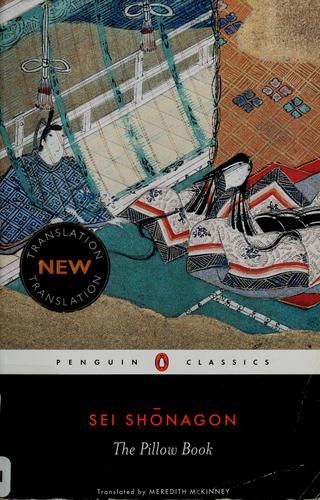
The Pillow Book
1002 book of observations and musings recorded by Sei Shōnagon
The Tales of Ise
Japanese collection of waka poems and associated narratives from the Heian period
Kokin Wakashū
10th century Japanese waka anthology
Shoku Nihongi
797 Book by Fujiwara no Tsuginawa
Konjaku Monogatarishū
literary work

Engishiki
The is a Japanese book of laws and customs. The major part of the writing was completed in 927.

Tosa Nikki
poetic diary written anonymously by the tenth-century Japanese poet Ki no Tsurayuki
Nihon Sandai Jitsuroku
901 Book by Fujiwara no Tokihira and Sugawara no Michizane about Japanese history

The Diary of Lady Murasaki
diary written by Murasaki Shikibu, author of The Tale of Genji.
Kujiki
, or , is a historical Japanese text. It was generally believed to have been one of the earliest Japanese histories until the middle of the Edo period, when scholars such as Tokugawa Mitsukuni and Tada Yoshitoshi successfully contended that it was an imitation based on the , the and the Kogo Shūi. Scholarship on the generally considers it to contain some genuine elements, specifically that Book 5 preserves traditions of the Mononobe and Owari clans, and that Book 10 preserves the earlier historical record the Kokuzō Hongi.
Nihon Kōki
840 Book by Fujiwara no Otsugu, Minamoto no Tokiwa and Fujiwara no Yoshifusa
Kogo Shūi
Historical record of the Inbe clan of Japan
Eiga Monogatari
literary work
Nihon Montoku Tennō Jitsuroku
879 Book by Fujiwara no Mototsune
Yamato Monogatari
literary work

Sarashina Nikki
memoir written by the daughter of Sugawara no Takasue, a lady-in-waiting of Heian-period Japan

Shūi Wakashū
the third imperial waka anthology of Japan, compiled by Emperor Kazan around 1005, containing 1351 poems in 20 volumes as an expansion of Fujiwara no Kintō’s Shūishō

Shoku Nihon Kōki
book by Fujiwara no Yoshifusa about Japanese history in the period 833–850, published in 869
Nihon Ryōiki
literary work
Ōkagami
is a Japanese historical tale written around 1119 by an unknown author. It covers the period from 850 to 1025, the golden days of the Fujiwara family's rule. It is called a , along with the records of the Eiga Monogatari.
Wamyō Ruijushō
Japanese dictionary of Chinese characters compiled by Minamoto no Shitagō from 934-938 CE.
Ochikubo Monogatari
story from the Heian period
Ennin's Diary
book by Ennin
Ishinpō
thumb|250px|The 22nd volume of the Ishinpō, which has the only illustration in the full text.
Utsubo Monogatari
10th century Japanese story
Shinsen Shōjiroku
imperially commissioned Japanese genealogical record

Kagerō Nikki
diary and a work of classical Japanese literature
Imakagami
The is a Japanese rekishi-monogatari (historical tale) written in the late Heian period. It is also called the or the .
Senzai Wakashū
seventh imperial waka anthology of Japan, compiled in 1187 by Fujiwara no Shunzei at the behest of the Retired Emperor Go-Shirakawa, who ordered it in 1183, containing 1285 poems in 20 volumes
Ryōjin Hishō
collection of Japanese folk songs
Shika Wakashū
sixth imperial anthology of Japanese waka, compiled in the 1150s at the behest of the Emperor Sutoku by Fujiwara no Akisuke
Wakan rōeishū
11th-century anthology of Chinese and Japanese poetry
Nihon Kiryaku
11th century Japanese historical text
Ruijū Kokushi
historical text that categorizes and chronologizes the events listed in the Six National Histories of Japan
Kin'yō Wakashū
5th imperial waka anthology, compiled in the 1120s at the behest of the Retired Emperor Shirakawa by Minamoto no Shunrai, consisting of 716 poems in 10 volumes; one of the shortest anthologies behind Shikashū
Honchō Monzui
Japanese book of Chinese prose and poetry
Torikaebaya Monogatari
Japanese tale from the late Heian period
Honchō Seiki
historical text
Tsutsumi Chūnagon Monogatari
post late-Heian period Japanese collection of short stories.
Sumiyoshi Monogatari
literary work
Shinkokushi
is an unfinished Japanese official historical work compiled, in part, by the early Heian period scholar , grandson of Ōe no Otondo, who had been one of the compilers of the Nihon Montoku Tennō Jitsuroku. After Asatsuna's death in 957, his cousin Ōe no Koretoki became the head compiler. It was supposed to succeed the Six National Histories.
Tenrei Banshō Meigi
oldest extant Japanese dictionary of Chinese characters
Shin'yō Wakashū
collection of Japanese poetry compiled by Munenaga Shinnō ca. 1381
Heian literature
Japanese literature of the Heian period
Sangō Shiiki
dialectic allegory
Keikokushū
The was the third imperially commissioned anthology of kanshi (poetry written in classical Chinese by Japanese poets). The text was compiled by Yoshimine no Yasuyo, Minabuchi no Hirosada, Sugawara no Kiyotomo, Yasuno no Fumitugu, Shigeno no Sadanushi, and Abe no Yoshihito under the command of Emperor Junna. The text was completed in 827, 13 years after the previous imperial collection, Bunka Shūreishū.
Ōjōyōshū
The was an influential medieval Buddhist text composed in 985 by the Japanese Buddhist monk Genshin. The text is a comprehensive analysis of Buddhist practices related to rebirth in the Pure Land of Amida Buddha, drawing upon earlier Buddhist texts from China, and sutras such as the Contemplation Sutra. Genshin advocated a collection of mutually supportive practices, such as sutra recitation, centered around visual meditation of Amitabha Buddha where later Pure Land sects favored an approach that relied on exclusive recitation of the verbal nembutsu. The text is also well known for its graphic