Category
page 1Lecanoromycetes genera

Rhizocarpon
Rhizocarpon is a genus of crustose, saxicolous (or sometimes lichenicolous), lichens in the family Rhizocarpaceae. The genus is common in arctic-alpine environments, but also occurs throughout temperate, subtropical, and even tropical regions. They are commonly known as map lichens because of the prothallus forming border-like bands between colonies in some species, like the common map lichen (Rhizocarpon geographicum).
Acarospora
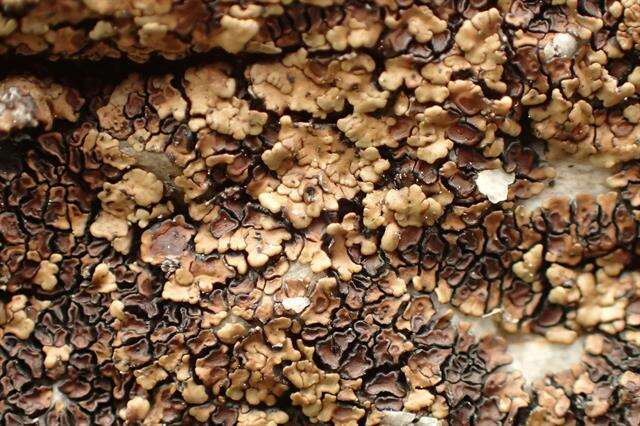
Acarospora is a genus of mostly lichen-forming fungi in the family Acarosporaceae. Most species in the genus are crustose lichens that grow on rocks in open and arid places all over the world. They may look like a cobblestone road or cracked up old paint, and are commonly called cobblestone lichens or cracked lichens. They usually grow on rock (are "saxicolous"), but some grow on soil (terricolous) or on other lichens. Some species in the genus are fungi that live as parasites on other lichens (lichenicolous fungi). Acarospora is a widely distributed genus, with about 128 species according to
.jpg)
Heterodermia
Heterodermia is a genus of foliose lichens in the family Physciaceae. The genus has a widespread distribution, especially in tropical regions, and contains about 70 species. Heterodermia was historically confused with the related genus Anaptychia, but was distinguished in 1965 based on differences in spore structure and chemical composition. These lichens can be identified in the field using simple chemical spot tests that produce distinctive colour changes when applied to the thallus. The lichens in this genus are small- to medium-sized, usually pale grey in colour, comprising narrow lobes wi

Sarcogyne
Sarcogyne is a genus of crustose lichen-forming fungi in the family Acarosporaceae. It was circumscribed by German botanist Julius von Flotow in 1850. A proposal has been put forth in 2021 to assign Sarcogyne clavus as the type species of the genus, "as it represents the original concept of Sarcogyne as having melanized apothecia without algae in the margin".

Sporastatia
Sporastatia is a genus of crustose lichens in the family Sporastatiaceae. It has four species. Sporastatia lichens are long-lived species that grow on siliceous or weakly calcareous rocks in arctic and alpine locales.

Pleopsidium
Pleopsidium is a genus of lichen-forming fungi in the family Acarosporaceae (order Acarosporales). The widespread genus was circumscribed by lichenologist Gustav Wilhelm Körber in 1855. After a 2025 revision of the genus, it comprises eight species.

Polysporina
Polysporina is a genus of fungi in the family Acarosporaceae. The genus was circumscribed by the Czech lichenologist Antonín Vězda in 1978. Some of the species form lichens, while others are species of lichenicolous (lichen-dwelling) fungi.

Coccodinium
Coccodinium is a genus of five species of fungi within the Coccodiniaceae family.

Myriospora
genus of fungi

Xerotrema
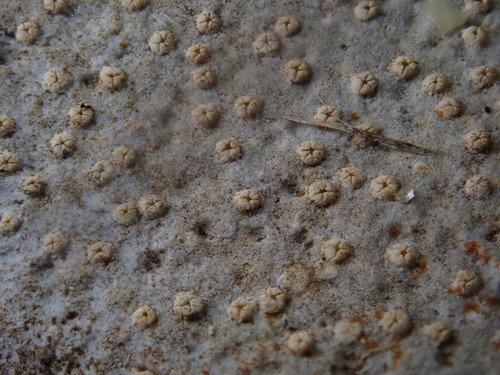
Xerotrema is a small genus of fungi in the family Odontotremataceae. It comprises two species. The genus was circumscribed by Martha Allen Sherwood and Brian John Coppins in 1980. The type species, Xerotrema megalospora, is found in the United States and Canada. X. quercicola was added to the genus in 2008. These fungi produce tiny, deeply cup-shaped fruiting bodies on weathered, barkless wood of conifers and hardwoods in temperate regions. While the genus was originally thought to be non-lichenized, at least one species appears to form facultative partnerships with green algae, meaning i
Petractis
Petractis is a small genus of lichen-forming fungi of uncertain familial and ordinal placement in the Lecanoromycetes. These inconspicuous lichens grow as thin crusts embedded within rock surfaces, partnering with cyanobacteria to form barely visible films that are primarily detected by their small, star-shaped fruiting bodies. The genus contains two species that typically inhabit calcareous rocks, where their fruiting structures create distinctive pits in the stone surface after they decay.

Schaereria
Schaereria is a genus of lichen-forming fungi. It is the sole genus in the family Schaereriaceae, which itself is the only family in the Schaereriales, an order in the subclass Ostropomycetidae of the class Lecanoromycetes. Most Schaereria species are crustose lichens that live on rocks. Schaereria was first proposed by Gustav Wilhelm Körber in 1855 and was later taken up by other lichenologists despite periods of disuse.

Piccolia
Piccolia is a small genus of crustose lichens in the class Lecanoromycetes. First circumscribed by Italian lichenologist Abramo Bartolommeo Massalongo in 1864, it contains ten species. Due to a lack of molecular data, it has not been assigned to an order or family.

Epilichen
Epilichen is a small genus of lichen-forming fungi in the family Rhizocarpaceae. These parasitic lichens live on other lichens, beginning as thin, crust-like patches that may break into small islands or scales, and in some cases produce no visible body at all except for their reproductive structures. They reproduce through black, disc-shaped fruiting bodies that contain distinctive brown spores with a "doughnut ring" appearance, and can eventually take over the space occupied by their host lichen once it dies.

Halecania
Halecania is a genus of fungi in the family Leprocaulaceae. It has 24 species. These lichens form inconspicuous, crust-like films that spread over rock or other surfaces, with colours ranging from chalky white through bluish-grey to brownish-grey and textures that can be cracked like dried mud, granular, or covered in tiny warts. They reproduce through small, disc-shaped fruiting bodies that contain eight colourless ascospores divided by a single cross-wall, with the spore envelope swelling conspicuously when treated with certain chemicals—a key identifying feature.

Thelenella
Thelenella is a genus of lichen-forming fungi in the family Thelenellaceae. These inconspicuous lichens form thin, crust-like growths that are tightly attached to their substrates and appear as dull whitish, pale grey, or light brown patches. Species of Thelenella are commonly found in damp, shaded environments where they grow on tree bark, living leaves, moss cushions, rock faces, and moss-rich soil. The genus is distinguished by its thick-walled fruiting bodies that are mostly embedded within the lichen crust and contain multicellular spores with multiple cross-walls.
Arthrorhaphis
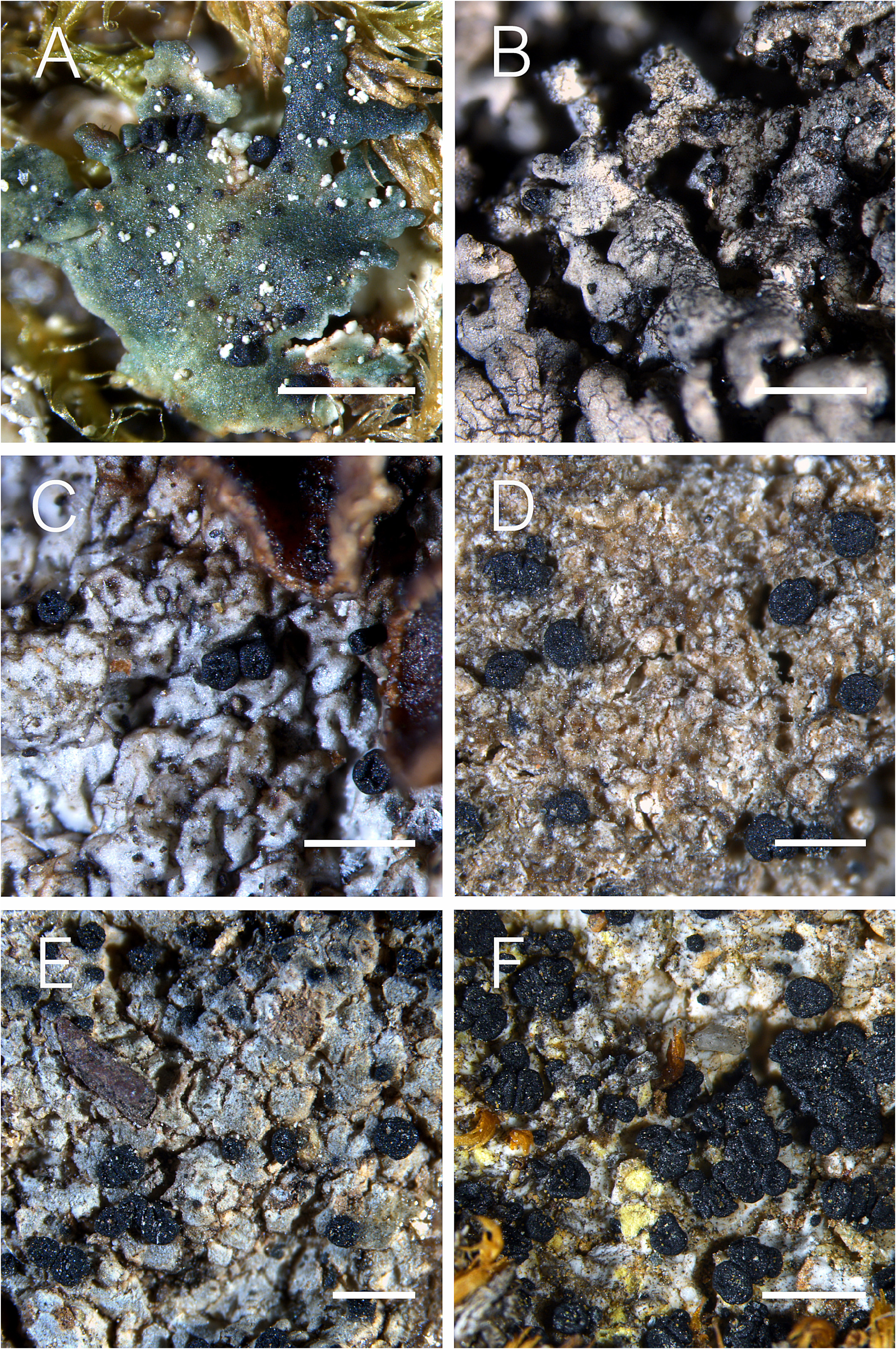
Arthrorhaphis is a genus of fungi in the monotypic family Arthrorhaphidaceae. It has 13 species. Species in this family have a widespread distribution in temperate and montane habitats. They grow symbiotically with green algae, or parasitically on other lichens. These fungi typically start as parasites on other lichens but can later become free-living, forming bright greenish-yellow to greyish scales on acidic soils and weathered rocks in cool upland regions.
Eiglera
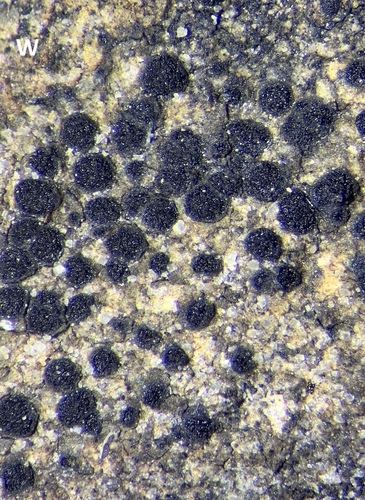
Eiglera is a small genus of rock-dwelling crustose lichens belonging to the monotypic family Eigleraceae. Eiglera species are found in Europe and Northern America.

Glypholecia
Glypholecia is a genus of lichenized fungi in the family Acarosporaceae.

Julella
Julella is a genus of ascomycete fungi. Most species are non-lichenised, bark-dwelling saprophytes, though some collections appear to be facultatively lichenised with the green alga Trentepohlia. The fungi produce immersed, black, flask-shaped perithecia with a dark . Their asci are double-walled and contain two or eight large, colourless, (multi-chambered) ascospores. Asexual fruiting bodies (pycnidia) produce simple, rod-shaped conidia. No secondary metabolites are known. The genus was introduced by Jean-Henri Fabre in 1879. Modern treatments recognise only a few species, and its family plac

Leprocaulon
Leprocaulon is a genus of lichen-forming fungi in the family Leprocaulaceae. Members of the genus Leprocaulon are commonly called cottonthread lichens. These small lichens typically form soft, powdery coatings on their growing surfaces, sometimes developing tiny white thread-like structures that create a cottony appearance. The genus contains eleven recognised species found primarily in North America and Europe.

Biatorella
Biatorella is a genus of lichen-forming fungi in the family Biatorellaceae.

Loxospora
Loxospora is a genus of lichen-forming fungi in the family Sarrameanaceae. The genus was established in 1852 by the Italian lichenologist Abramo Bartolommeo Massalongo and originally included species now placed in other genera. Molecular phylogenetics studies have revealed that several species previously assigned to Loxospora actually belong to a separate lineage, leading to the creation of the new genus Chicitaea in 2024. These lichens form crusty growths on bark and rock surfaces, with some species producing powdery reproductive structures whilst others develop disc-shaped fruiting bodies.
Poeltinula
Poeltinula is a small genus of lichen-forming fungi in the family Rhizocarpaceae. It comprises three species of crustose lichens that grow on limestone. The genus was established in 1984 by the lichenologist Josef Hafellner and is characterized by its inconspicuous, paint-like growth that often goes unnoticed until the distinctive black fruiting bodies appear. These lichens are recognized by their dark spores that turn bright red when treated with ammonia solution and their fruiting bodies that turn crimson when tested with potassium hydroxide solution.

Thrombium
Thrombium is a genus of lichen-forming fungi in the family Protothelenellaceae. The genus was established in 1831 by the German lichenologist Karl Friedrich Wilhelm Wallroth, who originally described numerous species under this name. Thrombium species are characterized by their extremely thin, often barely visible crusty thalli and tiny black fruiting bodies embedded in the substrate. These lichens grow on soil, rocks, mosses, and plant debris in various habitats around the world. The genus has undergone significant taxonomic revision over the years, with DNA studies confirming its placement i

Aspilidea
Aspilidea is a genus of rock-dwelling crustose lichens in the family Megasporaceae (order Pertusariales). It was introduced for the species Aspilidea myrinii, but a five-locus phylogenetic study recovered two distinct taxa in the genus and treated Aspilidea as an early-diverging lineage within Megasporaceae. In the same study, all North American records previously attributed to A. myrinii were found to be misidentifications, with many representing a second species, Aspilidea subadunans.