Category
page 1Leptodactylidae

Leptodactylidae
The southern frogs form the Leptodactylidae, a name that comes from Greek meaning a bird or other animal having slender toes. They are a diverse family of frogs that most likely diverged from other hyloids during the Cretaceous. The family has undergone major taxonomic revisions in recent years, including the reclassification of the former subfamily Eleutherodactylinae into its own family the Eleutherodactylidae; the Leptodactylidae now number 206 species in 13 genera distributed throughout Mexico, the Caribbean, and Central and South America. The family includes terrestrial, burrowing, aquati

Physalaemus
thumb|Physalaemus marmoratus
thumb|Physalaemus maculiventris
thumb|Physalaemus olfersii
Physalaemus is a large genus of leptodactylid frogs. These frogs, sometimes known as dwarf frogs or foam frogs, are found in South America. It is very similar to Leptodactylus, a close relative, and indeed the recently described Leptodactylus lauramiriamae is in some aspects intermediate between them. They have been described by researchers as presenting one of the most puzzling taxonomic histories among Neotropical anurans because of the occurrence of highly polymorphic and cryptic species.
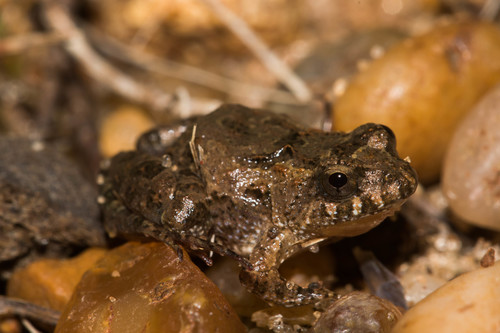
Pseudopaludicola
Pseudopaludicola is a genus of leptodactylid frogs from lowland northern and central South America. They are known under the common name dwarf swamp frogs or swamp frogs.
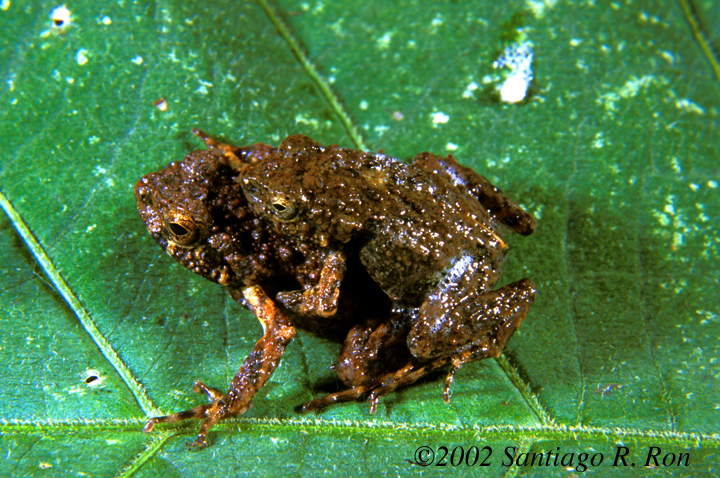
Engystomops
Engystomops is a genus of frogs in the family Leptodactylidae. They are commonly known as foam frogs or túngara frogs, though the latter name most commonly refers to Engystomops pustulosus. They are native to the Americas from southern Mexico south to the Amazon Basin.
Paratelmatobius
Paratelmatobius is a genus of frogs in the family Leptodactylidae. They are endemic to southern Brazil.

Edalorhina
Edalorhina is a small genus of leptodactylid frogs. They are found in Colombia, Ecuador, Peru, and western Brazil. They are sometimes known as the snouted frogs.
%20Figure%206%20(cropped).png)
Sapito Listado
Lithodytes is a genus of frogs in the family of Leptodactylidae. It is monotypic, being represented by the single species, Lithodytes lineatus, also commonly known as the gold-striped frog or painted antnest frog. It is found in tropical South America where it lives in humid forests among the leaf litter. These frogs build foam nests at the edge of temporary pools, and the tadpoles develop within these. The frogs also associate with certain leafcutter ants (Atta cephalotes) and breed inside their nests without being attacked by the ants.

Scythrophrys sawayae
Scythrophrys is a genus of frogs in the family Leptodactylidae. It is monotypic, being represented by the single species, Scythrophrys sawayae, commonly known as the Banhado frog, after its type locality. It is endemic to Serra do Mar in Paraná and Santa Catarina states, south-eastern Brazil. Its natural habitats are secondary and old growth forests; reproduction takes place in temporary pools. Its populations are scattered but it is locally common. It is threatened by habitat loss. This species was first described in 1953 by the American herpetologist Doris Mable Cochran whose research was fo
Leiuperinae
The Leiuperinae are a subfamily of frogs in the family Leptodactylidae. Over 90 species are in five genera. The distribution of this subfamily is from southern Mexico to the Central America and much of South America.
Rupirana
Rupirana is a genus of frogs in the family Leptodactylidae. It is monotypic, being represented by the singles species Rupirana cardosoi. The specific name cardosoi honors Adão José Cardoso, a Brazilian herpetologist. It is endemic to northern Espinhaço Mountains, Bahia, Brazil.