Category
page 1Leptothecata

Leptothecata
Leptothecata, or thecate hydroids, are an order of hydrozoans in the phylum Cnidaria. Their closest living relatives are the athecate hydroids, which are similar enough to have always been considered closely related, and the very apomorphic Siphonophorae, which were placed outside the "Hydroida". Given that there are no firm rules for synonymy for high-ranked taxa, alternative names like Leptomedusa, Thecaphora or Thecata, with or without the ending emended to "-ae", are also often used for Leptothecata.

Campanulariidae
Campanulariidae is a family of hydrozoans in the phylum Cnidaria, or stinging-celled animals. Campanulariidae is composed entirely of hydoids, a Greek term meaning "water animals" applied to the plant-like polyp colonies of the class Hydrozoa. All species of the Campanulariidae are aquatic in habitat, primarily inhabiting coastal regions and tidal pools.

Aequoreidae
Aequoreidae is a family of hydrozoans, sometimes called the many-ribbed jellies or many-ribbed jellyfish. There are approximately 30 known species found in temperate and tropical marine coastal environments. Aequoreids include Aequorea victoria, the organism from which the green fluorescent protein gene was isolated.
thumb|This map shows the distribution of the Aequoreidae family across the Pacific, Atlantic, and Indian ocean.
Eirenidae
Eirenidae is a family of hydrozoans.
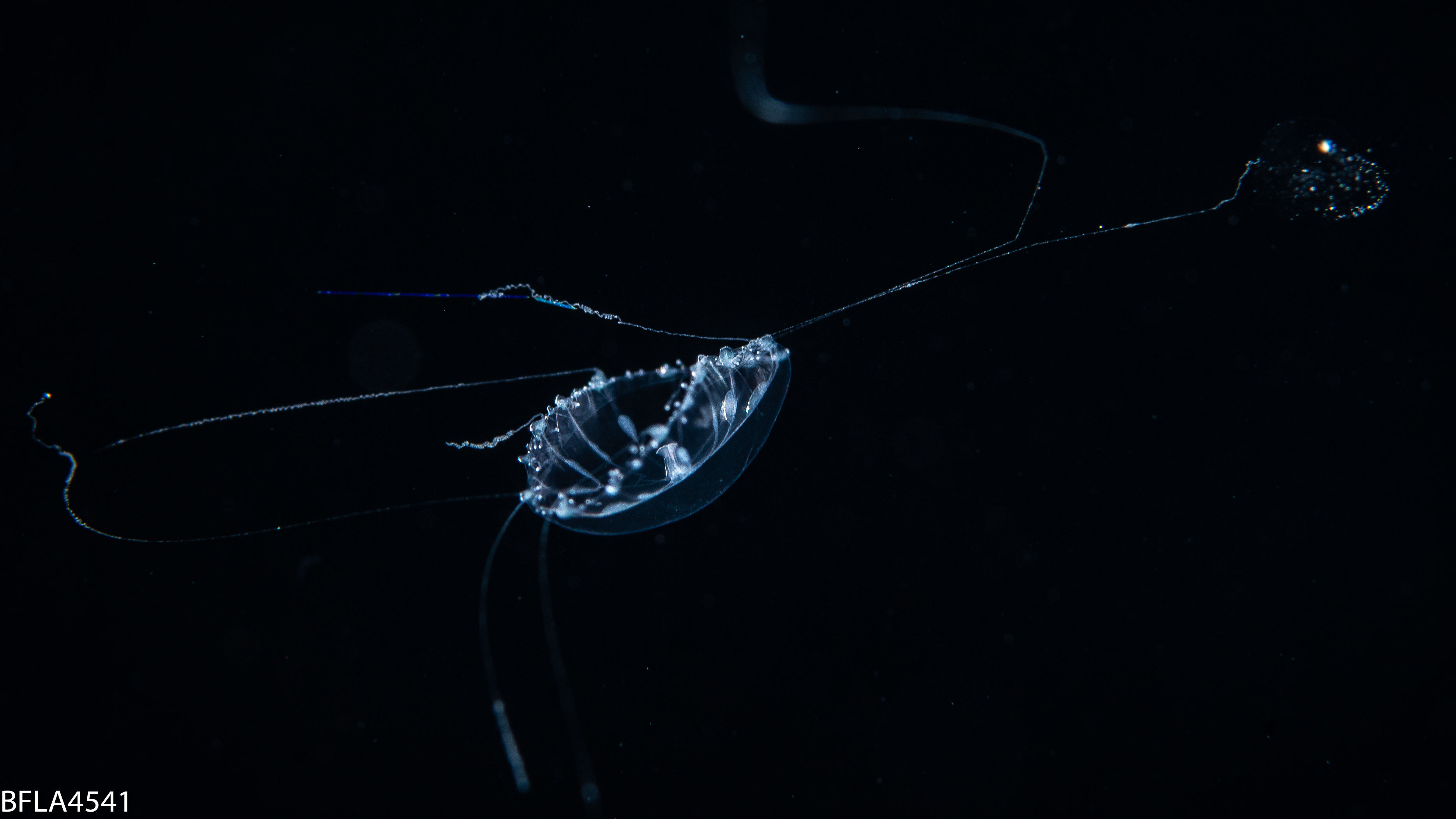
Orchistoma
Orchistoma is a genus of hydrozoans in the order Leptothecata. It is the only genus in the monotypic family Orchistomatidae.
Lovenellidae
__NOTOC__
Tiarannidae
Tiarannidae is a family of hydrozoans belonging to the order Leptothecata.
Lafoeidae
Lafoeidae is a family of hydrozoans.

Haleciidae
Haleciidae is a family of hydrozoans. Their hydroid colonies emerge from a creeping hydrorhiza and usually form upright branching colonies, although some species' colonies are stolonal. Their gonophores are typically sporosacs, growing singly or bunched into a glomulus. They remain attached to the hydroids or break off to be passively drifted away; in a few, the gonophores are naked.
Campanulinidae
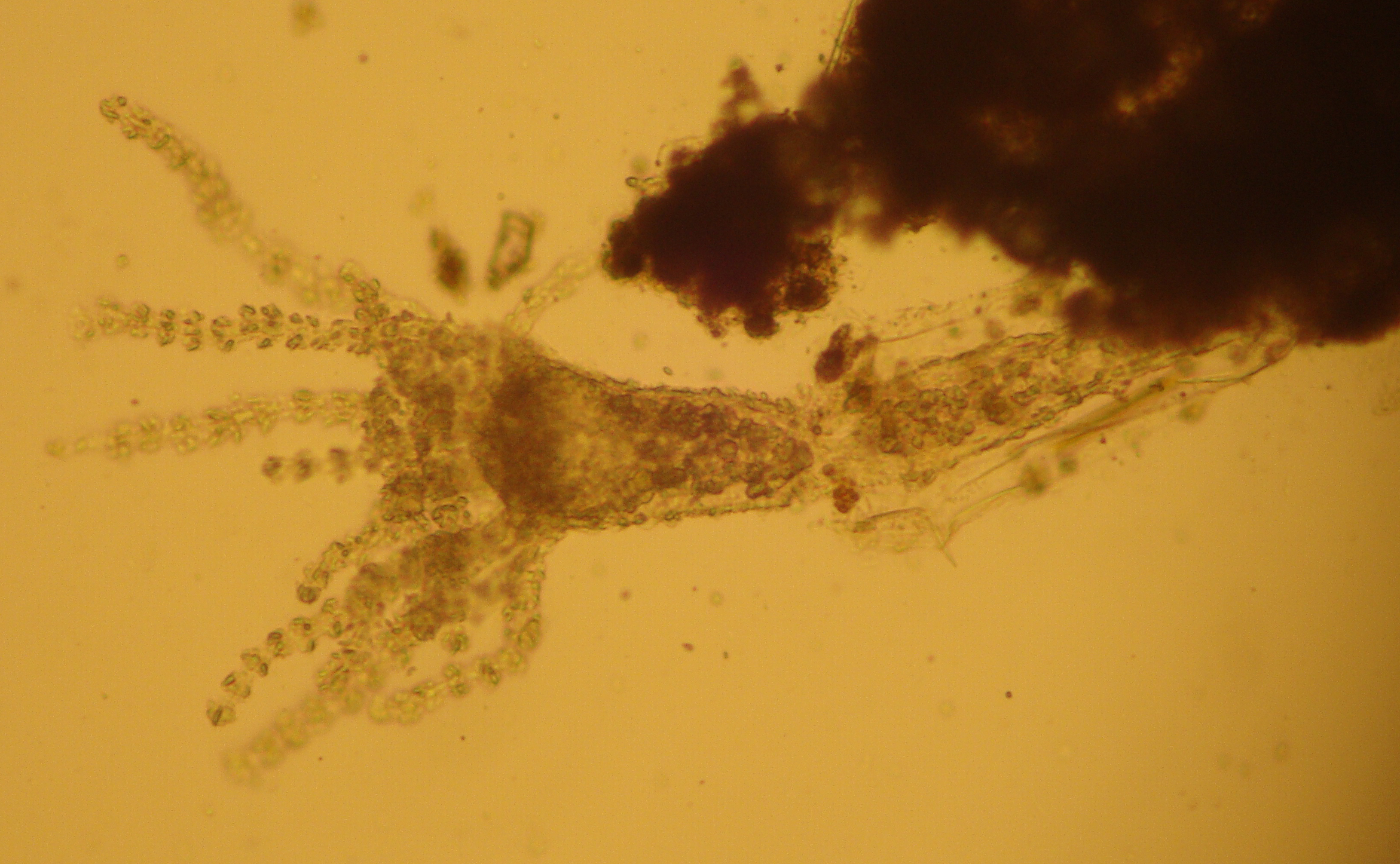
Campanulinidae is a family of cnidarians belonging to the order Leptomedusae.
Clathrozoella
Clathrozoella is a genus of hydrozoans in the order Anthoathecata. It is the only genus in the monotypic family Clathrozoellidae.
Syntheciidae
Syntheciidae is a family of hydrozoans belonging to the order Leptothecata.
Teclaiidae
Teclaiidae is a family of hydrozoans belonging to the order Leptothecata.
Melicertidae
Melicertidae is a family of hydrozoans belonging to the order Leptothecata.
Mitrocomidae
Mitrocomidae is a family of hydrozoans in the order Leptothecata.
Dipleurosomatidae
Dipleurosomatidae is a family of hydrozoans belonging to the order Leptothecata.
Malagazziidae
Malagazziidae is a family of hydrozoans.
Tiaropsidae
Tiaropsidae is a family of hydrozoans belonging to the order Leptothecata.
Cirrholoveniidae
Cirrholovenia is a genus of cnidarians belonging to the family Cirrholoveniidae.
Laodiceidae
Laodiceidae is a family of cnidarians belonging to the order Leptomedusae.
Laodicea
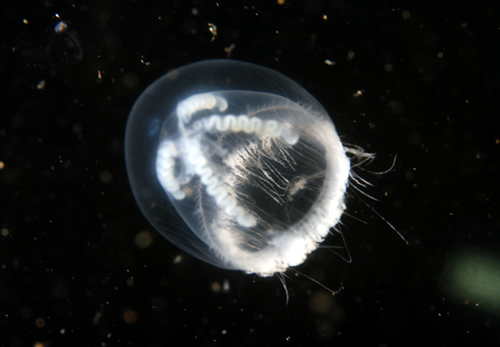
genus of cnidarians
Blackfordiidae
Blackfordiidae is a family of cnidarians belonging to the order Leptothecata. The family consists of only one genus: Blackfordia Mayer, 1910.
Hebellidae
Hebellidae is a family of hydrozoans in the order Leptothecata.
Clathrozoidae
Clathrozoidae is a family of hydrozoans belonging to the order Leptothecata.
Lineolariidae
Lineolariidae is a family of cnidarians belonging to the order Leptomedusae.

Laodicea undulata
species of cnidarian
Barcino foixensis
species of cnidarian