Category
page 1Letter writers in Latin

Augustine of Hippo
Christian theologian, philosopher, and saint (354–430)

Cicero
Marcus Tullius Cicero ( , ; 3 January 106 BC – 7 December 43 BC) was a Roman statesman, lawyer, scholar, philosopher, orator, and writer who tried to uphold principles during the political crises of the Roman Republic that led to the establishment of the Roman Empire. The extensive writings of Cicero include treatises on rhetoric, philosophy, and politics. He is considered one of Rome's greatest orators and prose stylists and the innovator of what became known as "Ciceronian rhetoric". Cicero was educated in Rome and in Greece. He came from a wealthy municipal () family of the Roman

Seneca
Roman Stoic philosopher, statesman and dramatist (c. 4 BCE–65 CE)
.jpg)
Erasmus
Desiderius Erasmus Roterodamus ( ; ; 28 October c. 1466 – 12 July 1536), commonly known in English as Erasmus of Rotterdam or simply Erasmus, was a Dutch humanist, Christian theologian, and pioneering philologist and educationalist. He was, through his writings and translations, one of the most influential scholars of the Northern Renaissance and a major figure of Western culture.

Thomas More
English statesman, lawyer and philosopher (1478–1535)
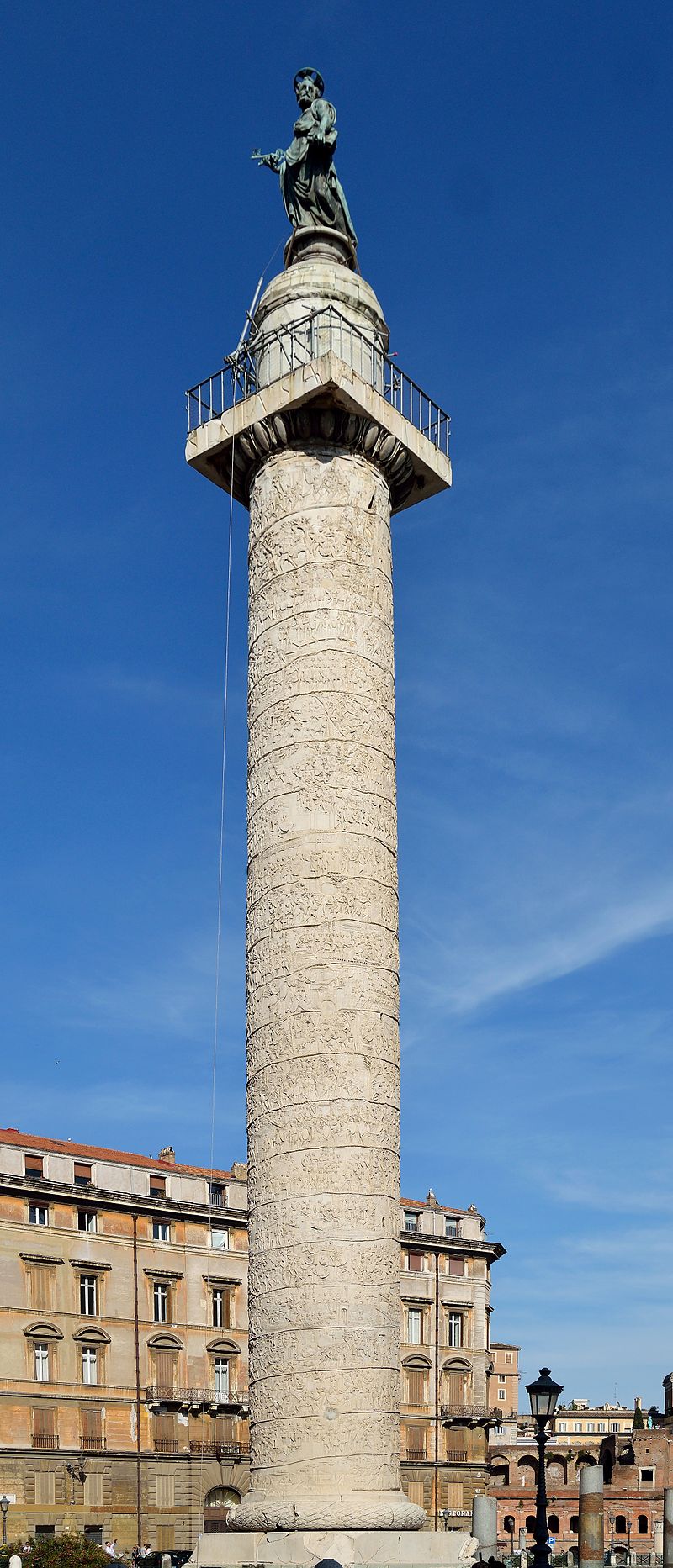
Trajan
Trajan ( ; born Marcus Ulpius Traianus, 18 September 53) was a Roman emperor from AD 98 to 117, remembered as the second of the Five Good Emperors of the Nerva–Antonine dynasty. He was a philanthropic ruler and a successful soldier-emperor who presided over one of the greatest military expansions in Roman history, during which, by the time of his death, the Roman Empire reached its maximum territorial extent. He was given the title of optimus princeps ('the best ruler') by the Roman Senate.

Jerome
Jerome (; ; ; – 30 September 420), also known as Jerome of Stridon, was an early Christian priest, confessor, theologian, translator, and historian; he is commonly known as Saint Jerome.

Pliny the Younger
Roman lawyer, author and magistrate (61 – c.113)

Ambrose
Ambrose of Milan (; 4 April 397), canonized as Saint Ambrose, was a theologian and statesman who served as Bishop of Milan from 374 to 397.

Innocent I
early medieval pope (???-417)

Vigilius
pope

Cassiodorus
Magnus Aurelius Cassiodorus Senator (c. 485 – c. 585), commonly known as Cassiodorus (), was a Roman statesman, scholar, and writer who served in the administration of Theodoric the Great, king of the Ostrogoths. Senator was part of his surname, not his rank. In his later years, he devoted himself to Christian learning and founded the Vivarium monastery, where he worked extensively during the final decades of his life.

Sidonius Apollinaris
Gaulish poet, aristocrat and bishop (430-489)

Pelagius
Pelagius ( ; 354–418) was a Christian theologian known as an ascetic monk and promoting a system of doctrines (termed Pelagianism by the Catholic Church) which emphasized human choice in salvation and denied original sin. Pelagius was accused of heresy at the Synod of Diospolis in 415 and his doctrines were harshly criticized by Augustine of Hippo, especially the Pelagian views about mankind's good nature and individual responsibility for choosing asceticism. Pelagius especially stressed the freedom of human will. Very little is known about the personal life and career of Pelagius, although he

Peter Chrysologus
Bishop of Ravenna

Marcus Cornelius Fronto
2nd century Roman rhetorician and advocate

Quintus Aurelius Symmachus
consul of the Roman Empire 391, orator (340-402)
Saint Remigius
French archbishop and saint

Paulinus of Nola
Christian bishop and saint
Cornelia
2nd century BC Roman noblewoman, mother of the Gracchi
Hosius of Corduba
Spanish bishop (256–359)

Ingeborg of Denmark, Queen of France
Queen Consort of France
Magnus Felix Ennodius
Bishop of Pavia
Caesarius of Arles
Merovingian archbishop and saint
Eucherius of Lyon
5th century Bishop of Lyon
Avitus of Vienne
Archbishop of Vienne
Eusebius of Vercelli
Catholic bishop and saint
Pacian
Saint Pacian (Pacianus) () ( 310–391 AD) was an early Spanish Christian prelate.
Sulpicius the Pious
French bishop and saint
Lupus of Troyes
christian bishop, saint

Fructuosus of Braga
Bishop of Dumio
Germain of Paris
Bishop of Paris
Eugippius
Eugippius (circa 460 – circa 535, Castellum Lucullanum) was a disciple and the biographer of Saint Severinus of Noricum.
Claudianus Mamertus
Gallo-Roman theologian
Nicetius
Saint Nicetius () (c. 525 - c. 566) was a bishop of Trier, born in the latter part of the sixth century, exact date unknown; died in 563 or more probably 566.
Berhtwald
Berhtwald (died 731) was the ninth Archbishop of Canterbury in England. His predecessor had been Theodore of Tarsus. Berhtwald begins the first continuous series of native-born Archbishops of Canterbury, although there had been previous Anglo-Saxon archbishops, they did not succeed each other until Berhtwald's successor Tatwine.
Ruricius
Ruricius I (c. 440c. 510) was a Gallo-Roman aristocrat and bishop of Limoges from c. 485 to 510. He is one of the writers whose letters survive from late Roman Gaul, depicting the influence of the Visigoths on the Roman lifestyle. He should not be confused with his son-in-law, Saint Rusticus (Archbishop of Lyon).
Ælfflæd of Whitby
Abbess of Whitby
Trojanus of Saintes
Frankish bishop of Saintes (6th century)
Acca of Hexham
8th-century Bishop of Hexham
Francesco da Barberino
Italian poet

Saint Pammachius
Pammachius (d. 410 AD) was a Roman senator who is venerated as a saint in the Eastern Orthodox and Roman Catholic Churches. He married Paulina. After her death, he gave himself up to works of charity.
Cuthbert of Canterbury
Archbishop of Canterbury; Bishop of Hereford

Didier of Cahors
Merovingian official

Constantius of Lyon
Roman Gaul cleric and writer
Dietmar I, Archbishop of Salzburg
archbishop of Salzburg from 873-907
Bregowine
Bregowine (died August 764) was a medieval Archbishop of Canterbury. Little is known of his origins or his activities as archbishop, although a number of stories were told about his possible origins after the Norman conquest in 1066. There are no records of him prior to his becoming archbishop. He possibly owed his elevation to the Kentish monarch. The records after his elevation to Canterbury are mainly about disputes over land, but knowledge of his time in office is hampered by the destruction of many of the contemporary records. After his death, he was considered a saint and a life about hi
Damian of Pavia
bishop of Pavia
Megingoz of Würzburg
German bishop
Aldric of Le Mans
Bishop of Le Mans and saint
Eutropius of Valencia
bishop of Valencia and originally abbot of the monastery of Servitanum
Claudia Severa
Roman writer
Milred
Milred (died 774) (also recorded as Mildred and Hildred) was an Anglo-Saxon prelate who served as Bishop of Worcester from until his death in 774.
Higbald of Lindisfarne
Bishop of Lindisfarne
Mensurius
Mensurius was a bishop of Carthage in the early 4th century during the early Christian Church.
Daniel of Winchester
Bishop of Winchester