Category
page 1Lichenicolous fungi
Phoma
Phoma is a genus of common coelomycetous soil fungi. It contains many plant pathogenic species.

Abrothallus
Abrothallus is a genus of lichenicolous (lichen-dwelling) fungi. It is the only genus in the monotypic family Abrothallaceae, which itself is the sole taxon in the order Abrothallales. Species produce small, blackish, nearly spherical fruiting bodies on the surface of their host lichens, often dusted with green or yellow powder (pruina). About 44 species are accepted, most of them parasites of leafy or shrubby macrolichens.
Athelia
genus of fungi
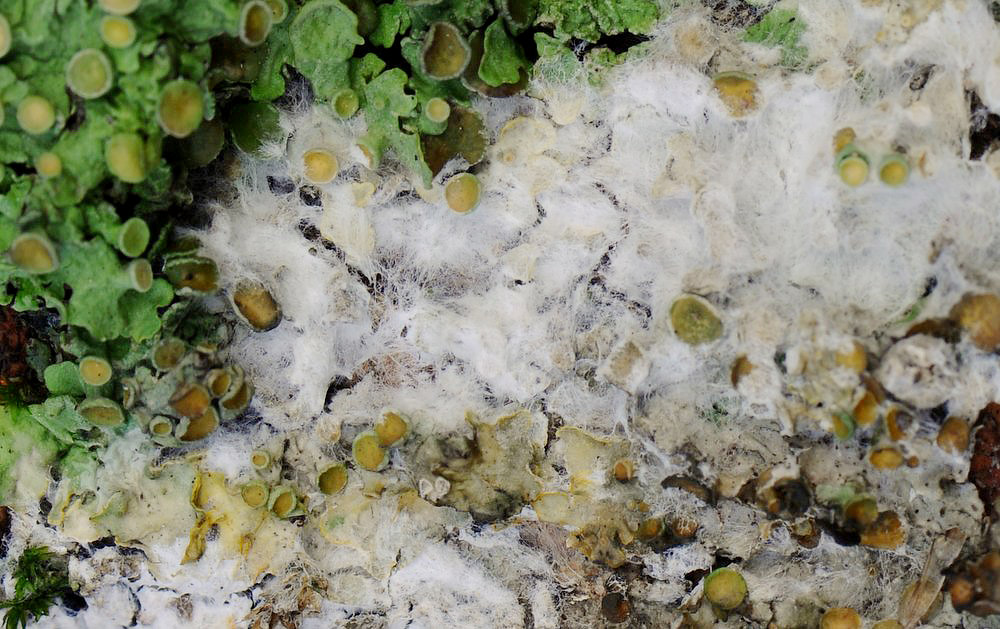
Athelia arachnoidea
species of fungus
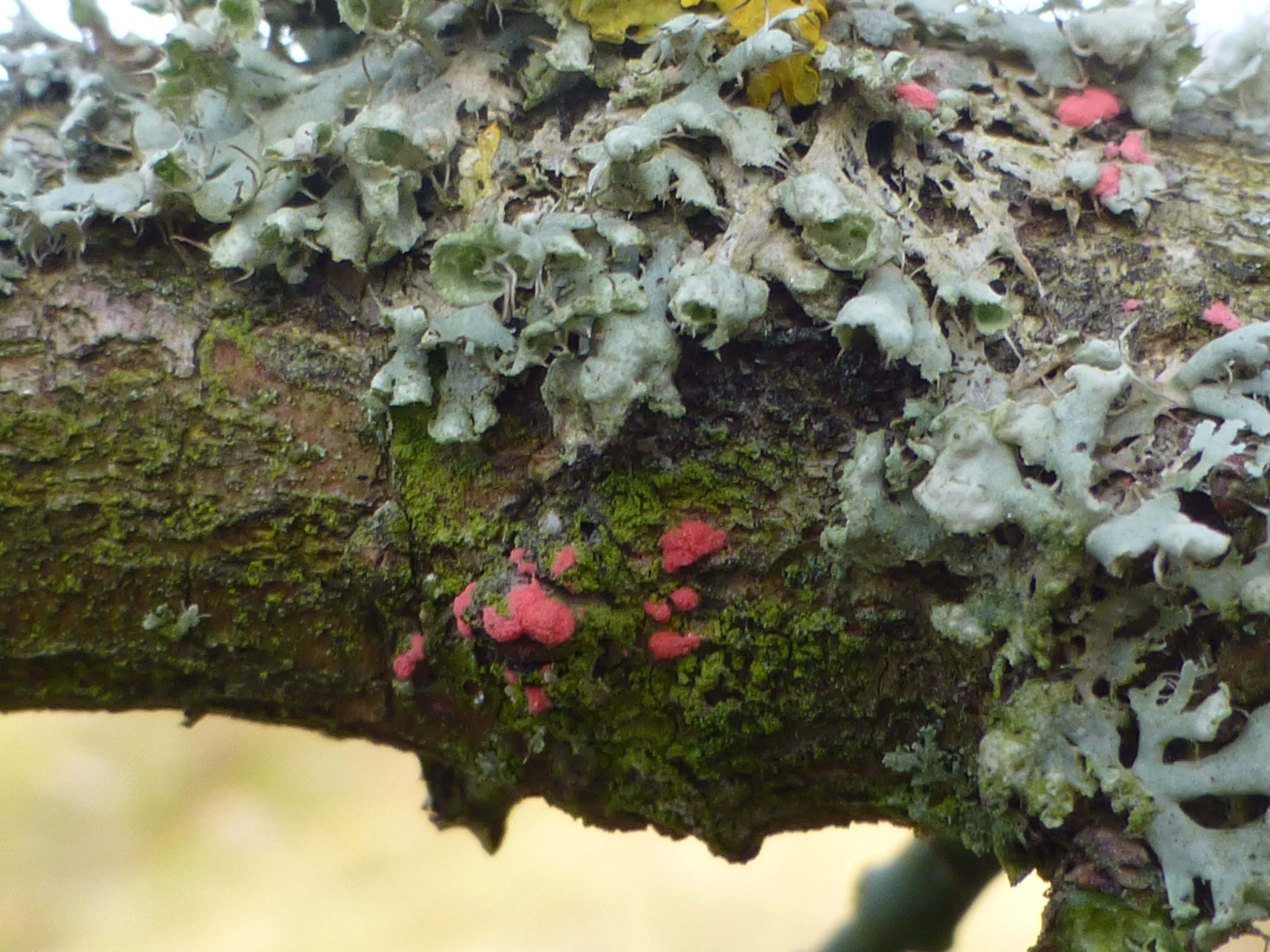
Illosporiopsis christiansenii
species of fungus
Taeniolella
Taeniolella is a genus of asexual fungi hyphomycetes in the family Mytilinidiaceae. Some of the species are lichenicolous (lichen-dwelling), others are saprophytic, while others are endophytic. The genus was circumscribed in 1958 by Canadian mycologist Stanley John Hughes, with Taeniolella exilis as the type species. Major revisions of the lichenicolous species in the genus were published in 2016 and 2018.
Antennulariellaceae
The Antennulariellaceae are a family of fungi in the Ascomycota, class Dothideomycetes. The family was named by Nikolai Nikolaevich Woronichin in 1925 to contain the genus Antennulariella that he had described a decade earlier in 1915. Species in the family have a widespread distribution, and are found in warm temperate to tropical locations, where they grow as black sooty molds on plants.
Dacampiaceae
Dacampiaceae is a family of fungi belonging to the order Pleosporales. The family was circumscribed in 1855 by the German lichenologist Gustav Wilhelm Körber.
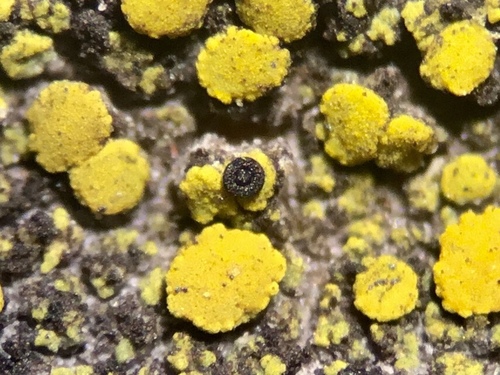
Carbonea
Carbonea is a genus of fungi in the family Lecanoraceae. Most of the species grow on lichens. The genus is widespread, and contains 20 species. Carbonea was originally circumscribed as a subgenus of Lecidea in 1967 before it was promoted to generic status in 1983.
Abrothallus parmeliarum
species of fungus
Stigmidium
Stigmidium is a genus of lichenicolous (lichen-dwelling) fungi in the family Mycosphaerellaceae.
Melaspilea
Melaspilea is a genus of fungi in the family Melaspileaceae. The genus includes both lichen-forming species that grow on tree bark and lichenicolous species that parasitise other lichens. Originally, Melaspilea encompassed a broad and diverse group of species, but a 2015 molecular study narrowed its circumscription, showing that many species historically placed in the genus actually belonged to unrelated lineages. In its current sense, Melaspilea belongs to the family Melaspileaceae and order Eremithallales within Dothideomycetes and is characterised by dark fruiting bodies with single-septum
Zwackhiomyces
Zwackhiomyces is a genus of lichenicolous (lichen-dwelling) fungi in the family Xanthopyreniaceae.
Adelococcaceae
The Adelococcaceae are a family of fungi in the order Verrucariales. Species are mostly found in north temperate regions, and are biotrophic or necrotrophic on lichens. The family was proposed by mycologist Dagmar Triebel in 1993.
Pronectria
Pronectria is a genus of fungi in the family Bionectriaceae. It consists of 44 species, all of which are lichenicolous. The genus was circumscribed by American plant ecologist Frederic Clements in 1931.
Carbonea vitellinaria
species of fungus
Ampelomyces
Ampelomyces is a genus of mycoparasitic fungi in the family Phaeosphaeriaceae. Ampelomyces parasitizes the group of fungal plant pathogens known as powdery mildews (Erysiphales). The type species is Ampelomyces quisqualis which was circumscribed by Italian botanist Vincenzo de Cesati in Klotzsch, Bot. Ztg. vol.10 on page 301 in 1852.
Lichenoconium
Lichenoconium is a genus of lichenicolous (lichen-dwelling) fungi belonging to the family Lichenoconiaceae.
Didymocyrtis
genus of fungi
Lichenopeltella santessonii
species of fungus
Niesslia
Niesslia is a genus of fungi in the family Niessliaceae. It was circumscribed by German mycologist Bernhard Auerswald in 1869, with Niesslia chaetomium assigned as the type species.
Lichenicolous fungus
parasitic fungus that only lives on lichen
Marchandiomyces corallinus
species of fungus
Phacopsis
Phacopsis is a genus of lichenicolous (lichen-dwelling) fungi. They are parasites of members of the large lichen family Parmeliaceae, of which they are also a member. Originally proposed by Edmond Tulasne in 1852 to contain 3 species, Phacopsis now contains 10 species, although historically, 33 taxa have been described in the genus. Many of the species are poorly known, some of them having been documented only from the type specimen.
Cercidospora
Cercidospora is a genus of fungi in the class Dothideomycetes. The relationship of this taxon to other taxa within the class is unknown (incertae sedis). The genus was first described by Gustav Wilhelm Körber in 1865; it is synonymous with the name Prolisea described by Frederick Edward Clements in 1931.
Sclerococcum
Sclerococcum is a genus of lichenicolous fungi in the family Dactylosporaceae.
Xenonectriella
Xenonectriella is a genus of lichenicolous fungi in the family Nectriaceae. The genus was circumscribed by lichenologist Josef Karl Weese in 1919, with Xenonectriella lutescens assigned as the type species.

Biatoropsis usnearum
species of fungus
Scutula
Scutula is a genus of lichenicolous fungi in the family Ramalinaceae.
Trichosphaerella
Trichosphaerella is a genus of lichenicolous fungi in the family Niessliaceae.
Clypeococcum
Clypeococcum is a genus of lichenicolous fungi belonging to the family Polycoccaceae.
Lichenochora
Lichenochora is a genus of fungi in the family Phyllachoraceae. It has 44 species. All species in the genus are lichenicolous, meaning they grow parasitically on lichens. The genus was circumscribed by Josef Hafellner in 1989, with Lichenochora thallina assigned as the type species.
Plectocarpon
Plectocarpon is a genus of lichenicolous (lichen-dwelling) fungi in the family Lecanographaceae. The genus, which was established in 1825 by the French botanist Antoine Laurent Apollinaire Fée, contains about 30 species that live as parasites on other lichens rather than forming their own independent body (thallus). These fungi are recognized by the small, wart-like swellings they create on their host lichens and by their distinctive dark fruiting bodies that often contain a green pigment that dissolves when treated with potassium hydroxide solution.
Arthonia graphidicola
species of fungus
Capronia normandinae
species of fungus
Cercidospora macrospora
species of fungus

Phacopsis vulpina
species of fungus
Lichenopeltella cladoniarum
species of fungus
Tremella normandinae
species of fungus
Arthonia thelotrematis
species of fungus
Lichenostigma
Lichenostigma is a genus of fungi in the family Phaeococcomycetaceae. It includes several species which are lichenicolous (i.e. parasitic on lichens). The genus was circumscribed in 1983 by the Austrian mycologist Josef Hafellner, with Lichenostigma maureri assigned as the type species.
Arthonia epiphyscia
species of fungus
Lichenopeltella
Lichenopeltella is a genus of fungi in the family Microthyriaceae. It comprises about 50 species. The genus was established in 1919 by the mycologist Franz Xaver Rudolf von Höhnel, and its classification within fungal families has been revised several times as scientists better understand its relationships. Nearly all species in the genus are specialized parasites that live on lichens rather than forming lichens themselves, often targeting specific host species. These fungi are found worldwide and are recognized by their tiny, shield-like fruiting bodies that develop on the surface of their li
Lichenopeltella cetrariicola
species of fungus
Lichenoconium reichlingii
species of fungus
Lichenopeltella stereocaulorum
species of fungus
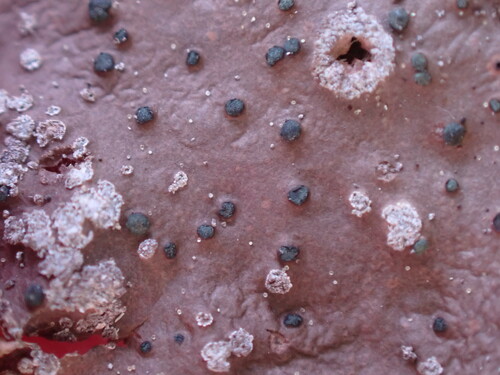
Abrothallus welwitschii
species of fungus
Candelariella lichenicola
species of fungus
Cercidospora stereocaulorum
species of fungus
Rhagadostoma
Rhagadostoma is a genus of fungi in the family Nitschkiaceae. All species in the genus are lichenicolous, meaning they live parasitically on lichens.
Muellerella
Muellerella is a genus of lichenicolous lichens in the family Verrucariaceae. The genus has a widespread distribution, especially in northern temperate areas, and contains species that live on other lichens, or on liverworts.
Cecidonia
Cecidonia is a genus of lichenicolous (lichen-dwelling) fungi in the family Lecideaceae. It has two species. These fungi create distinctive white, warty swellings or galls up to 6 mm across on the surface of their rock-dwelling lichen hosts, which then develop small black fruiting bodies. The genus name refers to this gall-forming behaviour, and the two species primarily attack crustose lichens that grow on siliceous rocks.
Hemigrapha
Hemigrapha is a genus of fungi in the family Hemigraphaceae. The genus was established in 1975 and currently includes nine recognised species. These fungi are parasites that grow on other lichens, producing distinctive flat, star-shaped or elongated black fruiting bodies on their host's surface.
Lichenosticta
Lichenosticta is a genus of fungi of uncertain familial placement in the order Lecanorales. It has five species. All species are lichenicolous, meaning they are parasitic on lichens.
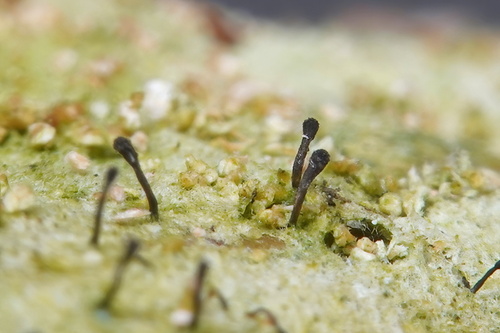
Mycocalicium
Mycocalicium is a genus of fungi in the family Mycocaliciaceae. The genus was circumscribed by Finnish lichenologist Edvard August Vainio in 1890.
Arthonia cohabitans
species of fungus
Sphaerellothecium stereocaulorum
species of fungus
Buelliella
Buelliella is a genus of lichenicolous (lichen-dwelling) fungi in the family Stictographaceae. It comprises 13 thirteen species. The genus was established in 1935 by the American lichenologist Bruce Fink, who originally included seven species. These fungi are parasites that live on other lichens, producing small disc-shaped fruiting bodies that start buried in their host and later emerge at the surface.
Llimoniella
Llimoniella is a genus of lichenicolous (lichen-dwelling) fungi in the family Cordieritidaceae. Species in the genus grow on other lichens as commensals, apparently without harming their hosts. They produce small, black, disc-like fruiting bodies that sit directly on the host lichen's surface.
Telogalla
Telogalla is a genus of lichenicolous fungi in the family Verrucariaceae. It has two species. The genus was circumscribed by Nikolaus Hoffmann and Josef Hafellner.