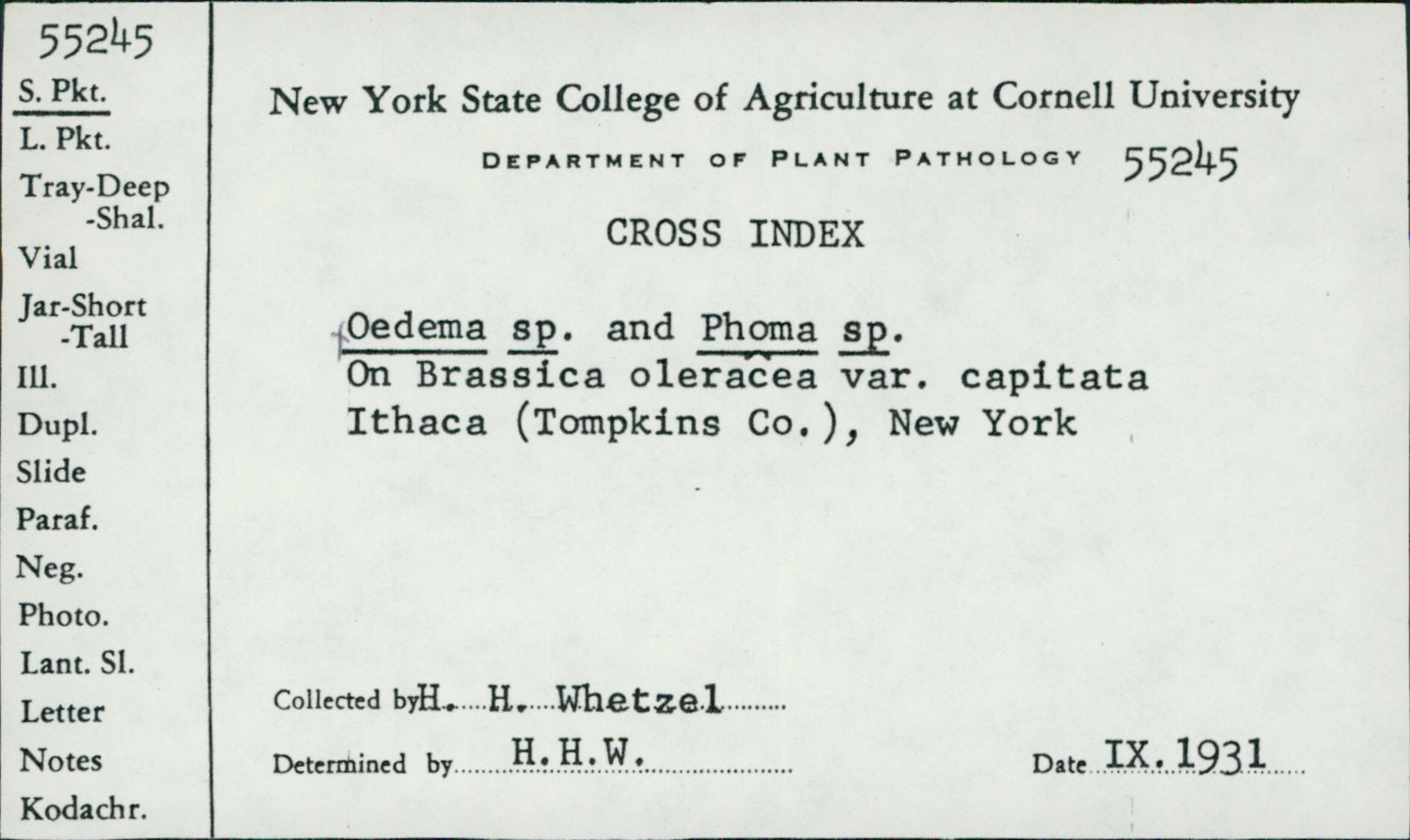
Specimen image via iDigBio · CC0
Phoma
Sign in to savePhoma is a genus of common coelomycetous soil fungi. It contains many plant pathogenic species.
Species
PHYLUM
- KingdomFungi
- PhylumAscomycota
- ClassDothideomycetes
- OrderPleosporales
- FamilyDidymellaceae
via GBIF
Museum specimens
- Specimen records
- 2,417
- With media
- 1,011
- Family
- Didymellaceae
- Collections
- FESI-UNAM, CIIDIR-IPN
- Recorded in
- Mexico
Research
1,153 papersvia PubMed
Wikidata facts
- Instance of
- taxon
- Parent taxon
- Didymellaceae
- Image
- Phoma a cafet.jpg
Show 6 more facts
- taxon name
- Phoma
- taxon rank
- genus
- topic's main category
- Category:Phoma
- Commons category
- Phoma
- taxonomic type
- Phoma herbarum
- taxon author citation
- Sacc.
via Wikidata · CC0
~3 min read
Encyclopedic overview
5 sectionsContents
- Description
- Taxonomy
- Selected species
- References
- Bibliography
Phoma is a genus of common coelomycetous soil fungi. It contains many plant pathogenic species.
== Description == Spores are colorless and unicellular. The pycnidia are black and depressed in the tissues of the host. Phoma is arbitrarily limited to those species in which the spores are less than 15 μm as the larger spored forms have been placed in the genus Macrophoma. The most important species include Phoma beta which is the cause of the heart rot and blight of beets, Phoma batata that produces a dry rot of sweet potato, and Phoma solani.
Excerpted from Wikipedia’s “Phoma” article, available under the CC BY-SA 4.0 licence.