Category
page 1Liliaceae genera
.jpg)
Tulipa
thumb|right|Tulipa alberti in Kazakhstan
thumb
Tulips are spring-blooming perennial herbaceous bulbiferous geophytes in the Tulipa genus. Their flowers are usually large, showy, and brightly coloured, generally red, orange, pink, yellow, or white. They often have a different coloured blotch at the base of the tepals, internally. Because of a degree of variability within the populations and a long history of cultivation, classification has been complex and controversial. The tulip is a member of the lily family, Liliaceae, along with 14 other genera, where it is most closely related to Amana, E

Lilium
Lilium ( ) is a genus of herbaceous flowering plants growing from bulbs, all with large and often prominent flowers. Lilies are a group of flowering plants which are important in culture and literature in much of the world. Most species are native to the Northern Hemisphere and their range is temperate climates and extends into the subtropics. Many other plants have "lily" in their common names, but do not belong to the same genus and are therefore not true lilies. True lilies are known to be highly toxic to cats.

Gagea
upright|thumb|Flowers of Gagea lutea
thumb|Gagea minima (least gagea)
Gagea is a large genus of spring flowers in the lily family. Gagea are perennially flowering plants. It is found primarily in Eurasia with a few species extending into North Africa and one species (Gagea serotina) in North America.

Fritillaria
thumb|Floral diagram of Fritillaria flower
Fritillaria (fritillaries) is a genus of spring flowering herbaceous bulbous perennial plants in the lily family (Liliaceae). The type species, Fritillaria meleagris, was first described in Europe in 1571, while other species from the Middle East and Asia were also introduced to Europe at that time. The genus has about 130–140 species divided among eight subgenera. The flowers are usually solitary, nodding and bell-shaped with bulbs that have fleshy scales, resembling those of lilies. They are known for their large genome size and genetically are very

Erythronium
Erythronium, the fawn lily, trout lily, '''dog's-tooth violet or adder's tongue', is a genus of Eurasian and North American plants in the lily family, most closely related to tulips. The name Erythronium derives from Ancient Greek () "red" in Greek, referring to the red flowers of E. dens-canis''. Of all the established species, most live in North America; only six species are found in Europe and Asia.

Calochortus
Calochortus is a genus of flowering plants in the lily family. The group includes herbaceous, perennial and bulbous species, all native to North America (primarily the Western United States).

Tricyrtis
Tricyrtis is a genus of Asian flowering plants in the lily family, with approximately 20 known species. The species are commonly known in English as toad lilies. The genus has a native range from the Himalayas to eastern Asia, including China, Japan, Philippines and Taiwan, and a few species are cultivated for their ornamental qualities in other parts of the world.

Cardiocrinum
Cardiocrinum is a genus of bulbous plants of the lily family first described in 1846. They are native to the Himalaya, China, the Russian Far East, and Japan. The bulbs are usually formed at the soil surface. The preferred habitat is woodland. The plants tend to be monocarpic, dying after flowering.

Clintonia
Clintonia is a genus of flowering plants in the lily family Liliaceae. Plants of the genus are distributed across the temperate regions of North America and eastern Asia, in the mesic understory of deciduous or coniferous forests. The genus, first described by Constantine Samuel Rafinesque in 1818, was named for DeWitt Clinton (1769–1828), a naturalist and politician from the U.S. state of New York. For this reason, plants of the genus are commonly known as '''Clinton's lily. The common name bluebead (and by extension bluebead lily) refer to the distinctive fruit of members of the genus.
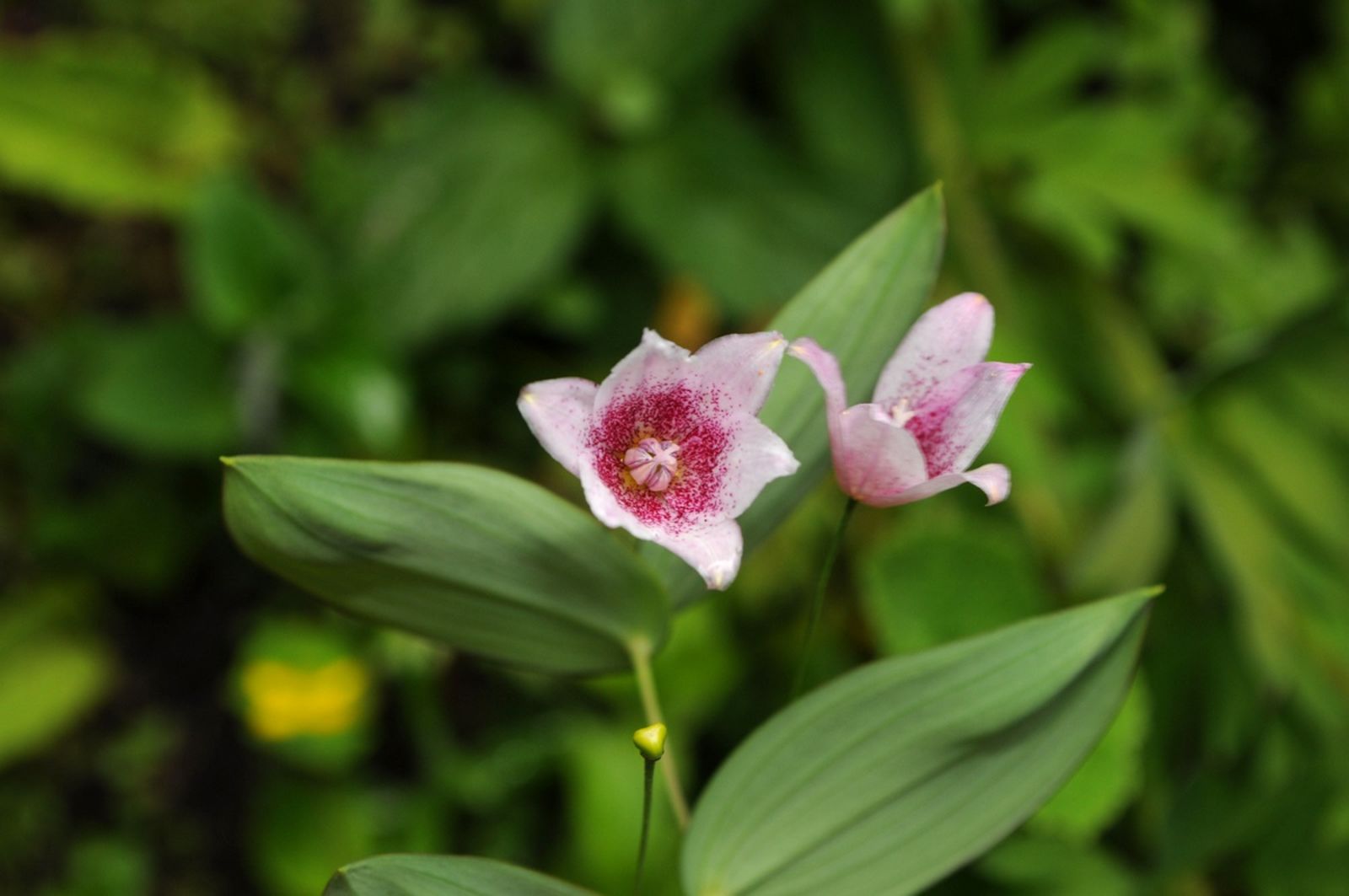
Streptopus
Streptopus is a Eurasian and North American genus of flowering plants in the lily family, found primarily in colder and temperate regions. Members of the genus are often referred to as twistedstalk. It is one of the shade-loving genera of the lily family.
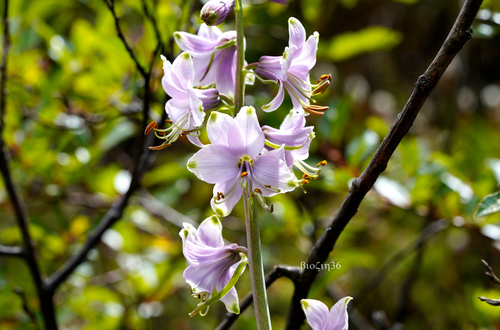
Notholirion
Notholirion is a small Asian genus of bulbous plants in the lily family, Liliaceae. It is closely related to Lilium, but each individual flowers only once, and then dies after producing offsets. The bulb is covered by a tunic. Leaves are basal, produced in autumn and winter.
.jpg)
Scoliopus
Scoliopus, or fetid adderstongue, is a genus of plant within the family Liliaceae consisting of two species, Scoliopus bigelovii and S. hallii. Both are found in deep shaded forests, primarily in the coastal counties of the western United States from central California to northern Oregon. The name "Scoliopus" derives from the Greek words skolios and pous, meaning curved foot, a reference to the shape of the pedicel. Taxonomists believe that Scoliopus is closely related to Calochortus, Prosartes, Streptopus and Tricyrtis, which all have creeping rhizomes as well as styles that divide at the tip

Nomocharis
thumb|Lilium apertum, formerly Nomocharis aperta
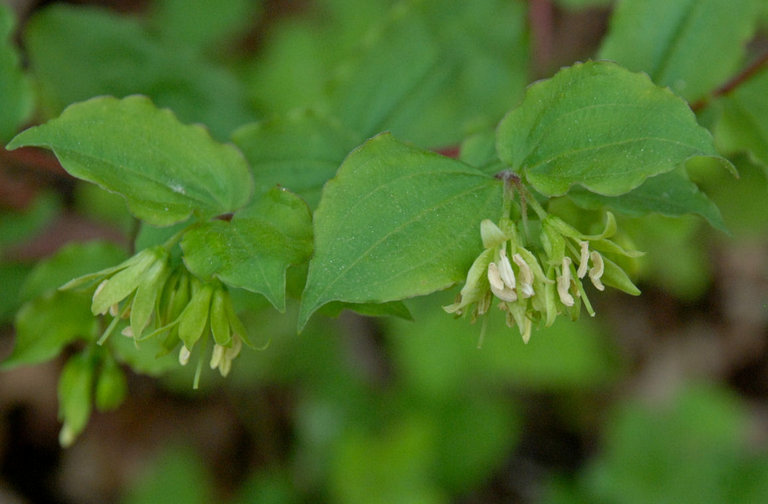
Prosartes
Prosartes, the fairybells, is a North American genus of flowering plants in the lily family.

Amana
genus of Asian bulbous herbs, formerly included in genus Tulipa (L.)