Category
page 1Linux distributions

Ubuntu
Ubuntu ( ) is a Linux distribution based on Debian and composed primarily of free and open-source software. Developed by the British company Canonical and a community of contributors under a meritocratic governance model, Ubuntu is released in multiple official editions: Desktop, Server, and Core for IoT and robotic devices.

Android
operating system created by Google for use on mobile devices

Debian
Debian () is a Linux distribution developed by the Debian Project, established by Ian Murdock in August 1993.

Linux Mint
Ubuntu/Debian-based Linux distribution

Fedora Linux
Linux distribution

Linux distribution
operating system based on the Linux kernel and often core GNU components

Kubuntu
Kubuntu ( ) is an official flavor of Ubuntu, a Linux distribution that uses the KDE Plasma Desktop Environment instead of the GNOME desktop environment. As part of the Ubuntu project, Kubuntu uses the same underlying systems. Kubuntu shares the same repositories as Ubuntu and is released regularly on the same schedule as Ubuntu.

Arch Linux
Linux distribution

ChromeOS
ChromeOS (sometimes styled as chromeOS and formerly styled as Chrome OS) is a proprietary operating system designed and developed by Google. It is derived from the open-source operating system (which itself is derived from Gentoo Linux), and uses the Google Chrome web browser as its principal user interface.

Slackware
Slackware is a Linux distribution created by Patrick Volkerding in 1993. Originally based on Softlanding Linux System (SLS), Slackware has been the basis for many other Linux distributions, most notably the first versions of SUSE Linux distributions, and is the oldest distribution that is still maintained.

Knoppix
Knoppix, stylized KNOPPIX ( ), is an operating system based on Debian designed to be run directly from a CD or DVD (Live CD) or a USB flash drive (Live USB). It was first released in 2000 by German Linux consultant Klaus Knopper, and was one of the first popular live distributions. Knoppix is loaded from the removable medium and decompressed into a RAM drive. The decompression is transparent and on-the-fly.

Mandriva Linux
Linux distribution

openSUSE
openSUSE () is a free and open-source Linux distribution developed by the openSUSE Project. It is offered in two main variations: Tumbleweed, an upstream rolling release distribution, and Leap, a stable release distribution which is sourced from SUSE Linux Enterprise.

Kali Linux
Debian-derived Linux distribution

Xubuntu

CentOS
CentOS (, from Community Enterprise Operating System; also known as CentOS Linux) is a discontinued Linux distribution that provided a free and open-source community-supported computing platform, functionally compatible with its upstream source, Red Hat Enterprise Linux (RHEL). In January 2014, CentOS announced the official joining with Red Hat while staying independent from RHEL, under a new CentOS governing board.

Lubuntu

Red Hat Linux
discontinued Linux distribution

Manjaro
Manjaro ( ) is a free and open-source Linux distribution based on the Arch Linux operating system with a focus on user-friendliness, accessibility, and improved software testing and stability compared to its upstream sources. It uses a rolling release update model with Pacman-derived package managers. Manjaro is developed mainly in Austria, France and Germany.

Red Hat Enterprise Linux
Linux distribution

Deepin
deepin (; formerly known as Linux Deepin and Hiweed Linux) is a Linux distribution, formerly based on Ubuntu and Debian, that features the Deepin Desktop Environment (DDE), a desktop environment built on Qt and available for a variety of distributions. The Deepin userbase is predominantly Chinese, though DDE is in most prominent Linux distributions' repositories as an alternative desktop environment. The company behind the development, Deepin Technology, a wholly owned subsidiary of UnionTech (), is based in Wuhan, China.

elementary OS
Linux distribution

Puppy Linux
lightweight Linux distribution
Firefox OS
Linux-based mobile operating system by Mozilla

MIUI
MIUI is a deprecated mobile operating system developed and used by Xiaomi for its smartphones and mobile devices from 2010 to early 2024, prior to the launch of its successor Xiaomi HyperOS. MIUI was based on the Android Open Source Project. Xiaomi produced versions for Xiaomi-branded smartphones and its own Poco, MIUI Pad, MIUI Watch, and MIUI TV (PatchWall).

SliTaz
SliTaz GNU/Linux is a lightweight Linux distribution, community-based, suitable for use on older hardware and as a Live CD or Live USB. SliTaz stands for "Simple, Light, Incredible, Temporary Autonomous Zone" according to the boot screen.

Edubuntu
Edubuntu is an official derivative of the Ubuntu operating system designed for use in classrooms inside schools, homes, and communities.

CyanogenMod
CyanogenMod ( ; CM) is a discontinued open-source operating system for mobile devices, based on the Android mobile platform. Developed between 2009 and 2016, it was free and open-source software based on the official releases of Android by Google, with added original and third-party code, and based on a rolling release development model. Although only a subset of total CyanogenMod users elected to report their use of the firmware, on 23 March 2015, some reports indicated that over 50 million people ran CyanogenMod on their phones. It was also frequently used as a starting point by developers o
Zorin OS
Ubuntu-based Linux distribution
.jpg)
LineageOS
LineageOS is an open source Android (AOSP)-based operating system for smartphones, tablets, and set-top boxes. It is community-developed and serves as the successor to CyanogenMod, from which it was forked in December 2016. As of 2025, there are about 4.5 million devices running LineageOS.

MeeGo
MeeGo is a discontinued Linux distribution hosted by the Linux Foundation, using source code from the operating systems Moblin (produced by Intel) and Maemo (produced by Nokia). MeeGo was primarily targeted at mobile devices and information appliances in the consumer electronics market. It was designed to act as an operating system for hardware platforms such as netbooks, entry-level desktops, nettops, tablet computers, mobile computing and communications devices, in-vehicle infotainment devices, SmartTV / ConnectedTV, IPTV-boxes, smart phones, and other embedded systems.
Red Star OS
North Korean Linux distribution
PCLinuxOS
PCLinuxOS, often shortened to PCLOS, is a rolling-release Linux distribution for x86-64 computers, with KDE Plasma, MATE, and XFCE as its default user interfaces. It is a primarily FOSS operating system for personal computers aimed at ease of use.

Trisquel
Trisquel (full name Trisquel GNU/Linux) is a computer operating system, a Linux distribution, derived from another distribution, Ubuntu. The project aims for a fully free software system without proprietary software or firmware and uses a version of Ubuntu's modified kernel, with the non-free code (binary blobs) removed. Trisquel relies on user donations, as a non-profit group. Its logo is a triskelion, a Celtic symbol. Trisquel is listed by the Free Software Foundation as a distribution that contains only free software.

Maemo
Maemo is a Linux-based software platform originally developed by Nokia, now developed by the community, for smartphones and Internet tablets. The platform comprises both the Maemo operating system and SDK. Maemo played a key role in Nokia's strategy as an attempt to compete with Apple and Android; the only retail devices that shipped with Maemo were the Nokia Internet tablet line released in 2005 and the Nokia N900 smartphone in 2009.
SteamOS
SteamOS is a gaming-focused operating system released by Valve that incorporates the company's video game storefront, Steam. Based on Arch Linux and built specifically to support Steam, it is the default Linux distribution for Valve's line of gaming hardware, including the Steam Deck, Steam Machine, and Steam Frame. Beginning in 2025, Valve expanded official support to include third-party devices designated as "SteamOS Compatible", such as handhelds like the Lenovo Legion Go and Asus ROG Ally. It can also be installed on personal computers without official support from Valve. The core operatin
list of Linux distributions
Wikimedia list article
Ubuntu Studio
Ubuntu-based Linux distribution for multimedia creation
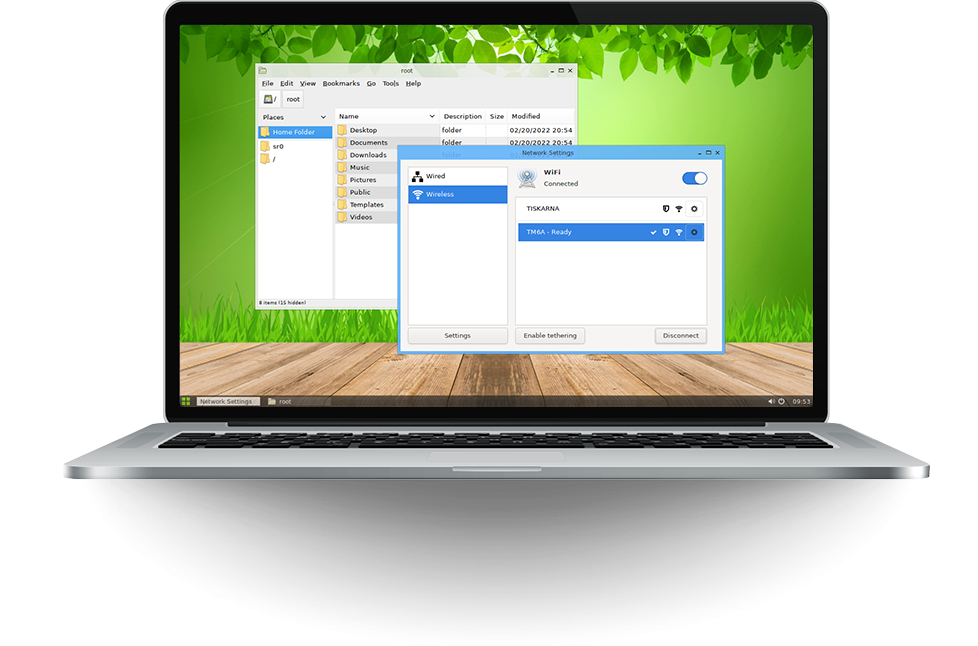
Slax
Slax is a LiveCD Linux distribution developed by Tomáš Matějíček and based on upstream customizable Linux distributions. Packages can be added by apt package manager or can be prepared as modules. The tagline for Slax refers to itself as "your pocket operating system".

Tizen
Tizen () is a Linux-based operating system primarily developed by Samsung Electronics and supported by the Linux Foundation.
Ubuntu Touch
mobile interface for Ubuntu, developed by UBports

OpenWrt
OpenWrt (from open wireless router) is an open-source project for embedded operating systems based on Linux, primarily used on embedded devices to route network traffic. The main components are Linux, util-linux, musl, and BusyBox. All components have been optimized to be small enough to fit into the limited storage and memory available in home routers.
BackTrack
BackTrack was a Linux distribution that focused on security, based on the Knoppix Linux distribution aimed at digital forensics and penetration testing use. In March 2013, the Offensive Security team rebuilt BackTrack around the Debian distribution and released it under the name Kali Linux.
Mageia
Mageia is a Linux-based operating system, distributed as free and open-source software. It was forked from the Mandriva Linux distribution. The name comes from the Greek (, ).
Tails
Linux distribution for anonymity and privacy
Sabayon Linux
Linux distribution
Ubuntu MATE
Ubuntu flavor that comes with the MATE desktop
Tiny Core Linux
lightweight Linux distribution
Solus
Linux distribution
Raspberry Pi OS
dedicated operating system for Raspberry Pi
Scientific Linux
Linux distribution

Linspire
Linspire (formerly Lindows) is a commercial operating system based on Debian and Ubuntu and currently owned by PC/OpenSystems LLC. It had been owned by Linspire. Inc. from 2001 to 2008, and then by Xandros from 2008 to 2017.
Ubuntu Kylin
Chinese Linux distribution

gNewSense
gNewSense was a Linux distribution, active from 2006 to 2016. It was based on Debian, and developed with sponsorship from the Free Software Foundation. Its goal was user-friendliness, but with all proprietary (e.g. binary blobs) and non-free software removed. The Free Software Foundation considered gNewSense to be composed entirely of free software.

Xandros
Xandros, Inc. was a software company which sold Xandros Desktop, a Linux distribution. The name Xandros was derived from the X Window System and the Greek island of Andros.
Xandros was founded in May 2001 by Linux Global Partners (Will Roseman and Frederick Berenstein). The company was headquartered in New York City with its development office in Ottawa, Canada.

KaiOS
thumb|Nokia 8110 4G "banana phone"
KaiOS is a mobile Linux distribution for keypad-based mobile phones. It is designed and optimised for affordable and low-power feature phones, while retaining access to Internet services through web apps, based on the Gecko engine. KaiOS was originally forked from the former Firefox OS open-source project, and is developed by KaiOS Technologies (Hong Kong) Limited; a company based in Hong Kong, whose largest shareholder is Chinese electronics conglomerate TCL Corporation.''''
Linux Lite
Lightweight Linux distribution based on Ubuntu LTS
Sailfish OS
mobile phone Linux distribution
Alpine Linux
Linux distribution
ChromiumOS
ChromiumOS (formerly styled as Chromium OS) is a free and open-source Linux distribution designed for running web applications and browsing the World Wide Web. It is the open-source version of ChromeOS, a Linux distribution made by Google.