Category
page 1Logic puzzles

Rubik's Cube
3-D combination puzzle with many different permutations

sudoku
Sudoku (; ; originally called Number Place) is a logic-based, combinatorial number-placement puzzle. In classic Sudoku, the objective is to fill a 9 × 9 grid with digits so that each column, each row, and each of the nine 3 × 3 subgrids that compose the grid (also called "boxes", "blocks", or "regions") contains all of the digits from 1 to 9. The puzzle setter provides a partially completed grid, which, for a well-posed puzzle, has a single solution.
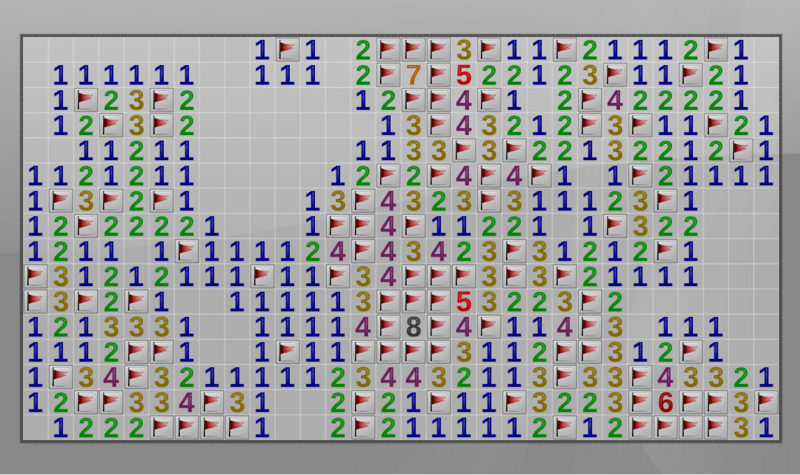
Minesweeper
logic puzzle video game genre
escape room
physical puzzle game played by a team of players

kakuro
thumb|250px|An easy Kakuro puzzle
thumb|250px|Solution for the above puzzle
Kakuro or Kakkuro or Kakoro () is a kind of logic puzzle that is often referred to as a mathematical transliteration of the crossword. Kakuro puzzles are regular features in many math-and-logic puzzle publications across the world. In 1966, Canadian Jacob E. Funk, an employee of Dell Magazines, came up with the original English name Cross Sums and other names such as Cross Addition have also been used, but the Japanese name Kakuro, abbreviation of Japanese kasan kurosu (加算クロス, "addition cross"), seems to have gained ge

Sokoban
is a puzzle video game created in 1981 by Hiroyuki Imabayashi. In Sokoban, the player pushes boxes in a warehouse to get them onto storage locations. The game is viewed from a top-down perspective. Boxes can only be pushed, never pulled, and only one box can be pushed at a time. The principal challenge is planning moves correctly to avoid causing a deadlock, a situation where a box or the player becomes permanently trapped, making the puzzle unsolvable.

Nonogram
thumb|A completed nonogram of the letter "W" from the Wikipedia logo
Mastermind
board game
Zebra Puzzle
well-known logic puzzle

Skewb
thumb|The Skewb in solved state
thumb|The four turning planes of the Skewb bisect it as shown in this figure.
The Skewb () is a combination puzzle and a mechanical puzzle similar to the Rubik's Cube. It was invented by Tony Durham and marketed by Uwe Mèffert. Although it is cubical, it differs from the typical cubes' construction; its axes of rotation pass through the corners of the cube, rather than the centers of the faces. There are four axes, one for each space diagonal of the cube. As a result, it is a deep-cut puzzle in which each twist affects all six faces.
Verbal arithmetic
a puzzle of reconstructing equations that have been enciphered into words

Tantrix
Tantrix is a hexagonal tile-based abstract game invented by Mike McManaway from New Zealand. Each of the 56 different tiles in the set contains three lines, going from one edge of the tile to another. No two lines on a tile have the same colour. There are four colours in the set: red, yellow, blue, and green. No two tiles are identical, and each is individually numbered from 1 through 56.
Wason selection task
test in the study of deductive reasoning
Nurikabe
logic puzzle
Square-1
shape-shifting puzzle similar to Rubik's Cube
logic puzzle
puzzle deriving from the mathematics field of deduction

Hashiwokakero
Hashiwokakero (橋をかけろ Hashi o kakero; lit. "build bridges!") is a type of logic puzzle published by Nikoli. It has also been published in English under the name Bridges or Chopsticks (based on a mistranslation: the hashi of the title, 橋, means bridge; hashi written with another character, 箸, means chopsticks). It has also appeared in The Times under the name Hashi. In France, Denmark, the Netherlands, and Belgium it is published under the name Ai-Ki-Ai.
The Hardest Logic Puzzle Ever
logic puzzle by George Boolos and Raymond Smullyan

Hitori
right|thumb|240px|Example of a Hitori puzzle
Hitori (Japanese: "Alone" or "one person"; Hitori ni shite kure; literally "leave me alone") is a type of logic puzzle published by Nikoli.
fox, goose and bag of beans puzzle
riddle-like puzzle

Slitherlink
thumb|right|class=skin-invert-image|Moderately difficult Slitherlink puzzle (Media:Slitherlink-answer.png|solution)
Slitherlink (also known as Sli-Lin, Fences, Takegaki, Loop the Loop, Loopy, Ouroboros, Suriza, Rundweg, Tectonic and Dotty Dilemma) is a logic puzzle developed by publisher Nikoli.

Nikoli
Japanese games publisher

KenKen
thumb|A simple KenKen puzzle, with answers filled in as large numbers.
KenKen and KenDoku are trademarked names for a style of arithmetic and logic puzzle invented in 2004 by Japanese math teacher Tetsuya Miyamoto, who intended the puzzles to be an instruction-free method of training the brain. The name derives from the Japanese word for . The names Calcudoku and Mathdoku are sometimes used by those who do not have the rights to use the KenKen or KenDoku trademarks.
river crossing puzzle
class of mental challenges
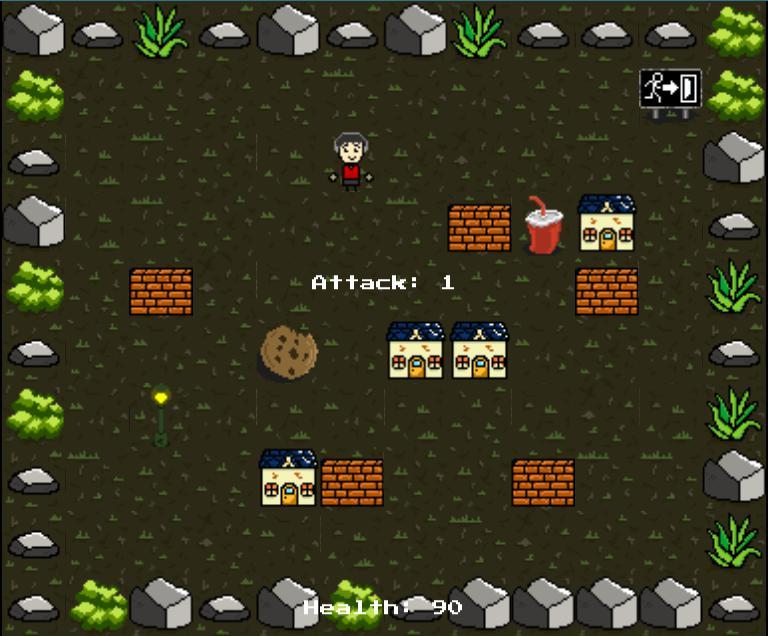
Light Up
2001 video game

balance puzzle
logic puzzle
mutilated chessboard problem
tiling puzzle
shikaku
is a logic puzzle published by Nikoli.

Masyu
thumb|right|Sample puzzle
thumb|right|Solution to above puzzle
is a type of logic puzzle designed and published by Nikoli. The purpose of its creation was to present a puzzle that uses no numbers or letters and yet retains depth and aesthetics.
God's algorithm
an algorithmthat produces a solution to a combinatorial puzzle with the fewest possible moves
Battleship
logic puzzle
missionaries and cannibals problem
Logic problem
Futoshiki
, or More or Less, is a logic puzzle game from Japan. Its name means "inequality". It is also spelled hutosiki (using Kunrei-shiki romanization). Futoshiki was developed by Tamaki Seto in 2001.
Cheryl's Birthday
a variant of the classic Birthday problem
Hidato
Hidato (, originating from the Hebrew word Hida = Riddle), also known as "Hidoku", is a logic puzzle game invented by Dr. Gyora M. Benedek, an Israeli mathematician. The goal of Hidato is to fill the grid with consecutive numbers that connect horizontally, vertically, or diagonally. The name Hidato is a registered trademark. Some publishers use different names for this puzzle such as Number Snake, Snakepit (both of which play on the game's similarity in concept to the video game Snake), Jadium or Numbrix.
Fillomino
thumb|right|293px|Moderately difficult sample puzzle
thumb|right|293px|Solution for the sample puzzle
dissection puzzle
tiling puzzle where a set of pieces can be assembled in different ways to produce two or more distinct geometric shapes
Helicopter Cube
combination puzzle
Kuromasu
, abbreviated or , is a binary-determination logic puzzle published by Nikoli. A book consisting entirely of puzzles has been published by Nikoli.
monkey and banana problem
thought experiment
Numberlink
Numberlink is a type of logic puzzle involving finding paths to connect numbers in a grid.
Heyawake
thumb|A Heyawake puzzle
Heyawake (Japanese: へやわけ, "divided rooms") is a binary-determination logic puzzle published by Nikoli. As of 2013, five books consisting entirely of Heyawake puzzles have been published by Nikoli. It first appeared in Puzzle Communication Nikoli #39 (September 1992).
bulls and cows
game
Impossible Puzzle
Puzzle published by Hans Freudenthal
bridge and torch problem
logic puzzle
In Search of the Golden Owl
quest to find a golden owl in France
Fill-In
crossword-like puzzle in which a list of words is given (but not their positions in the grid), and one must place them into the grid
Gear Cube
combination puzzle
Inshi no heya
logic puzzle
Ages of Three Children puzzle
logic puzzle
Knights and Knaves
logic puzzle
Lights Out
1995 electronic game
Str8ts
thumb|A sample puzzle
Str8ts is a logic-based number-placement puzzle, invented by Jeff Widderich in 2008. It is distinct from, but shares some properties and rules with, Sudoku. The name is derived from the poker straight. The puzzle is published in a number of newspapers internationally, in two book collections, and in downloadable apps. It was featured on the Canadian television show ''Dragons' Den'' on November 24, 2010.
Goishi Hiroi
logic puzzle
Yajilin
thumb|An example of a Yajilin puzzle.
thumb|Solved.
Yajilin (ヤジリン) is a type of logic puzzle published by Nikoli. It has been published in English under the name Arrow Ring, such as in the 2005 U.S. qualifier for the World Puzzle Championship.
Gokigen Naname
logic puzzle
Cross-figure
thumb|Example grid for a cross-figure puzzle with some answers filled in
A cross-figure (also variously called cross number puzzle or figure logic) is a puzzle similar to a crossword in structure, but with entries that consist of numbers rather than words, where individual digits are entered in the blank cells. Clues may be mathematical ("the seventh prime number"), use general knowledge ("date of the Battle of Hastings") or refer to other clues ("9 down minus 3 across").