Category
page 1Lost ancient cities and towns

Persepolis
Persepolis was the ceremonial capital of the Achaemenid Empire (). It is situated in the plains of Marvdasht, encircled by the southern Zagros Mountains, Fars province of Iran. It is one of the key Iranian cultural heritage sites and a UNESCO World Heritage Site.

Teotihuacan

Ellora Caves
ancient cave temples of Hinduism, Buddhism and Jainism in Maharashtra, India

Akkad
ancient Mesopotamian city

Nan Madol
ruined city of Federated States of Micronesesia

Ollantaytambo
Ollantaytambo () is a town and an Inca archaeological site in southern Peru some by road northwest of the city of Cusco. It is located at an altitude of above sea level in the district of Ollantaytambo, province of Urubamba, Cusco region. During the Inca Empire, Ollantaytambo in the Sacred Valley of the Incas was the royal estate of Emperor Pachacuti, after the mid-15th century. He built a town and a ceremonial center there. At the time of the Spanish conquest of Peru, it served as a stronghold for Manco Inca Yupanqui, leader of the Inca resistance. It is now an important tourist attraction on

Thinis
Thinis (Greek: Θίνις Thinis, Θίς This ; Egyptian: Tjenu; ;
) was the capital city of pre-unification Upper Egypt. Thinis remains undiscovered but is well attested by ancient writers, including the classical historian Manetho, who cites it as the centre of the Thinite Confederacy, a tribal confederation whose leader, Menes (or Narmer), united Egypt and was its first pharaoh. Thinis began a steep decline in importance when the capital was relocated to Memphis, which was thought to be the first true and stable capital after the unification of Egypt by Menes. Thinis's location on the border of th
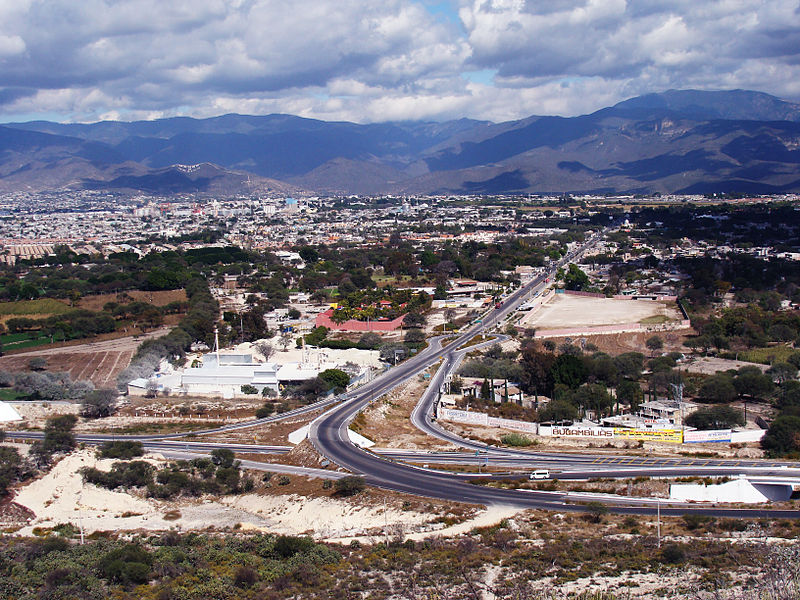
Tehuacán
Tehuacán () is the second largest city in the Mexican state of Puebla, nestled in the southeast of the valley of Tehuacán, bordering the states of Oaxaca and Veracruz. The 2010 census reported a population of 248,716 in the city and 274,906 in the surrounding Tehuacán municipality, of which it serves as municipal seat. The municipality has an area of .

Saqsaywaman
thumb|right|Sideways view of the walls of Sacsayhuamán showing the details of the stonework and the angle of the walls.
thumbnail|Muyuq Marka
thumb|Close up of stone wall

Tartessos
thumb|300 px|Tartessos, circa 500 BC
thumb|Tartessian winged feline statue at the Getty Villa
Kailasa Temple, Ellora
temple in Ellora, India
Iram of the Pillars
lost city, region or tribe mentioned in the Quran
Tulasas
archaeological site in Hidalgo, Mexico

Itjtawy
Itjtawy or It-Towy ("Seizer of the Two Lands"), also known by its full name Amenemhat-itjtawy ("Amenemhat seizes the Two Lands"), was an ancient Egyptian royal city established by pharaoh Amenemhat I.

Washukanni
thumb|A map of Mesopotamia showing Waššukanni, [[Nineveh, Hatra, Assur, Nuzi, Palmyra, Mari, Sippar, Babylon, Kish, Nippur, Isin, Lagash, Uruk, Charax Spasinu and Ur, from north to south.]]

Kussara
thumb|Proposed location of Kussara, bottom right, shown in the context of the Black Sea Region of modern TurkeyKussara (Kuššar) was a Middle Bronze Age kingdom in Anatolia. The kingdom, though apparently important at one time, is mostly remembered today as the origin of the dynasty that would form the Old Hittite Kingdom.
Karahan Tepe
archeological site in Turkey
Zalpuwa
Zalpa (also called Zalba, Zalpah, Zalpuwa) were ancient regions mentioned in Assyrian, Mari and Hittite records. The toponyms appear in a variety of forms and contexts and likely refer to at least two similarly named regions. They are believed to have been located on the Pontic coast of the Black Sea, along the Euphrates in northern Mesopotamia and along the Balikh river in northern Syria.
Apamea
Apamea or Apameia () is the name of several Hellenistic cities in western Asia, after Apama, the Sogdian wife of Seleucus I Nicator, several of which are also former bishoprics and Catholic titular see.

Noreia
thumb|300px|Roman province of Noricum, 1907 map
Noreia is an ancient lost city in the Eastern Alps, most likely in southern Austria. While according to Julius Caesar it is known to have been the capital of the Celtic kingdom of Noricum, it was already referred to as a lost city by Pliny the Elder (AD 23 – AD 79). The location of Noreia has not been verified by modern researchers.

Muziris
Muciṟi (), (),, commonly anglicized as Muziris (, Old Tamil: Mucciṟi or Mucciṟippaṭṭaṇam, possibly identical with the medieval Muyiṟikkōṭŭ), was an ancient harbour and urban centre on India's Malabar Coast. It was the major ancient port city of the Chera dynasty of Ancient Tamilakam.

Arimathea

Cyropolis
thumb|300px|Map of the Achaemenid Empire showing the location of Cyropolis in [[Sogdiana.]]

lost land
islands or continents supposedly existing during prehistory, having since disappeared
Arsinoe
ancient city on the Gulf of Suez
Ocomtún
Ocomtún, whose original name could have been Maatz', is an ancient Late Classic Maya city located on the Yucatan Peninsula in the Mexican state of Campeche. Archaeologists from Mexico's National Institute of Anthropology and History announced the discovery of the city in June 2023, after finding the ruins of several pyramid structures measuring approximately in height in a relatively unexplored area of the state. Analysis of pottery fragments found in the area indicate the area was inhabited by the Maya people between 600 CE and 800 CE, and that the city fell into ruin in around 1000 CE, coinc

Alexandropolis Maedica
first town founded by Alexander the Great in 340 BC
Nicaea
human settlement in Pakistan
Peñico
Peñico was an ancient Caral city located in the Peruvian province of Huaura in the northern Lima Region. The city is thought to have been founded between 1800 and 1500 BC. The Peruvian Ministry of Culture announced opening the site to the public in July 2025 following eight years of research and restorations. Numerous ancient towns found in the Supe and adjacent valleys are readily apparent and visible in satellite imagery, only a few have developed visitation facilities.
Ismara
ancient site in Greece
Tugunbulak
Tugunbulak was a medieval city in the Turkestan Range, located in what is now southeastern Uzbekistan, in the Bakhmal District, close to the village of Guralash and near Zaamin National Park. It and the nearby contemporary site of Tashbulak () were occupied from the 6th to the late 10th centuries CE. Situated at altitudes of , the city was a center of iron mining and production, through which it was connected to the Silk Road trading networks. Tugunbulak's remains occupy an area of approximately , making it medieval Central Asia's largest known high-altitude urban center. It contained extensiv

Dion
former city in Coele-Syria
Tamralipta
ancient City in Eastern India
Yenoam
Yenoam or Yanoam () is a place in ancient Canaan, or in Syria, known from ancient Egyptian regnal sources from the time of Thutmose III to Ramesses III. One such source is a stela of Seti I found in Beit She'an. Another is the Merneptah Stele.
Apollonia
Ancient Sicilian city
Araplos
Araplus or Araplos () was an ancient Greek city located in ancient Thrace, located in the region of the Thracian Chersonesus. It is cited in the Periplus of Pseudo-Scylax, in the fifth position of its recitation of the towns of the Thracian Chersonesus, along with Cardia, Ide, Paeon, Alopeconnesus, Araplus, Elaeus and Sestos.
Apollonia
ancient chief town of Chalcidice in Macedonia
Thronium
ancient city of Epirus
Irridu
Irridu (Irrite) was a city in northwestern Mesopotamia, likely located between Harran and Carchemish. It flourished in the middle and late Bronze Age before being destroyed by Assyria.
Anemoreia
Anemoreia (), subsequently Anemoleia (Ἀνεμώλεια), was a town of ancient Phocis mentioned by Homer in the Catalogue of Ships in the Iliad. It was situated on a height on the borders of Phocis and Delphi, and is said to have derived its name from the gusts of wind which blew on the place from the tops of Mount Parnassus.
Abbassus
Abbassus or Ambasum (Latin: Abbassus; ), was an ancient town of Phrygia, on the frontiers of the Tolistoboii, in Galatia. It is, perhaps, the same as the Alamassus reported by of Hierocles, and the Amadasse whose bishops attended early church councils. The editors of the Barrington Atlas of the Greek and Roman World note that its probable location is near Synnada, however its precise location is not known.
Tegarama
Tegarama (Old Assyrian: Tergarma; Hittite: Takarama; Luwian: Lakarma/Lukarma) was a city in Anatolia during the Bronze Age. It is often identified with Gürün and biblical Togarmah.
Balla
human settlement in Greece
Cattigara
thumb|Funan|Funan-era ruins of Nam Linh Son, [[Óc Eo, Vietnam. Óc Eo has been identified multiple times by scholars as the location of Cattigara]]
Cattigara is the name of a major port city located on the Magnus Sinus described by various ancient sources. Some modern scholars have linked Cattigara to the archaeological site of Óc Eo in present-day Vietnam.
Salatiwara
Salatiwara was a Middle Bronze Age city in south-central Anatolia on a road connecting the kingdoms and Burushattum. The history of the city is known primarily from the Anitta text.
Onoguris
Onoguris, renamed as Stephanopolis in the Byzantine period, was a town in Lazica (in present-day western Georgia, possibly located at modern village Khuntsi) recorded by Byzantine historian Agathias in his narration of the Lazic War between the Byzantine Empire and the Sasanian Empire. Its exact location is still under study.
Olenus
ancient Greek town mentioned by Homero
Pamatan
Pamatan is the name of a lost city on Lombok Island in Indonesia and the capital of the principal kingdom on Lombok. The city was destroyed by the 1257 Samalas eruption; while the king and at least part of his family survived, many inhabitants were killed. The location of the city is unclear but probably was on the eastern coast of Lombok.
Idrias
Idrias () was a town of ancient Caria. It has been suggested that Idrias could be identified with the city that the Hittite texts of the Bronze Age call Atriya. Herodotus cites the territory of Idrias, which he names Idriade where rose the Marsyas River (Çine Çay), which is a tributary of the Maeander River. It was a member of the Delian League since it appears in a tribute decree of Athens dated to 425/4 BCE. Subsequently, in the opinion of Mehmet Çetin Şahin, Idrias was called Hiera Kome (meaning 'sacred village'). However, Stephanus of Byzantium quotes Apollonius of Aphrodisias who ide
Ascheion
Ascheion () was a city and polis (city-state) of ancient Achaea.
Apamea Ragiana
ancient city of Media
Tibula
Tibula (Greek: , Ptol.), was an ancient town of Sardinia, near the northern extremity of the island, which appears to have been the customary landing-place for travelers coming from Corsica; for which reason the Itineraries give no less than four lines of route, taking their departure from Tibula as a starting-point. (Itin. Ant. pp. 78–83.)
Cilla
ancient city of Aeolis in modern-day Turkey
Antinoeis
Antinoeis () was a deme of ancient Attica, in the part of the city founded by the emperor Hadrian. The deme was established only in 126 or 127, after the death of Antinous, a favourite of Hadrian.
Aulon
ancient Greek city in Messenia
Alesiaeum
Alesiaeum or Alesiaion (), also called Aleisium or Aleision () by Homer and Alesium or Alesion () by Stephanus of Byzantium, was a town of Pisatis in ancient Elis, situated upon the road leading across the mountains from Elis to Olympia. It appears in the Catalogue of Ships in Homer's Iliad.
Acripus
Acripus or Akripos () was a town of ancient Aetolia, near the border of Acarnania. It is known only through epigraphic testimony mentioning the appointment of a theorodokos of Acripus, about the year 356/5 BCE to welcome the theoroi of Epidaurus.
Hamaxanteia
thumb|Stele for Panaitios of Hamaxanteia (NAMA 884)
Hamaxantia or Hamaxanteia () was a deme of ancient Attica, of the phyle of Hippothontis, sending one delegate to the Boule.
Stenyclarus
Stenyclarus or Stenyklaros (), or Stenyclerus or Stenykleros (Στενύκληρος), was a town in the north of ancient Messenia, and the capital of the Dorian conquerors, built by Cresphontes. Andania had been the ancient capital of the country. The town afterwards ceased to exist, but its name was given to the northern of the two Messenian plains and site of a battle where Messenians defeated a small Spartan army.
Eteonus
Eteonus or Eteonos () was a town of ancient Boeotia, mentioned in the Catalogue of Ships in the Iliad by Homer, who gives it the epithet of πολύκνημος. It lay to the right of the Asopus. Strabo says that it was afterwards called Scarphe (Σκάρφη). It probably lay between Scolus and the frontier of the territory of Tanagra. Historically, another name for the town is Skaphaliai.