Category
page 1Lung disorders

cystic fibrosis
autosomal recessive disease characterized by the buildup of mucus

sarcoidosis
Sarcoidosis, also known as Besnier–Boeck–Schaumann disease, is a non-infectious granulomatous disease involving abnormal collections of inflammatory cells that form lumps known as granulomata. The disease usually begins in the lungs, skin, or lymph nodes. Less commonly affected are the eyes, liver, heart, and brain, though any organ can be affected. The signs and symptoms depend on the organ involved. Often, no symptoms or only mild symptoms are seen. When it affects the lungs, wheezing, coughing, shortness of breath, or chest pain may occur. Some may have Löfgren syndrome, with fever, enlarge
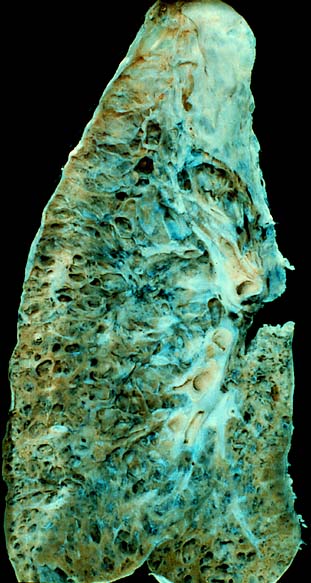
pulmonary fibrosis
human disease

asbestosis
granulomatosis with polyangiitis
wegner granulomatosis
lung abscess
lung disease characterized by microbial infection which causes a type of liquefactive necrosis of the pulmonary tissue and formation of cavities containing necrotic debris or fluid
alpha-1-antitrypsin deficiency
genetic disorder that may result in lung disease or liver disease
Churg-Strauss syndrome
a systemic vasculitis realized as blood vessel inflammation, with symptoms asthma along with hay fever, rash and gastrointestinal bleeding
interstitial lung disease
group of lung diseases affecting the interstitium (the tissue and space around the air sacs of the lungs)
Pulmonary contusion
internal bruise of the lungs
pulmonary aspiration
entry of materials into the larynx (voice box) and lower respiratory tract
pulmonary alveolar proteinosis
lung disease that is characterized by abnormal accumulation of surfactant occurs within the alveoli, interfering with gas exchange
high altitude pulmonary edema
human disease

lymphangioleiomyomatosis
Lymphangioleiomyomatosis (LAM) is a rare, progressive and systemic disease that typically results in cystic lung destruction. It predominantly affects women, especially during childbearing years. The term sporadic LAM is used for patients with LAM not associated with tuberous sclerosis complex (TSC), while TSC-LAM refers to LAM that is associated with TSC.
restrictive lung disease
medical condition
obstructive lung disease
category of respiratory disease characterized by airway obstruction

aspergilloma
A pulmonary aspergilloma, also known as chronic pulmonary aspergillosis, is a human infectious disease of the lung caused by the colonization of a cavity by a fungus of the genus Aspergillus, most commonly Aspergillus fumigatus. The spores are transmitted through the air and are not contagious between individuals. It is a frequent complication of tuberculous cavities, which are themselves the primary sequelae of pulmonary tuberculosis, and correspond to localized lung tissue destruction. The cavities of pulmonary tubercles are poorly equipped to defend against Aspergillus infection, allowing t
transfusion related acute lung injury
medical condition
antisynthetase syndrome
human disease
pulmonary hemosiderosis
human disease
Ghon's complex
lung lesion caused by tuberculosis
Swyer-James syndrome
medical condition
pulmonary hemorrhage
medical condition
Swimming-induced pulmonary edema
also known as swimming-induced pulmonary edema
baritosis
Baritosis is a benign type of pneumoconiosis, which is caused by long-term exposure to the dust of insoluble compounds of barium, such as ground baryte ore.
Biotrauma
Although the term has occasionally been used in other ways, in medical literature biotrauma is usually defined as a severe inflammatory response produced in the lungs of patients who breathe by means of a mechanical ventilator for a long period of time. The term was coined in a 1998 paper by L. N. Tremblay and A. S. Slutsky, titled Ventilator-induced injury: from barotrauma to biotrauma. The message of that paper was that barotrauma caused by pressure differentials is only one of several types of lung damage that a ventilator can produce.
chronic pulmonary aspergillosis
fungal infection
alcoholic lung disease
Human disease
Acute eosinophilic pneumonia
medical condition
pulmonary cyst
medical condition
hepatization of lungs
conversion of the lungs into a liver-like substance
Respiratory bronchiolitis interstitial lung disease
medical condition
air-bronchogram