Category
page 1Lycophyte genera

Selaginella
thumb|Curled up Selaginella tamariscina
thumbnail|180px|right|Wallace's Selaginella (Selaginella wallacei)

Lycopodium
Lycopodium (from Ancient Greek lykos, wolf and podion, diminutive of pous, foot) is a genus of clubmosses, also known as ground pines or creeping cedars, in the family Lycopodiaceae. Two very different circumscriptions of the genus are in use. In the Pteridophyte Phylogeny Group classification of 2016 (PPG I), Lycopodium is one of nine genera in the subfamily Lycopodioideae, and has from nine to 15 species. In other classifications, the genus is equivalent to the whole of the subfamily, since it includes all of the other genera. More than 40 species are accepted.
Isoetes
Isoetes, commonly known as the quillworts, is a genus of lycopod. It is the only living genus in the family Isoetaceae and order Isoetales. , there were about 200 recognized species, with a cosmopolitan distribution mostly in aquatic habitats but with the individual species often scarce to rare. Species virtually identical to modern quillworts have existed since the Jurassic epoch, though the timing of the origin of modern Isoetes is subject to considerable uncertainty.

Huperzia
Huperzia is a genus of lycophyte plants, sometimes known as the firmosses or fir clubmosses; the Flora of North America calls them gemma fir-mosses. This genus was originally included in the related genus Lycopodium, from which it differs in having undifferentiated sporangial leaves, and the sporangia not formed into apical cones. The common name firmoss, used for some of the north temperate species, refers to their superficial resemblance to branches of fir (Abies), a conifer. , two very different circumscriptions of the genus were in use. In the Pteridophyte Phylogeny Group classification of

Diphasiastrum
thumb|Diphasiastrum complanatum

Lycopodiella
Lycopodiella is a genus in the clubmoss family Lycopodiaceae. The genus members are commonly called bog clubmosses, describing their wetland habitat. In the past, the genus was often incorporated within the related genus Lycopodium, but was segregated in 1964. In the Pteridophyte Phylogeny Group classification of 2016 (PPG I), Lycopodiella is placed in the subfamily Lycopodielloideae, along with three other genera. In this circumscription, the genus has about 15 species. Other sources use a wider circumscription, in which the genus is equivalent to the Lycopodielloideae of PPG I, in which case

Phlegmariurus
Phlegmariurus is a genus of lycophyte plants in the family Lycopodiaceae. The genus is recognized in the Pteridophyte Phylogeny Group classification of 2016 (PPG I), but not by some other sources, which keep it in a broadly defined Huperzia.
Palhinhaea
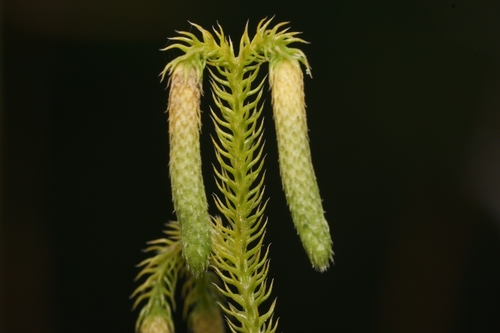
Palhinhaea is a genus of lycophytes in the family Lycopodiaceae. In the Pteridophyte Phylogeny Group classification of 2016 (PPG I), it is placed in the subfamily Lycopodielloideae. Some sources do not recognize the genus, sinking it into Lycopodiella. Palhinhaea species are widespread in the tropics and subtropics.
Austrolycopodium
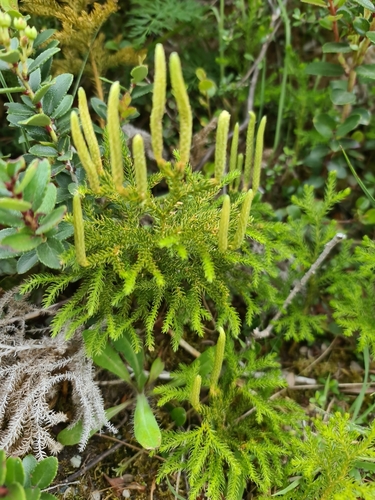
Austrolycopodium is a genus of lycophytes in the family Lycopodiaceae. In the Pteridophyte Phylogeny Group classification of 2016 (PPG I), it is placed in the subfamily Lycopodioideae. Some sources do not recognize the genus, sinking it into Lycopodium. Austrolycopodium species are mostly native to the temperate southern hemisphere.

Pseudolycopodiella
Pseudolycopodiella is a genus of non-seed plants in the Lycopodiaceae, long considered part of Lycopodium, but now recognized as a separate genus. It has 10–14 recognized species, only one in North America: Pseudolycopodiella caroliniana.
Phylloglossum
Phylloglossum, a genus in the clubmoss family Lycopodiaceae, is a small plant superficially resembling a tiny grass plant, growing with a rosette of slender leaves 2–5 cm long from an underground bulb-like root. It has a single central stem up to 5 cm tall bearing a spore-producing cone at the apex, and was previously classified variously in the family Lycopodiaceae or in its own family the Phylloglossaceae, but recent genetic evidence demonstrates it is most closely related to the genus Huperzia and is a sister clade to the genus Phlegmariurus, which was formerly included in Huperzi
Dendrolycopodium
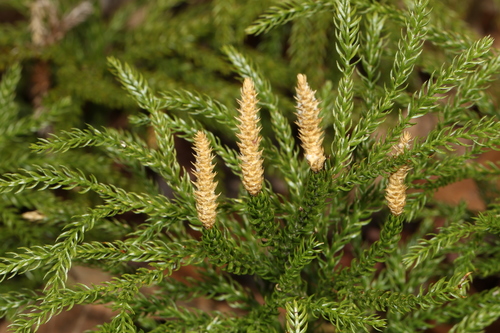
The genus Dendrolycopodium is a clubmoss genus in the family Lycopodiaceae. In the Pteridophyte Phylogeny Group classification of 2016 (PPG I), it is placed in the subfamily Lycopodioideae. Some sources do not recognize the genus, sinking it into Lycopodium. It is treated as section Obscura when retained within Lycopodium. The genus includes a discrete group of plants with similar morphologies. All have erect to semi-erect, branched stems.

Spinulum
Spinulum is a genus of club mosses in the family Lycopodiaceae. In the Pteridophyte Phylogeny Group classification of 2016 (PPG I), it is placed in the subfamily Lycopodioideae. Some sources do not recognize the genus, sinking it into Lycopodium. Spinulum annotinum is widespread in the temperate Northern Hemisphere.

Diphasium
Diphasium is a genus of lycophytes in the family Lycopodiaceae. In the Pteridophyte Phylogeny Group classification of 2016 (PPG I), it is placed in the subfamily Lycopodioideae. Some sources do not recognize the genus, sinking it into Lycopodium, others include it in Diphasiastrum. Diphasium species are mostly native to the temperate southern hemisphere, but extend northwards into Central America and the Caribbean.

Lateristachys
Lateristachys is a genus of lycophytes in the family Lycopodiaceae. In the Pteridophyte Phylogeny Group classification of 2016 (PPG I), it is placed in the subfamily Lycopodielloideae. Some sources do not recognize the genus, sinking it into Lycopodiella. Lateristachys species are native to the Philippines, Australia and New Zealand.
Lycopodiastrum
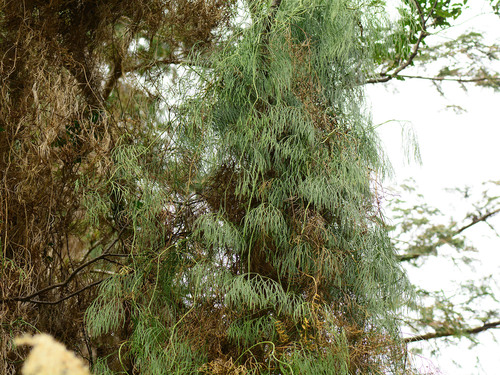
Lycopodiastrum is a genus of lycophyte in the family Lycopodiaceae with only one species, Lycopodiastrum casuarinoides. In the Pteridophyte Phylogeny Group classification of 2016 (PPG I), the genus is placed in the subfamily Lycopodioideae. Some sources do not recognize the genus, sinking it into Lycopodium. Lycopodiastrum casuarinoides is native to south-eastern Asia, from Tibet through China to Japan in the north, and from Sumatra to Sulawesi in the south.