Category
page 1Madhyamaka

Mahāyāna
thumb|260px|An illustration in a manuscript of the Aṣṭasāhasrikā Prajñāpāramitā Sūtra from [[Nalanda, depicting the bodhisattva Maitreya, an important figure in Mahāyāna]]

essence
Essence () has various meanings and uses for different thinkers and in different contexts. It is used in philosophy and theology as a designation for the property or set of properties or attributes that make an entity the entity it is or, expressed negatively, without which it would lose its identity. Essence is contrasted with accident, which is a property or attribute the entity has accidentally or contingently, but upon which its identity does not depend.

Śūnyatā
Śūnyatā ( ; ; "emptiness", "voidness", "vacuity") is an Indian philosophical concept In Buddhism, Jainism, Hinduism, and other Indian philosophical traditions. The concept has multiple meanings depending on its doctrinal context; an ontological feature of reality, a meditative state, or a phenomenological analysis of experience.

pratītyasamutpāda
thumb|upright=1.5|Brick inscribed with the Sutra on Dependent Origination. Found in Gopalpur, Gorakhpur District, Uttar Pradesh. Dated , Gupta Empire|Gupta period. [[Ashmolean Museum.]]
reductio ad absurdum
form of argument in informal logic

Madhyamaka
Madhyamaka (; ; , chữ Nôm: ; ) also known as Madhyamika () refers to a tradition of Buddhist philosophy and practice founded by the Indian Buddhist monk and philosopher Nāgārjuna (). The foundational text of the Mādhyamaka tradition is Nāgārjuna's Mūlamadhyamakakārikā ("Root Verses on the Middle Way"). More broadly, Madhyamaka also refers to the ultimate nature of phenomena as well as the non-conceptual realization of ultimate reality that is experienced in meditation.

Tsongkhapa
Tibetan Buddhist monk, philosopher, and guru (c. 1357–1419)
Middle way
Buddhist doctrine

Śāntarakṣita
'''''' (Sanskrit: शान्तरक्षित; , 725–788), whose name translates into English as "protected by the One who is at peace" was an important and influential Indian Buddhist philosopher, particularly for the Tibetan Buddhist tradition. Śāntarakṣita was a philosopher of the Madhyamaka school who studied at Nalanda monastery under Jñānagarbha, and became the founder of Samye, the first Buddhist monastery in Tibet.
Ātman
Buddhist concept
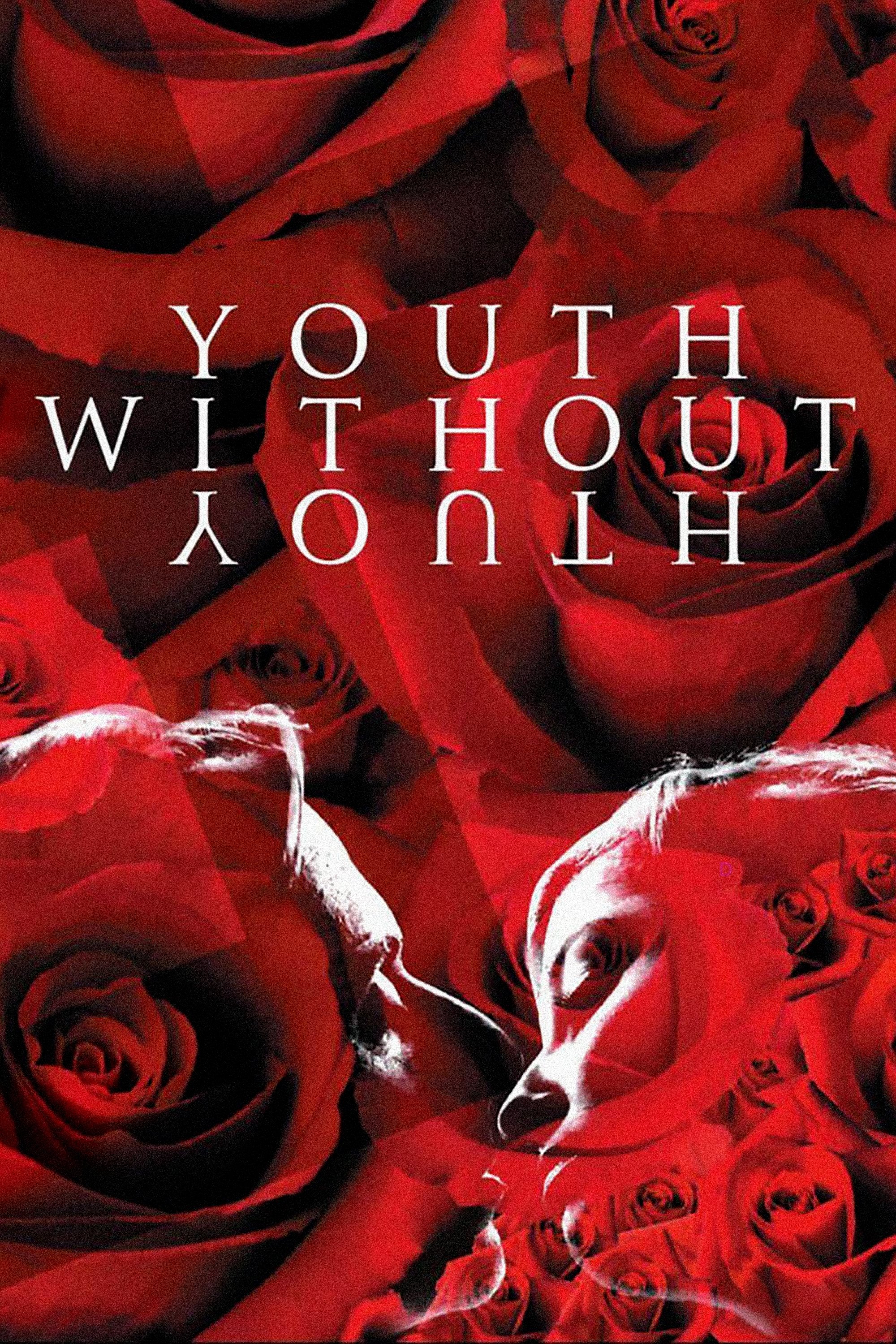
Youth Without Youth
2007 film by Francis Ford Coppola

Mūlamadhyamakakārikā
The Mūlamadhyamakakārikā (), abbreviated as MMK, is the foundational text of the Madhyamaka school of Mahāyāna Buddhist philosophy. It was composed by the Indian philosopher Nāgārjuna (around roughly 150 CE).
Sengzhao
Sengzhao (; , Sōjō; 384–414) was a Chinese Buddhist philosopher from Later Qin. Born to a poor family in Jingzhao, he acquired literary skills, apparently including the capacity to read Pali, and became a scribe. This exposed him to a variety of uncommon documents. He was influenced by Taoists, Laozi and Zhuangzi, and although we are told he enjoyed Lao Tzu’s Daodejing, he was overjoyed when he discovered the Vimalakirti Sutra. This encounter transformed his life and he became a Buddhist. He was known as being among the ablest of the disciples of Kumārajīva.
Buddhapālita
Buddhapālita (; , fl. 5th-6th centuries CE) was an Indian Mahayana Buddhist commentator on the works of Nagarjuna and Aryadeva. His Mūlamadhyamaka-vṛtti is an influential commentary to the Mūlamadhyamakakarikā.
East Asian Mādhyamaka
Buddhist tradition in East Asia which represents the Indian Madhyamaka
Two truths doctrine
Buddhist differentiation of conventional & ultimate (paramārtha) truth
svabhava
Svabhava (, svabhāva; , sabhāva; ; ; ) literally means "own-being" or "own-becoming". It is the intrinsic nature, essential nature or essence of beings.
bundle theory
ontological theory about objecthood in which an object consists only of a collection (bundle) of properties, relations or tropes; originated by Hume
Catuṣkoṭi
Catuṣkoṭi (Sanskrit; Devanagari: चतुष्कोटि, , Sinhalese:චතුස්කෝටිකය) refers to logical argument(s) of a 'suite of four discrete functions' or 'an indivisible quaternity' that has multiple applications and has been important in the Indian logic and the Buddhist logico-epistemological traditions, particularly those of the Madhyamaka school.
Svatantrika
doctrinal distinction within Tibetan Buddhism
Sakya Chokden
Tibetan Buddhist religious figure, 1428–1507
Śataśāstra
The Śataśāstra is the reconstructed Sanskrit title of a Buddhist treatise in the Mādhyamaka tradition known only in its Chinese translation under the title Bai lun (). Both names translate to the Hundred Verse Treatise, although the word "verse" is implied and not actually present in either Sanskrit or Chinese. It is attributed to Āryadeva, a student of Nāgārjuna. The text was translated into Chinese by Kumārajīva in 404 CE and came to be counted as one of the three foundational texts of the Three Treatise School. In the Chinese tradition, another text by Āryadeva called the Catuḥśataka—which
Madhyamakāvatāra
The Madhyamakāvatāra () is a text by Candrakīrti (600–c. 650) on the Mādhyamaka school of Buddhist philosophy. Candrakīrti also wrote an auto-commentary to the work, called the Madhyamakāvatārabhasya.