Category
page 1Mahayana Buddhists

Nagarjuna
Nāgārjuna (, ; ) was an Indian philosopher and Mahāyāna Buddhist monk of the Madhyamaka (Centrism, Middle Way) school. Nāgārjuna is widely considered one of the most important Buddhist philosophers. He was the founder of the Madhyamaka school of Buddhist philosophy and a defender of the Mahāyāna movement. His Mūlamadhyamakakārikā (Root Verses on Madhyamaka, MMK) is the most important text on the Madhyamaka philosophy of emptiness. The MMK inspired a large number of commentaries in Sanskrit, Chinese, Tibetan, Korean and Japanese and continues to be studied today.
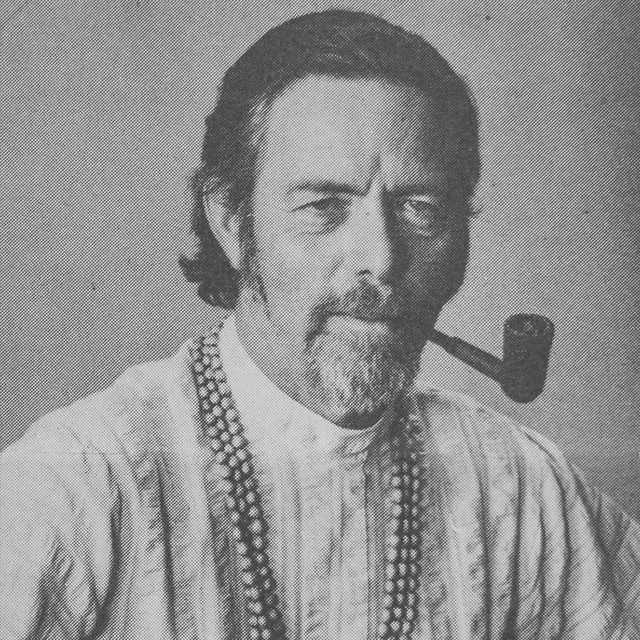
Alan Watts
British American author and lecturer (1915–1973)

Vasubandhu
Vasubandhu (; Tibetan: དབྱིག་གཉེན་ ; fl. 4th to 5th century CE) was an influential Indian Buddhist monk and scholar. He was a philosopher who wrote commentary on the Abhidharma, from the perspectives of the Sarvastivada and Sautrāntika schools. After his conversion to Mahayana Buddhism, along with his brother, Asanga, he was also one of the main founders of the Yogacara school.
Shantideva
Shantideva (Sanskrit: Śāntideva; ; ; ; ) was an 8th-century CE Indian philosopher, Buddhist monk, poet, and scholar at the mahavihara of Nalanda. He was an adherent of the Mādhyamaka philosophy of Nāgārjuna. Abhayadatta Sri also lists Shantideva as one of the eighty-four mahasiddhas and is known as Bhusuku Pa (布苏固巴).

Huvishka
Huvishka (Kushan: Οοηϸκι, Ooēški, Brahmi: 𑀳𑀼𑀯𑀺𑀱𑁆𑀓; ', '; Kharosthi: 𐨱𐨂𐨬𐨅𐨮𐨿𐨐 ', ') was the emperor of the Kushan Empire from the death of Kanishka (assumed on the best evidence available to be in 150 CE) until the succession of Vasudeva I about thirty years later.
Suryavarman I
Cambodian king
Paramartha
Indian Buddhist monk and translator active in China (499–569)
Vasumitra
Buddhist monk of the Sarvastivada school who flourished in the 2nd century CE