Category
page 1Malvaceae genera

Tilia
Tilia is a genus of about 30 species of trees or bushes, native throughout most of the temperate Northern Hemisphere. The species are known as linden or lime for the European and Asian species, and linden or basswood for North American species and more generally in American literature. The greatest species diversity is found in Asia, but the genus also occurs widely in Europe and eastern North America. Under the Cronquist classification system, this genus was placed in the family Tiliaceae, but genetic research summarised by the Angiosperm Phylogeny Group has resulted in the incorporation of t

Hibiscus
Hibiscus is a genus of flowering plants in the mallow family, Malvaceae. The genus is quite large, comprising several hundred species that are native to warm temperate, subtropical and tropical regions throughout the world. Member species are renowned for their large, showy flowers and those species are commonly known simply as "hibiscus", or less widely known as rose mallow. The genus includes both annual and perennial herbaceous plants, as well as woody shrubs and small trees.

Adansonia
Adansonia is a genus of medium-to-large deciduous trees known as baobabs (also boabab; or ). The eight species of Adansonia are native to Africa, Australia, and Madagascar but have also been introduced to other regions of the world, including Barbados, where several of the baobabs there are suspected to have originated from Africa. Other baobabs have been introduced to Asia. A genomic and ecological analysis further suggests that the genus itself originated from Madagascar.

Gossypium
Gossypium () is a genus of flowering plants in the tribe Gossypieae of the mallow family, Malvaceae, from which cotton is harvested. It is native to tropical and subtropical regions of the Old and New Worlds. There are about 50 Gossypium species, making it the largest genus in the tribe Gossypieae, and new species continue to be discovered. The name of the genus is derived from the Arabic word goz, which refers to a soft substance.

Malva
thumb|right|190px|Malva sylvestris
alt=Cheeseweed, Behbahan|thumb|Cheeseweed, Behbahan, Iran

Durio
Durio is a genus of plants in the family Malvaceae. Several species produce an edible fruit known as durian, the most common species being Durio zibethinus, with eight others producing edible fruit.

Cola
genus of plants
.jpg)
Alcea
Alcea is a genus of over 80 species of flowering plants in the mallow family Malvaceae, commonly known as the hollyhocks. They are native to Asia and Europe. The single species of hollyhock from the Americas, the streambank wild hollyhock, belongs to a different genus.

Corchorus
Corchorus is a genus of about 40–100 species of flowering plants in the family Malvaceae, native to tropical and subtropical regions throughout the world.

Abutilon
Abutilon is a large genus of flowering plants in the mallow family, Malvaceae. It is distributed throughout the tropics and subtropics of the Americas, Africa, Asia, and Australia. General common names include Indian mallow and velvetleaf; ornamental varieties may be known as room maple, parlor maple, or flowering maple.
The genus name is an 18th-century Neo-Latin word that came from the Arabic '''' (), the name given by Avicenna to this or a similar genus.

Althaea
genus of plants
-%20fallen%20flower%20at%20ground%20in%20Kolkata%20W%20IMG%204121.jpg)
Bombax
Bombax is a genus of mainly tropical trees in the mallow family, Malvaceae. They are native to western Africa, the Indian subcontinent, Southeast Asia, and the subtropical regions of East Asia and northern Australia. It is distinguished from the genus Ceiba, which has whiter flowers.

Abelmoschus
Abelmoschus is a genus of about fifteen species of flowering plants in the family Malvaceae, native to tropical Africa, Asia and northern Australia. It was formerly included within Hibiscus, but is now classified as a distinct genus. The genus name derives from Arabic meaning 'father of musk' or 'source of musk' referring to the scented seeds.

Theobroma
Theobroma is a genus of flowering plants in the mallow family, Malvaceae. It was previously classified as a member of Sterculiaceae, which has been incorporated into Malvaceae to make it monophyletic. It contains 41 species of small understory trees native to the tropical forests of Central and South America.

Ceiba
Ceiba is a genus of trees in the family Malvaceae, native to tropical and subtropical areas of the Americas (from Mexico and the Caribbean to northern Argentina) and tropical West Africa. Some species can grow to tall or more, with a straight, largely branchless trunk that culminates in a huge, spreading canopy, and buttress roots that can be taller than a grown person. The best-known, and most widely cultivated, species is kapok, Ceiba pentandra, one of several trees known as kapok. Ceiba is a word from the Taíno language meaning "boat" because Taínos use the wood to build their dugout canoes

Brachychiton
Brachychiton (kurrajong, bottletree) is a genus of 31 species of trees and large shrubs, native to Australia (the centre of diversity, with 30 species) and New Guinea (one species). Fossils from New South Wales and New Zealand are estimated to be 50 million years old, corresponding to the Paleogene.

Sida
genus of plants

Grewia
thumb|Grewia damine flowers in [[Hyderabad, India]]
thumb|Grewia flavescens flowers in Hyderabad
thumb|Grewia tiliaefolia flowers in Hyderabad
Grewia is a large flowering plant genus in the mallow family Malvaceae, in the expanded sense as proposed by the Angiosperm Phylogeny Group. Formerly, Grewia was placed in either the family Tiliaceae or the Sparrmanniaceae. However, these were both not monophyletic with respect to other Malvales - as already indicated by the uncertainties surrounding placement of Grewia and similar genera - and have thus been merged into the Malvaceae. Together with the
%20(8679258490).jpg)
Sterculia
thumb|Ripe fruit capsules releasing their smooth seeds, Malaysia
thumb|S. setigera, dry capsules and seeds – MHNT
thumb|S. pruriens, wood texture – MHNT
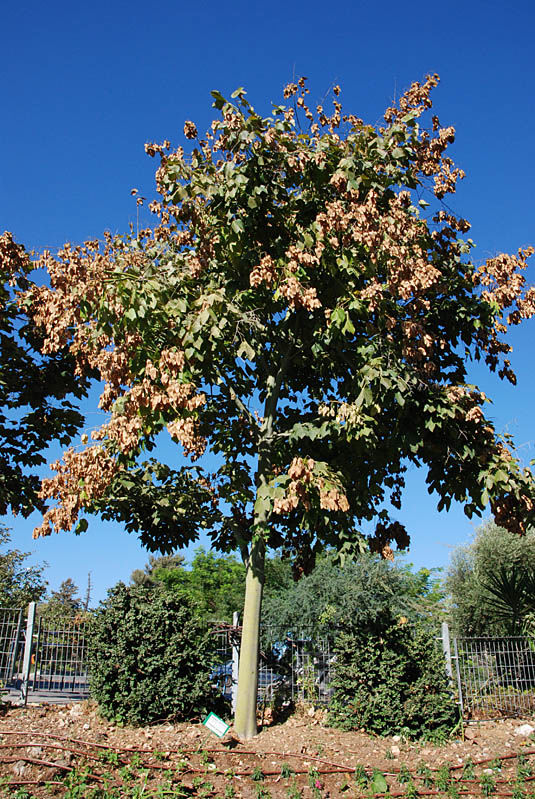
Firmiana
Firmiana is a genus of flowering plant in the family Malvaceae, native to tropical and temperate south, southeast, and Eastern Asia to New Guinea and the southwest Pacific. It was formerly placed in the now defunct family Sterculiaceae and may sometimes be called the "parasol tree". The genus name honours Karl Joseph von Firmian. The defining characteristic of the genus Firmiana is the development of the fruit. Shortly after pollination the five carpels unfold to be flat and turn green with four developing seeds attached to the edge, fully exposed to the environment.
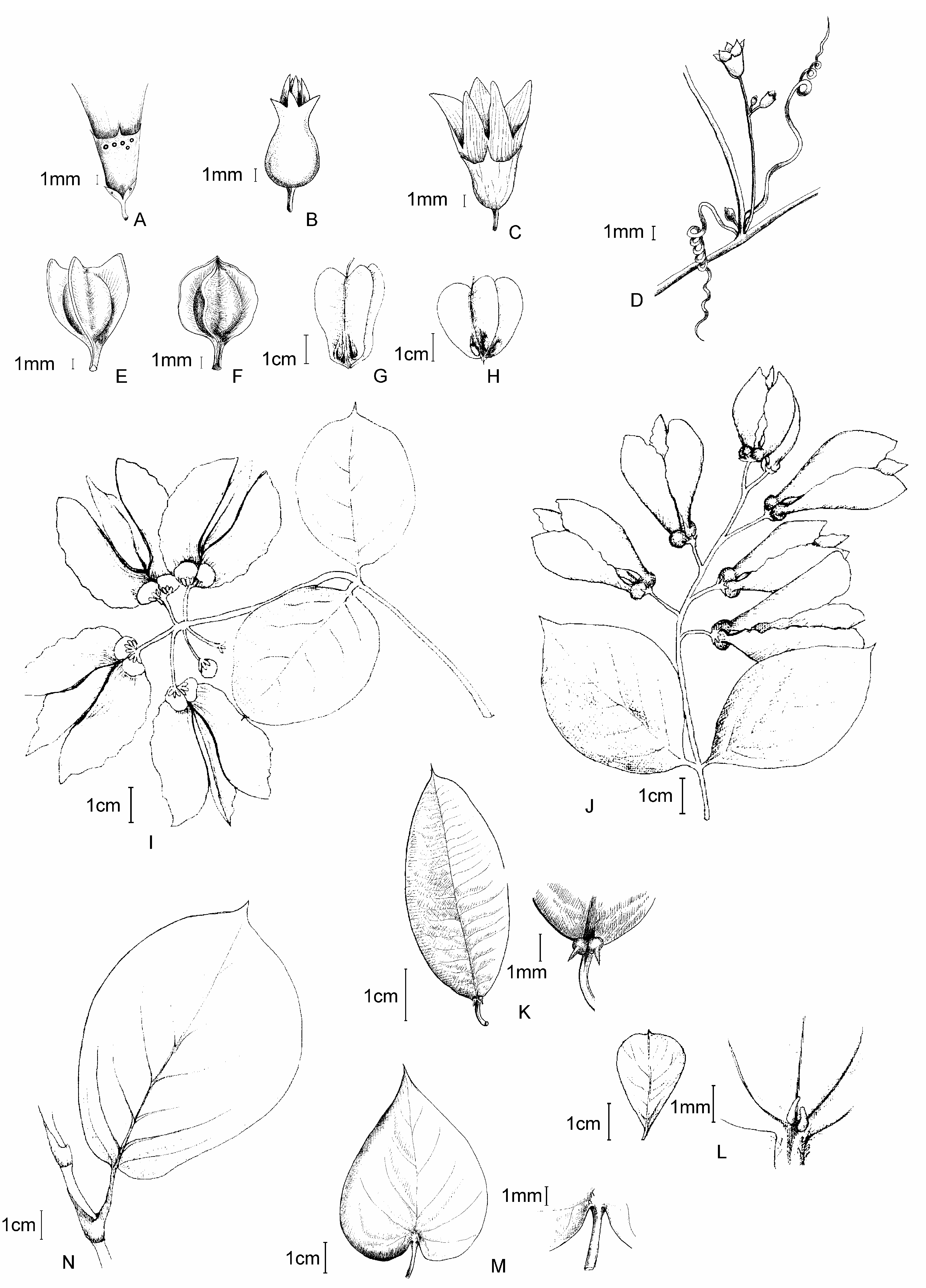
Heritiera
Heritiera is a genus of flowering plants in the family Malvaceae, subfamily Sterculioideae. They are most dominant tropical forest trees in several areas in eastern Africa and India to the Pacific. Some are mangroves. Several are valuable for their timber and are over-exploited.

Dombeya
Dombeya is a flowering plant genus. Traditionally included in the family Sterculiaceae, it is included in the expanded Malvaceae in the APG and most subsequent systematics. These plants are known by a number of vernacular names which sometimes, misleadingly, allude to the superficial similarity of flowering Dombeya to pears or hydrangeas (which are unrelated). Therefore, the genus as a whole is often simply called dombeyas. The generic name commemorates Joseph Dombey (1742–1794), a French botanist and explorer in South America, involved in the notorious "Dombey affair", embroiling scientists a

Pachira
Pachira is a genus of tropical trees distributed in Central and South America and the Caribbean, ranging from Mexico to Bolivia and southern Brazil. They are classified in the subfamily Bombacoideae of the family Malvaceae. Previously the genus was assigned to Bombacaceae.
Prior to that the genus was found in the (now obsolete) Sterculiaceae.

Pavonia
genus of plants

Thespesia
Thespesia is a genus of 14 flowering shrubs and trees in the Hibiscus family, Malvaceae, although within the family they are more closely related to cotton plants (Gossypium). The genus is distributed from the South Pacific through Asia, Africa, and the Caribbean.

Malope
Malope is a genus in the family (Malvaceae). It includes four species native to the Mediterranean basin countries of southern Europe, northwestern Africa, and Turkey. Malope trifida is often used as an ornamental plant.

Malvaviscus
thumb|Malvaviscus (Maui)
Malvaviscus is a genus of flowering plants in the mallow family, Malvaceae. Common names for species in this genus include '''Turk's cap mallow, wax mallow, sleeping hibiscus, and mazapan'. It belongs to a group of genera that differ from the closely related Hibiscus in possessing a fruit divided into 5 separate parts (a schizocarp), and having a style surmounted by 10, rather than 5, capitate or capitellate stigmas. Among those genera Malvaviscus is distinguished by having auriculate petals and red, fleshy fruits.
The generic name is derived from the Latin words malva
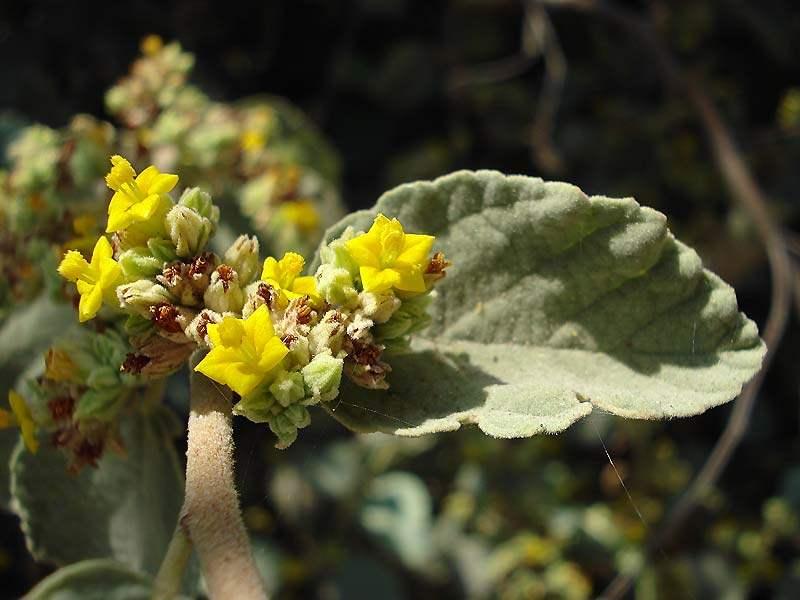
Waltheria
Waltheria is a genus of flowering plants in the mallow family, Malvaceae. It is sometimes placed in Sterculiaceae. It includes 61 species native to the tropical and subtropical Americas, West Africa, Madagascar, Peninsular Malaysia, northern Australia, and the central Pacific. The name honours German botanist Augustin Friedrich Walther (1688–1746).

Anoda
Anoda is a genus of flowering plants in the mallow family. It includes 24 species of herbs, native to the subtropical and tropical Americas from the southwestern United States (Arizona, New Mexico, and Texas) through Mexico, Central America, and western South America to northern Argentina and southern Chile. They are generally erect plants with a variety of leaf shapes, and many bear colorful flowers. Most bear distinctive disk-shaped segmented fruits.
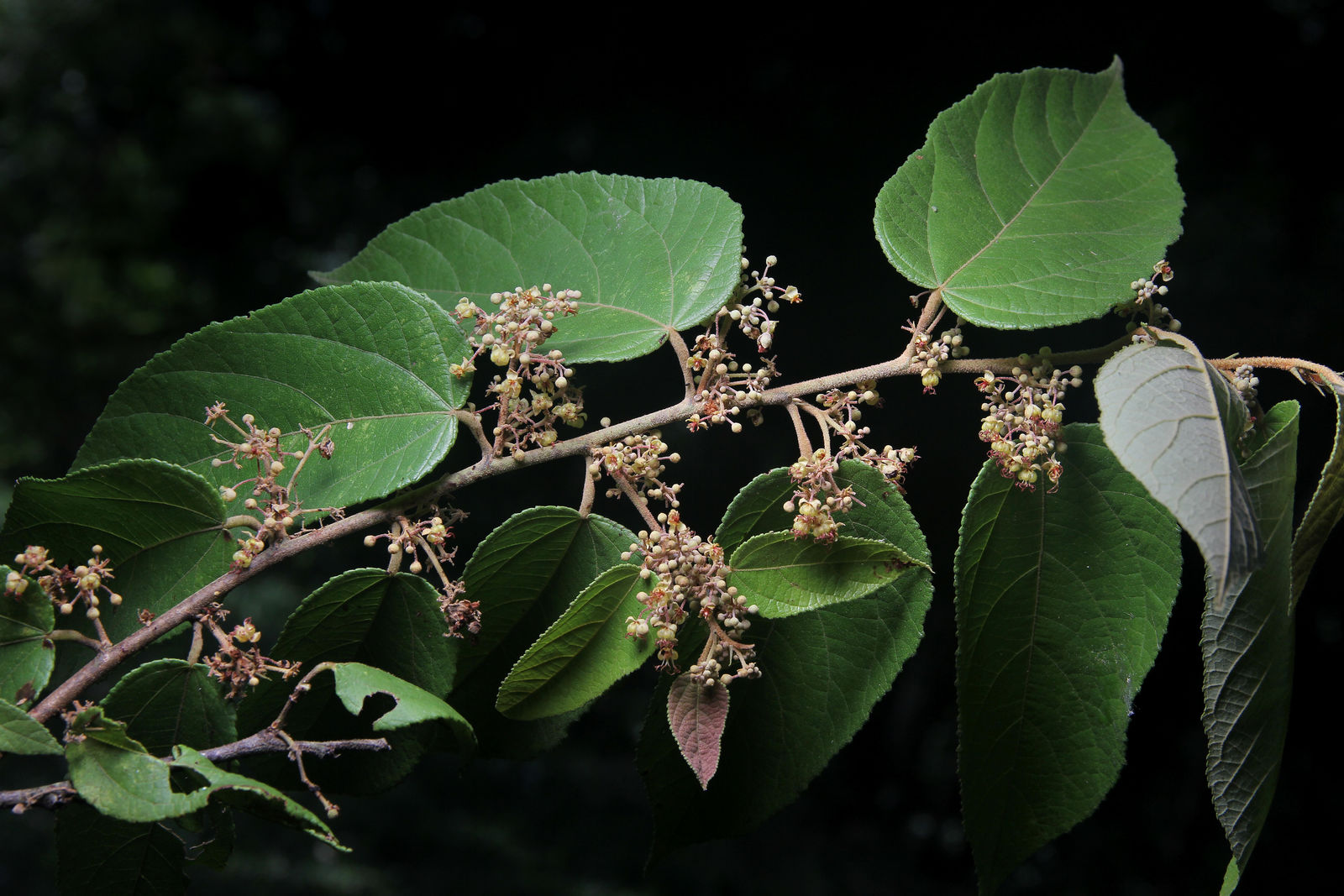
Guazuma
Guazuma is a genus of flowering plants in the family Malvaceae native Mexico and tropical America.
Sparrmannia
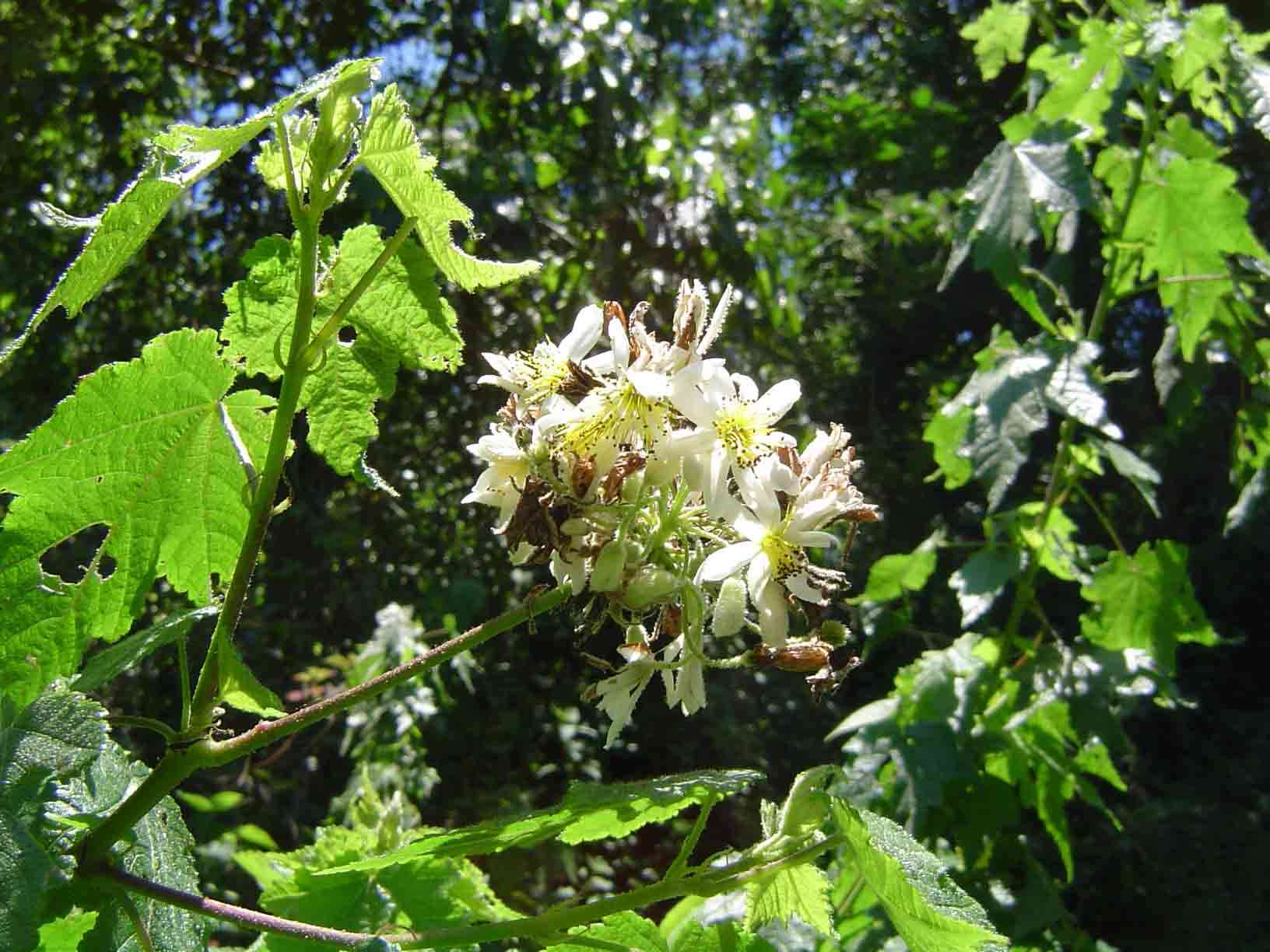
Sparrmannia is a genus of flowering plants in the family Malvaceae. It includes three species native to eastern, central, and southern Africa and Madagascar.
Helicteres
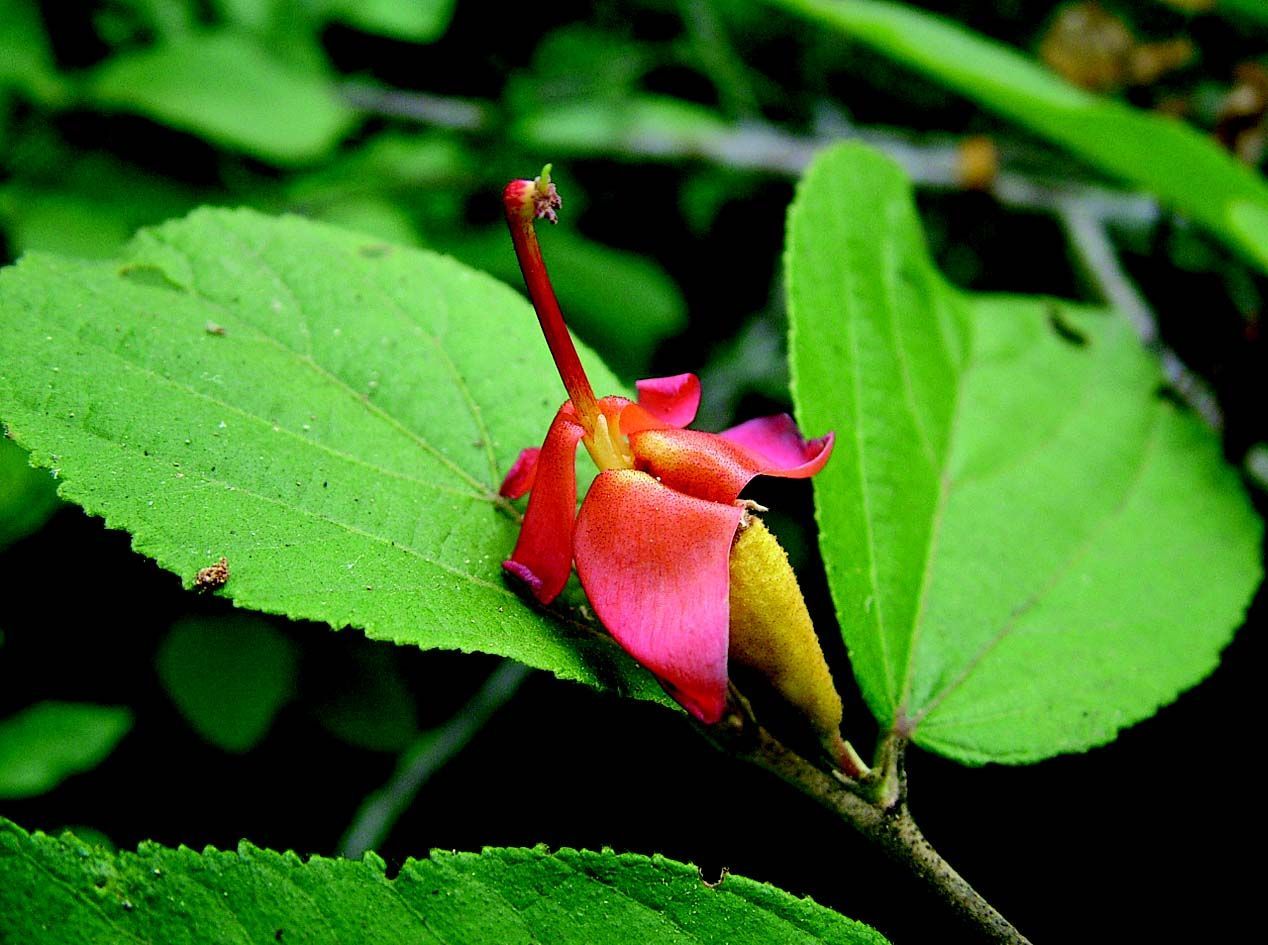
Helicteres is a genus of flowering plants in the family Malvaceae. Its range is from tropical and sub-tropical Asia through to northern Australia, and also Mexico through to the northern half of South America.
Scaphium
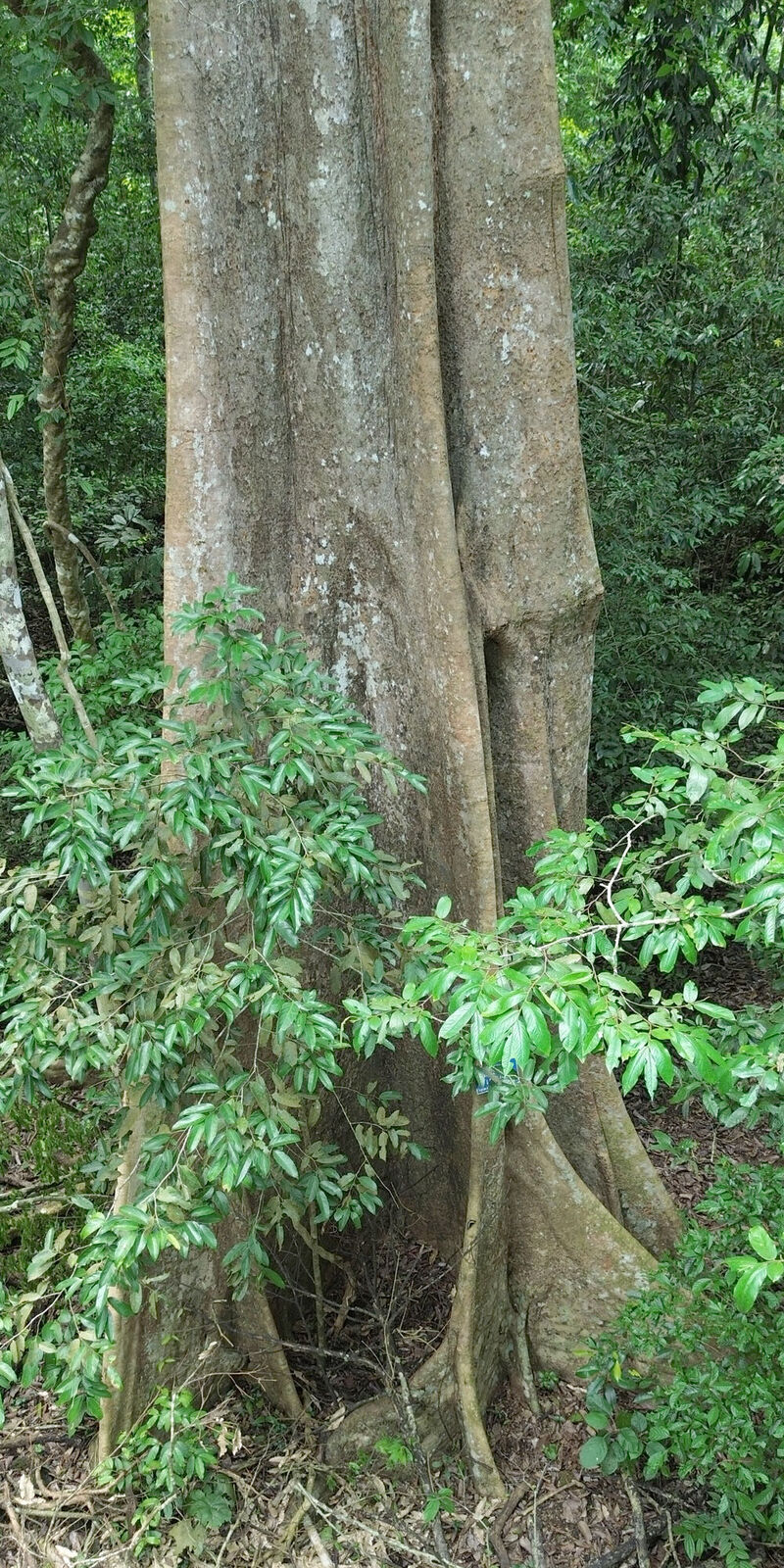
Scaphium is a genus of about eight species of plants in the subfamily Sterculioideae of the family Malvaceae. The species are native to tropical Asia, ranging from the eastern Himalayas through Indochina to Borneo and Sumatra. The name Scaphium was picked in reference to the shape of the plants' fruit, and is derived from the Greek word for skiff, skaphion (σκάφιον).

Fremontodendron
Fremontodendron, with the common names fremontia and flannelbush or flannel bush, is a genus of three known species of shrubs native to the Southwestern United States and northwest Mexico.

Kitaibela
Kitaibelia is a genus of flowering plants belonging to the family Malvaceae.

Urena
Urena is the genus of plants, which grow in various tropical and subtropical areas worldwide, although several species are Asian in origin. Some view Urena lobata as a weed, but others make use of its fibre for various purposes. The leaves and flowers are also a famine food in Africa. Its seeds are spread by animals. Fibres obtained from it are used for making coffee sacks in Brazil.

Sphaeralcea
Sphaeralcea is a genus of flowering plants in the mallow family (Malvaceae). There are about 40-60 species, including annuals, perennials, and shrubs. Most originate in the drier regions of North America, with some known from South America. They are commonly known as globemallows, globe mallows, false mallows or falsemallows. The name of the genus is derived from the Greek words σφαῖρα (sphaira), meaning "sphere," and αλκεα (alkea), meaning "mallow."
Kosteletzkya
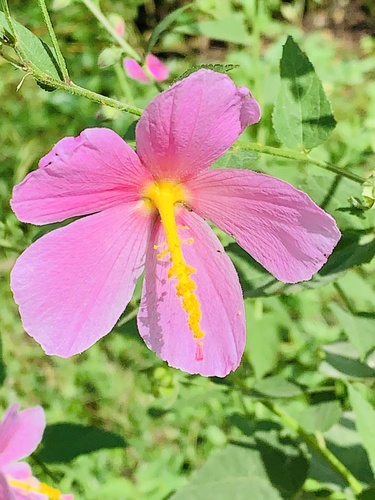
Kosteletzkya is a genus of the plant family Malvaceae that includes the seashore mallow (K. pentacarpos). It includes about 19 species found worldwide.
Malvastrum
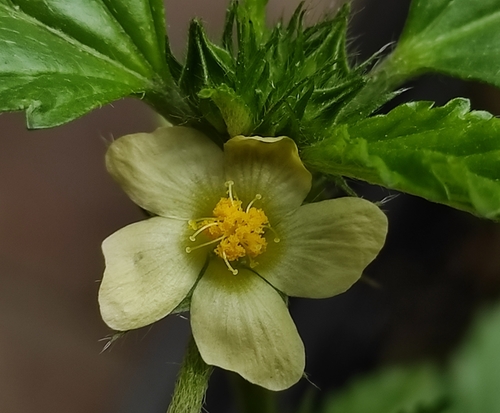
Malvastrum is a genus of flowering plants belonging to the family Malvaceae. Its native range is the New World.

Anisodontea
Anisodontea is a genus of flowering plants in the tribe Malveae of the mallow family Malvaceae. It comprises 19 species native to South Africa and Lesotho. Members of the genus typically bear toothed leaves with three or five palmate, uneven lobes. Members of the genus also typically bear flowers with a pubescent calyx, a five-petaled corolla streaked from the center and pink to magenta in color, and stamens with anthers of a dark color.

Kokia
genus of plants

Hoheria
Hoheria is a genus of six species of flowering plants in the family Malvaceae. All are endemic to New Zealand. The genus name is a Latinization of the Māori language name, houhere. That name, as well as lacebark and ribbonwood, are often used as common names. The name lacebark comes from the lace-like fibrous inner bark layer.
Callirhoe
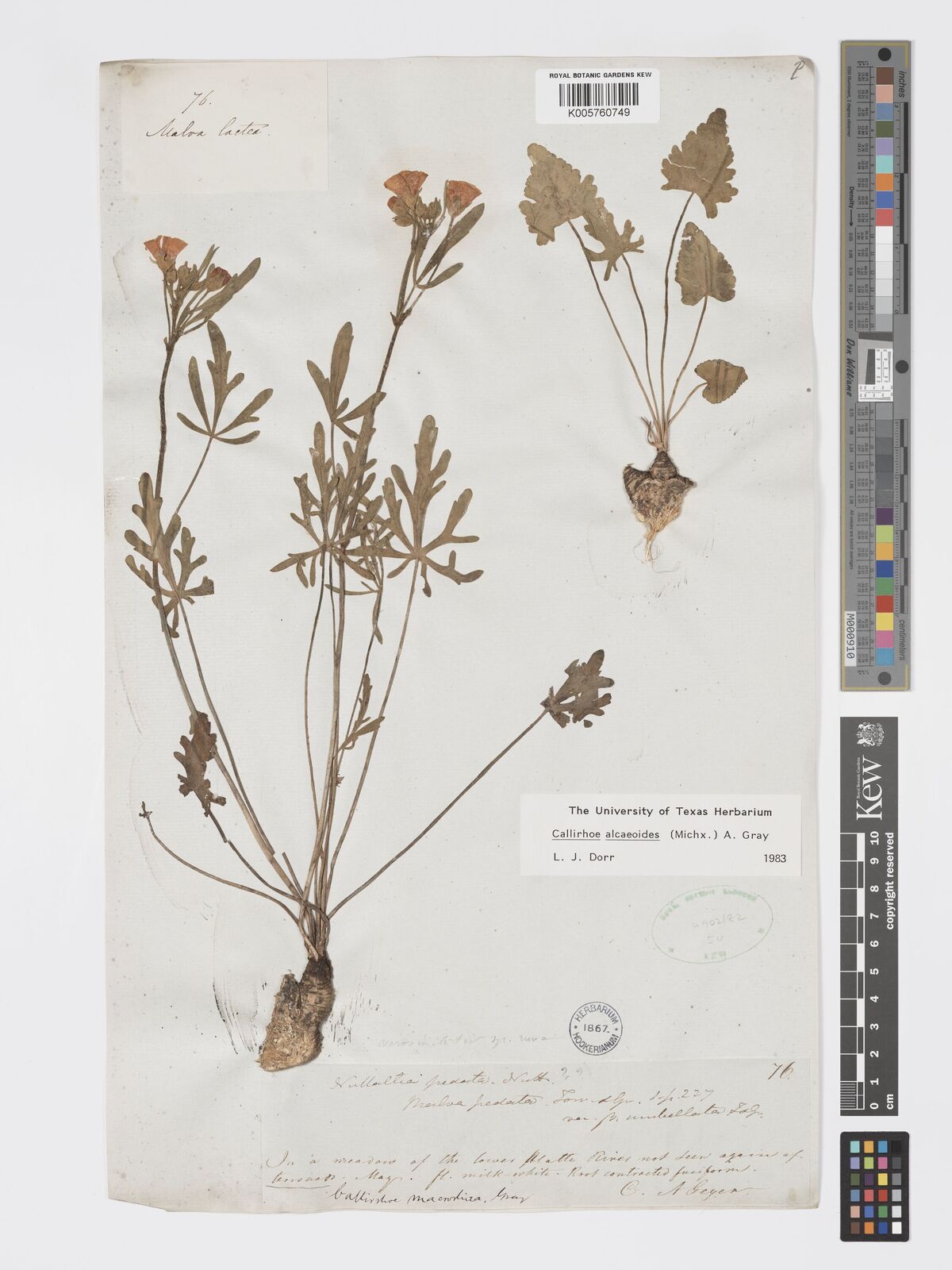
genus of plants in the family Malvaceae

Acaulimalva
Acaulimalva is a genus of plants in the family Malvaceae. It contains 21 species that are found in South America.
Eremalche
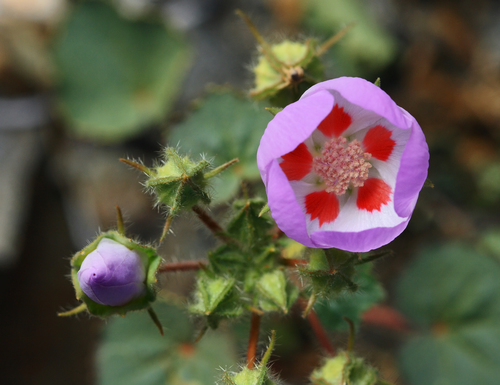
Eremalche is a genus of flowering plants in the mallow family. They are endemic to the United States desert southwest.
Neesia
Neesia is a genus of flowering plants in the Malvaceae family. It contains eight species, which are native to Thailand, Peninsular Malaysia, Sumatra, Borneo, and Java.
Luehea
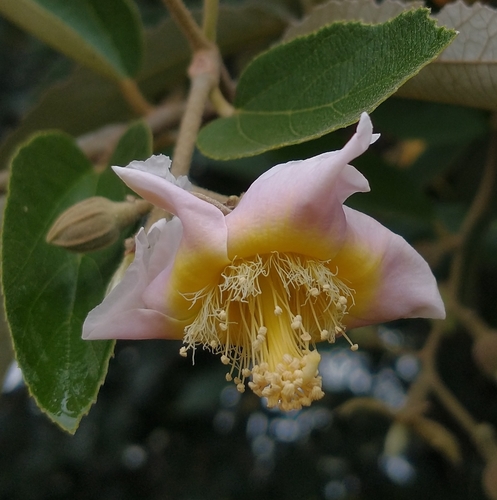
Luehea is a genus of trees in the family Malvaceae.

Acropogon
Acropogon is a genus of flowering plants in the family Malvaceae. The genus is endemic to New Caledonia. It contains around 25 species. Its closest relatives are Australian genera: Argyrodendron, Brachychiton and Franciscodendron.

Hibiscadelphus
Hibiscadelphus is a genus of flowering plants that are endemic to Hawaii. It is known by the Native Hawaiians as hau kuahiwi which means "mountain Hibiscus". The Latin name Hibiscadelphus means "brother of Hibiscus". It is distinctive for its peculiar flowers, which do not fully open. Hibiscadelphus is in the family Malvaceae, subfamily Malvoideae. Several of the species in this small genus are presumed extinct, as a result of coextinction with their primary pollinators, the Hawaiian honeycreepers.

Pterospermum
Pterospermum is a genus of flowering plants in the mallow family Malvaceae. Its species are tropical trees that range from southern China across tropical Asia.

Apeiba
thumb|Apeiba glabra - MHNT
thumb|Apeiba petoumo - MHNT
Trochetiopsis
The flowering plant genus Trochetiopsis consists of two extant and one extinct species endemic to the island of Saint Helena (South Atlantic Ocean). They were formerly placed in the family Sterculiaceae, but this is included in the expanded Malvaceae in the APG and most subsequent systematics.

Sidalcea
Sidalcea is a genus (approx. 25 species) of the botanical family Malvaceae. It contains several species of flowering plants known generally as checkerblooms or checkermallows, or prairie mallows in the United Kingdom. They can be annuals or perennials, some rhizomatous. They are native to West and Central North America.

Triumfetta
thumb|Triumfetta lepidota
thumb|Triumfetta pentandra
thumb|Triumfetta semitriloba
thumb|Triumfetta pilosa
Pseudobombax
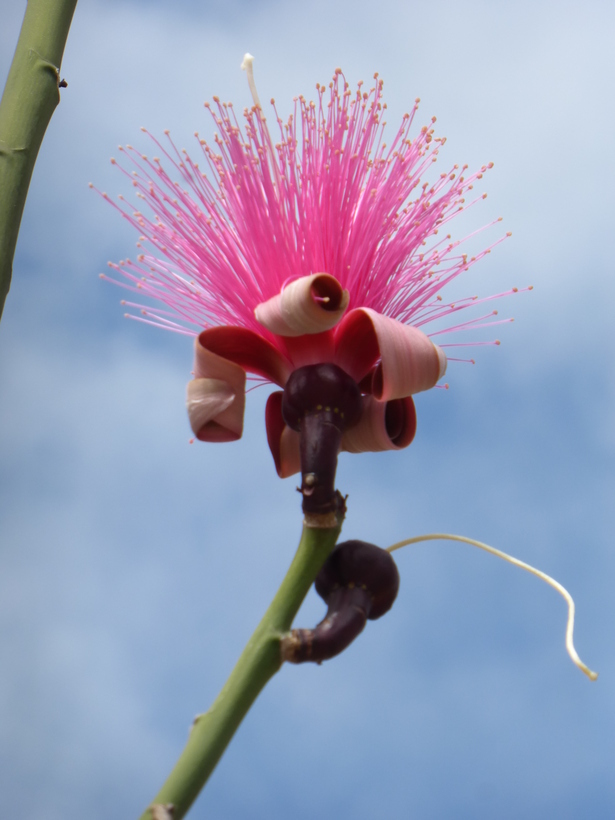
Pseudobombax is a genus of flowering plants in the subfamily Bombacoideae of the family Malvaceae.

Quararibea
Quararibea is a genus of flowering plants in the family Malvaceae. It includes 61 species native to the tropical Americas, ranging from Mexico through Central and South America to Bolivia and southeastern Brazil.
Cullenia
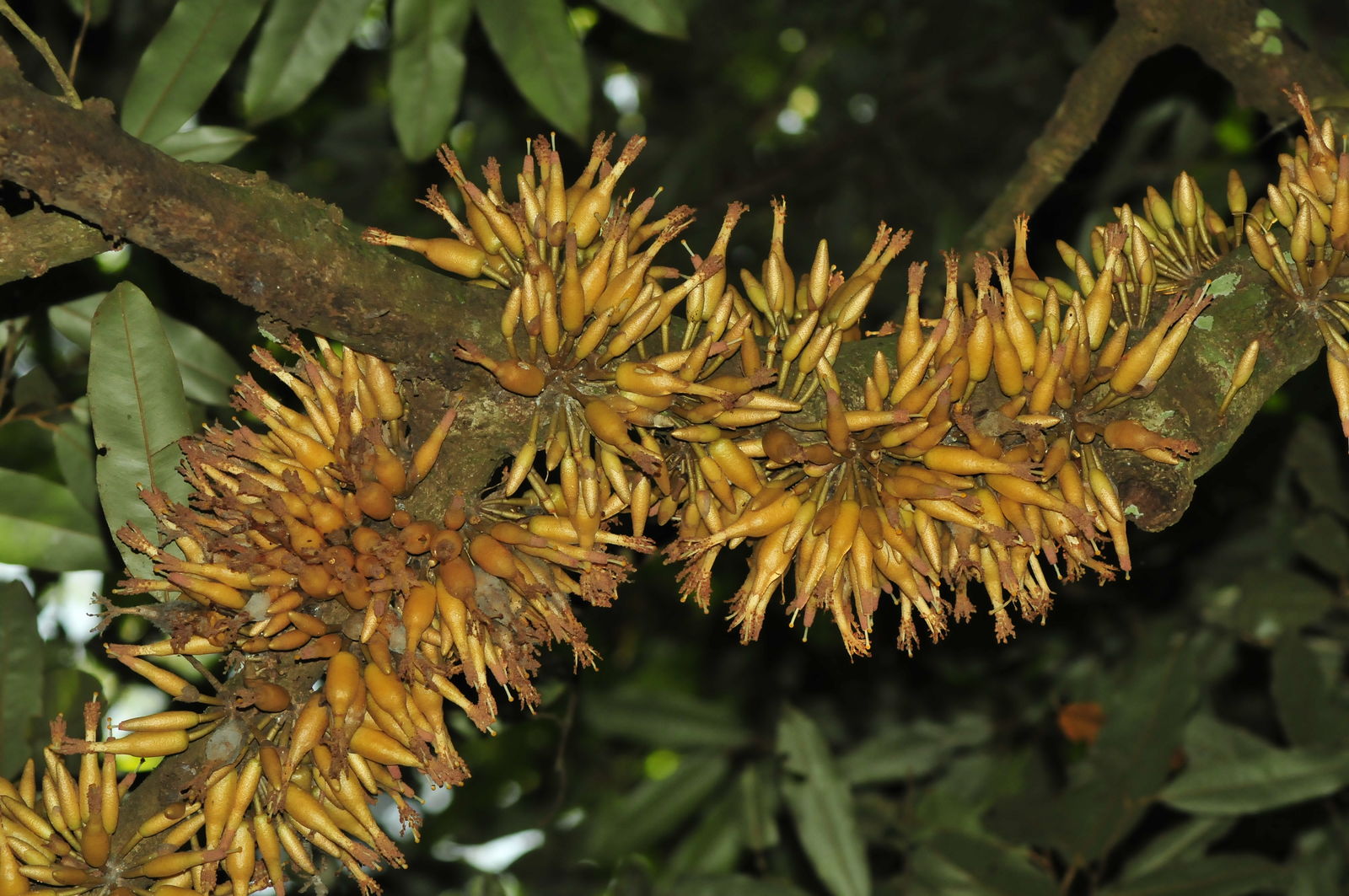
Cullenia is a genus of flowering plants native to India and Sri Lanka. Earlier classification schemes placed the genus in the kapok-tree family (Bombacaceae), but the Angiosperm Phylogeny Group places it in the mallow family (Malvaceae).
Cavanillesia
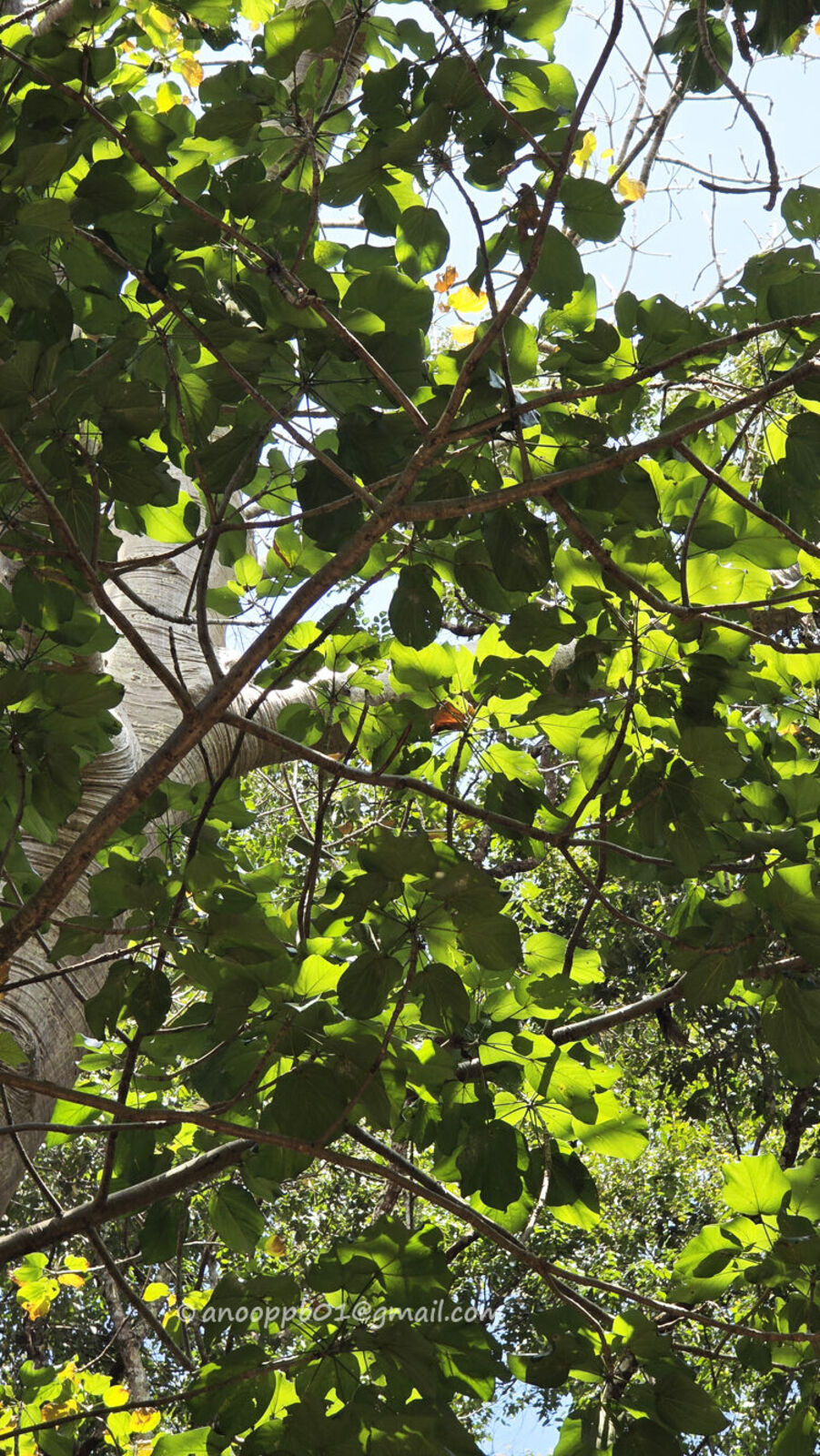
Cavanillesia is a genus of trees in the family Malvaceae. It is native to Panama and tropical South America.
Decaschistia
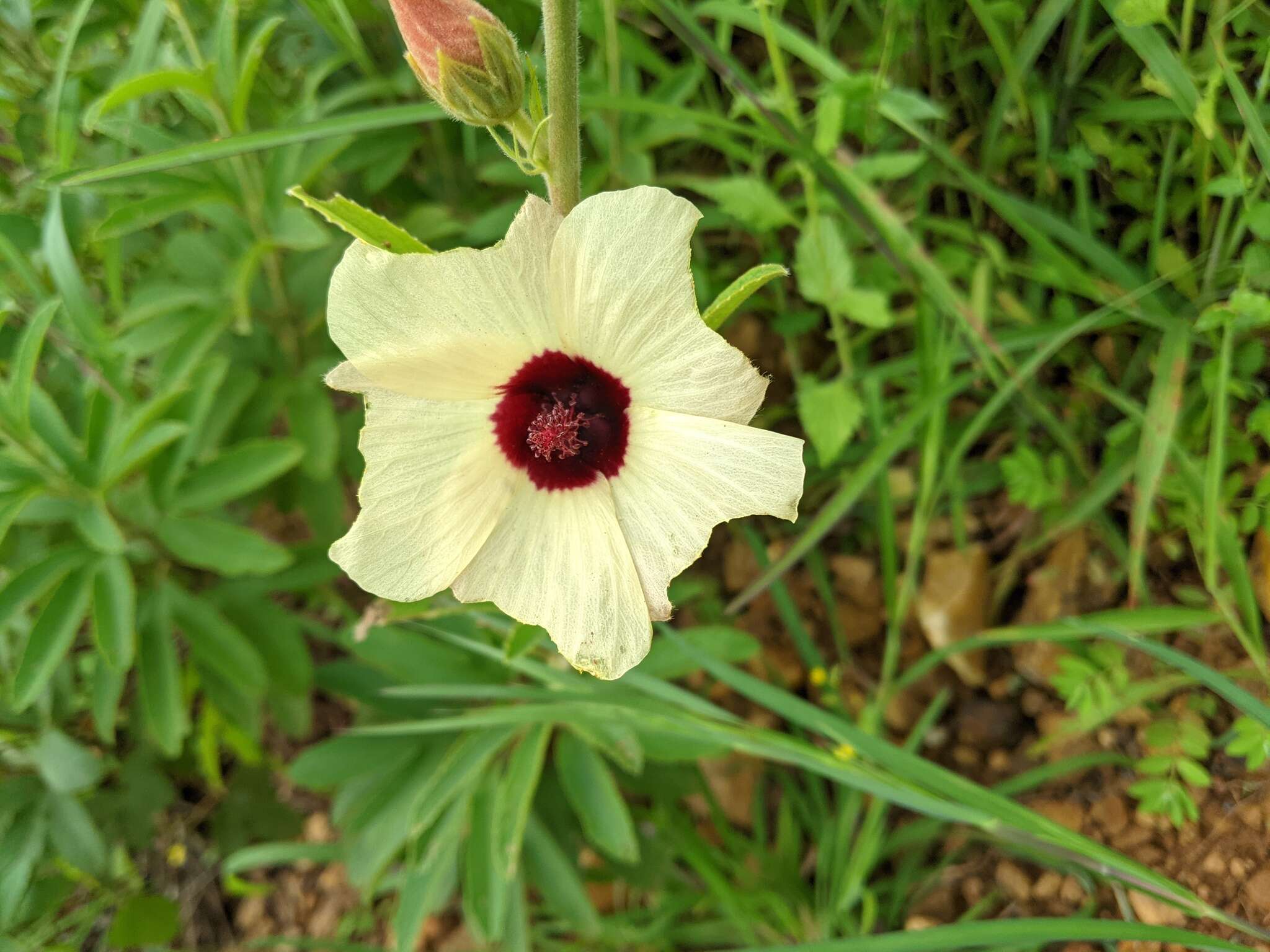
Decaschistia is a genus of flowering plants belonging to the family Malvaceae.
Burretiodendron
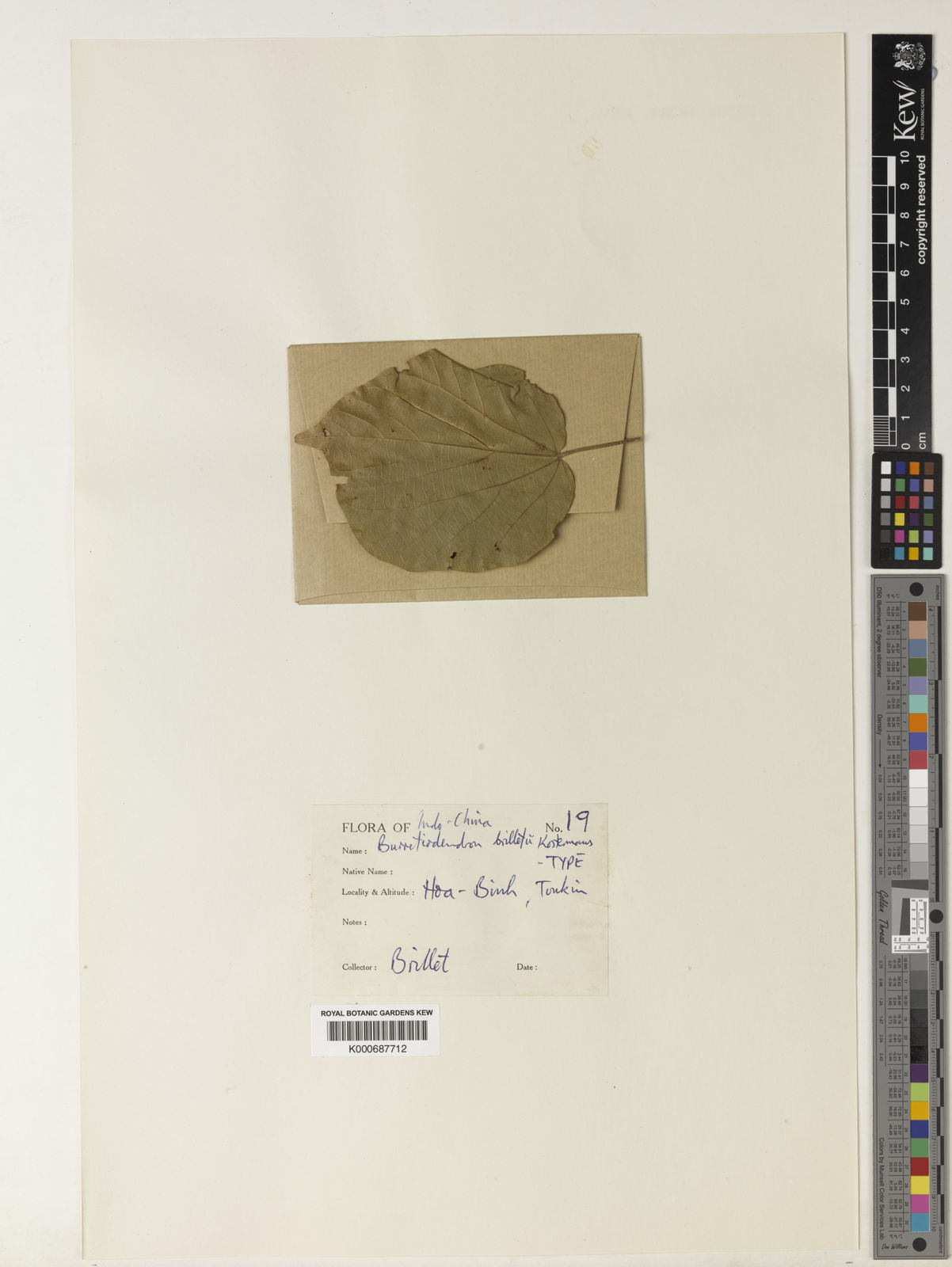
Burretiodendron is a genus of trees. Traditionally included in the family Tiliaceae, it is included in the expanded Malvaceae in the APG and most subsequent systematics. It contains some species formerly in the (not too closely related) genus Pentace. Thus, Parapentace Gagnep. may be a synonym of Burretiodendron rather than Pentace.