Category
page 2Mammal genera

Microgale
Microgale is a genus of mammal in the family Tenrecidae. There are 21 living species on the island of Madagascar and one extinct species known from a fossil. Some species have been discovered in the last twenty years.
Hemicentetes
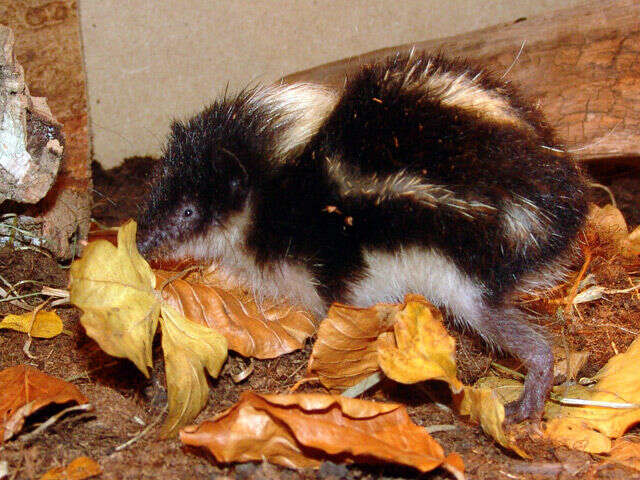
Hemicentetes is a genus of tenrec with two species, present on the island of Madagascar.
Paraechinus
Paraechinus is a genus of hedgehogs. Members are small and nocturnal. The genus contains four species from North Africa, the Middle East and South Asia:

Moschiola
Moschiola, the spotted chevrotains, are a genus of small even-toed ungulates in the family Tragulidae. They are found in forests in India, Sri Lanka and perhaps Nepal, and have pale-spotted or -striped upperparts unlike the other Asian members of the family, the mouse-deer of the genus Tragulus.
Myosorex
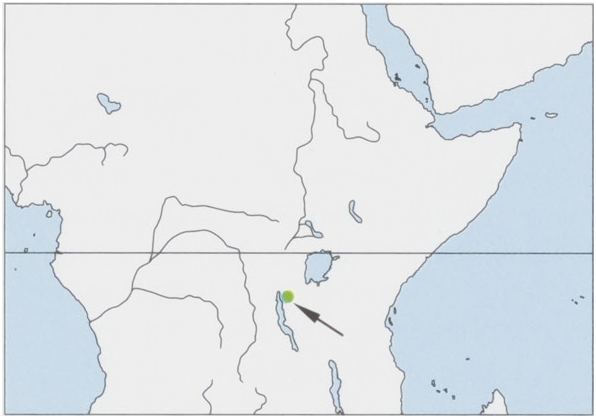
Myosorex is a mammal genus in the Soricidae (shrew) family. The genus, collectively referred to as the mouse shrews, contains these species:
Hylomys
Hylomys is a small genus of the family Erinaceidae. Hylomys species, like all species in the subfamily Galericinae, are known as gymnures or moonrats. Their closest relatives include the fossil Lantanotherium and Thaiagymnura and the living Neotetracus and Neohylomys. Members of this genus are found in Southeast Asia and Eastern Asia.
Cryptotis
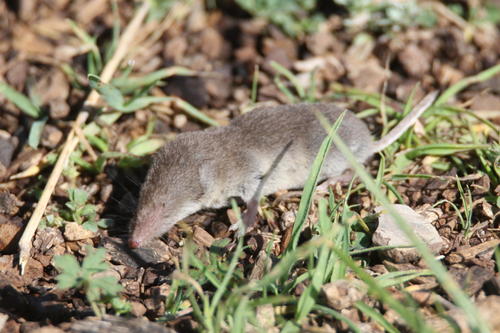
The genus Cryptotis is a group of relatively small shrews with short ears, which are usually not visible, and short tails, commonly called small-eared shrews. They have 30 teeth and are members of the red-toothed shrew subfamily. Since 1992, Neal Woodman (in cooperation with Robert Timm) at the United States National Museum has been in the process of revising the genus. To date, this has resulted in an increase in the number of species from 12 to 30.
Chrysospalax
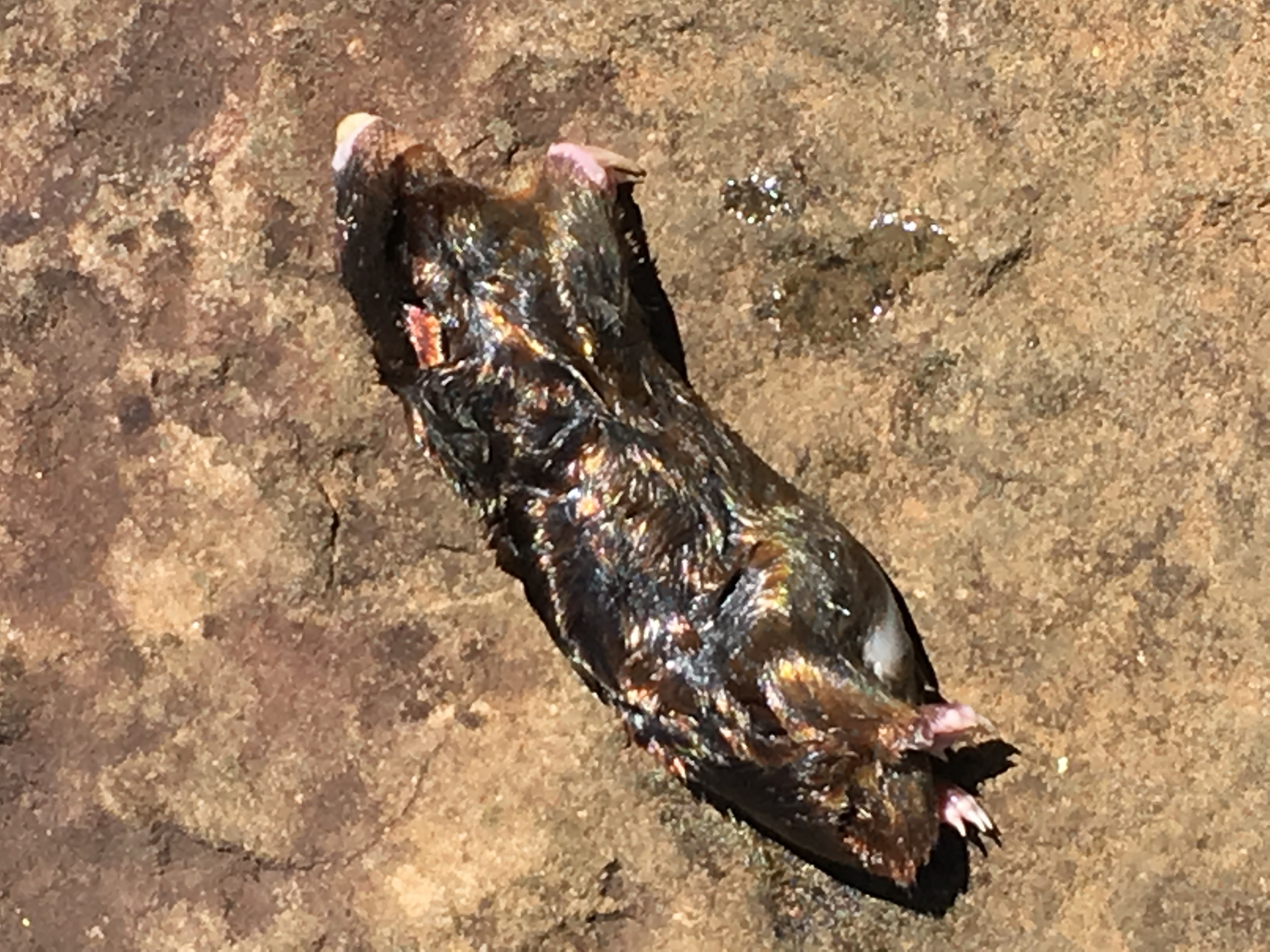
Chrysospalax is a small genus of mammal in the family Chrysochloridae. The two members are endemic to South Africa. It contains the following species:
Micropotamogale
Micropotamogale is a genus of small, otter-like dwarf otter shrews native to riverine habitats of West African rainforests. They feed on aquatic animals and insects they can find and capture. They are afrotherian mammals most closely related to the tenrecs of Madagascar, but are not closely related to shrews or otters.
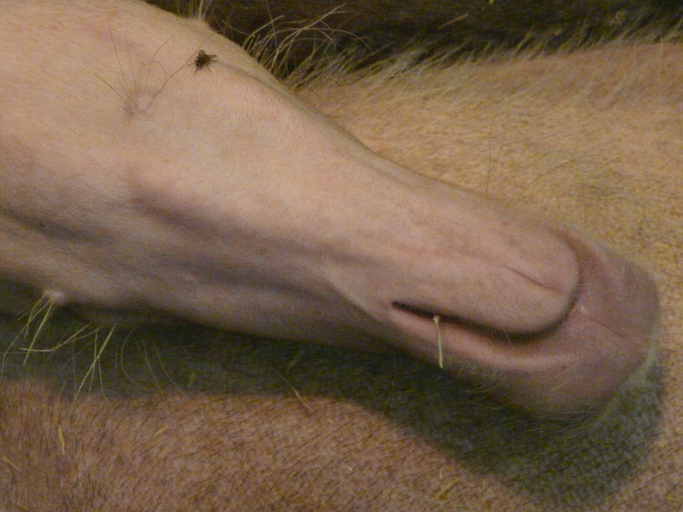
Orycteropus
Orycteropus is a genus of mammals in the family Orycteropodidae within Tubulidentata. The genus is known from Late Miocene to recent of Africa.
Cryptochloris
Cryptochloris is a genus of golden moles, containing the two species De Winton's golden mole (Cryptochloris wintoni) and Van Zyl's golden mole (Cryptochloris zyli).
Sylvisorex
The forest shrews are the members of the genus Sylvisorex. They are mammals in the family Soricidae and are found only in Africa. The genus name comes from the Latin world "silva" which means "forest" and "sorex", which means "shrew-mouse". This reflects the nature of these shrews, which prefer forest habitats. All shrews are carnivorous, and eat continually to satisfy their high metabolic rate.
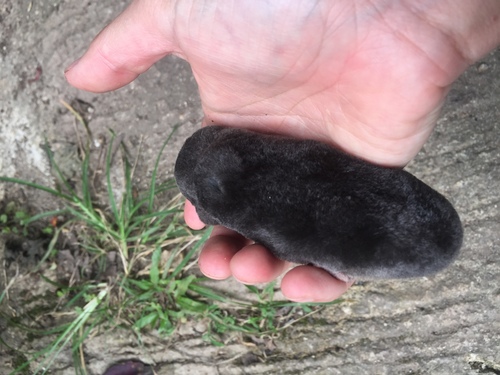
Euroscaptor
Euroscaptor is a genus of mammal in the family Talpidae. Members are found in China and South & Southeast Asia. It contains the following species as of October 2021:
Euroscaptor darwini Nguyen Truong Son, Hai Tuan Bui, Vinh Quang Dau, Phuong Dinh Le & Yen Huong Vu, 2025
Greater Chinese mole (Euroscaptor grandis)
Kloss's mole (Euroscaptor klossi)
Kuznetsov's mole (Euroscaptor kuznetsovi)
Long-nosed mole (Euroscaptor longirostris)
Malaysian mole (Euroscaptor malayanus)
Himalayan mole (Euroscaptor micrurus)
Ngoc Linh mole (Euroscaptor ngoclinhensis)
Orlov's mole (Euroscaptor orlovi)
Small-
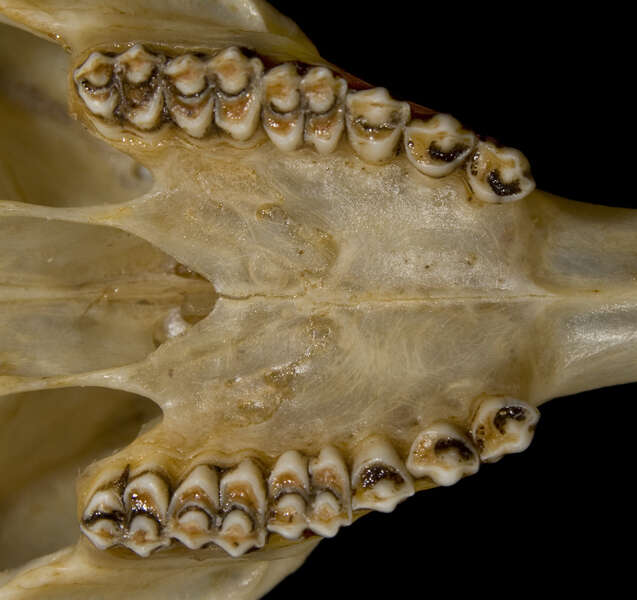
Philantomba
Philantomba is a mammal genus which contains three species of duiker, a type of small antelope. The three species are Maxwell's duiker (Philantomba maxwellii), the blue duiker (Philantomba monticola) and the
Walter's duiker (Philantomba walteri).
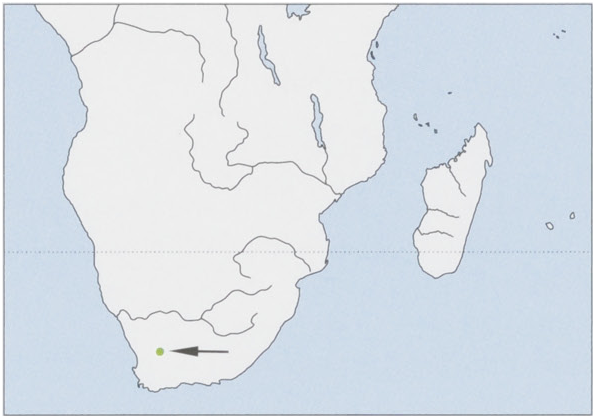
Chrysochloris
Chrysochloris is a genus of mammal in the family Chrysochloridae.
It contains the following species:
Subgenus Chrysochloris
Cape golden mole (Chrysochloris asiatica)
Visagie's golden mole (Chrysochloris visagiei)
Subgenus Kilimatalpa
Stuhlmann's golden mole (Chrysochloris stuhlmanni)
Podogymnura
Podogymnura is a genus of mammal in the family Erinaceidae. It contains the following species:
Dinagat moonrat (Podogymnura aureospinula)
Eastern Mindanao gymnure (Podogymnura intermedia)
Podogymnura minima
Mindanao gymnure (Podogymnura truei)
Chlorotalpa
Chlorotalpa is a genus of mammal in the family Chrysochloridae. It contains the following species:
Blarinella
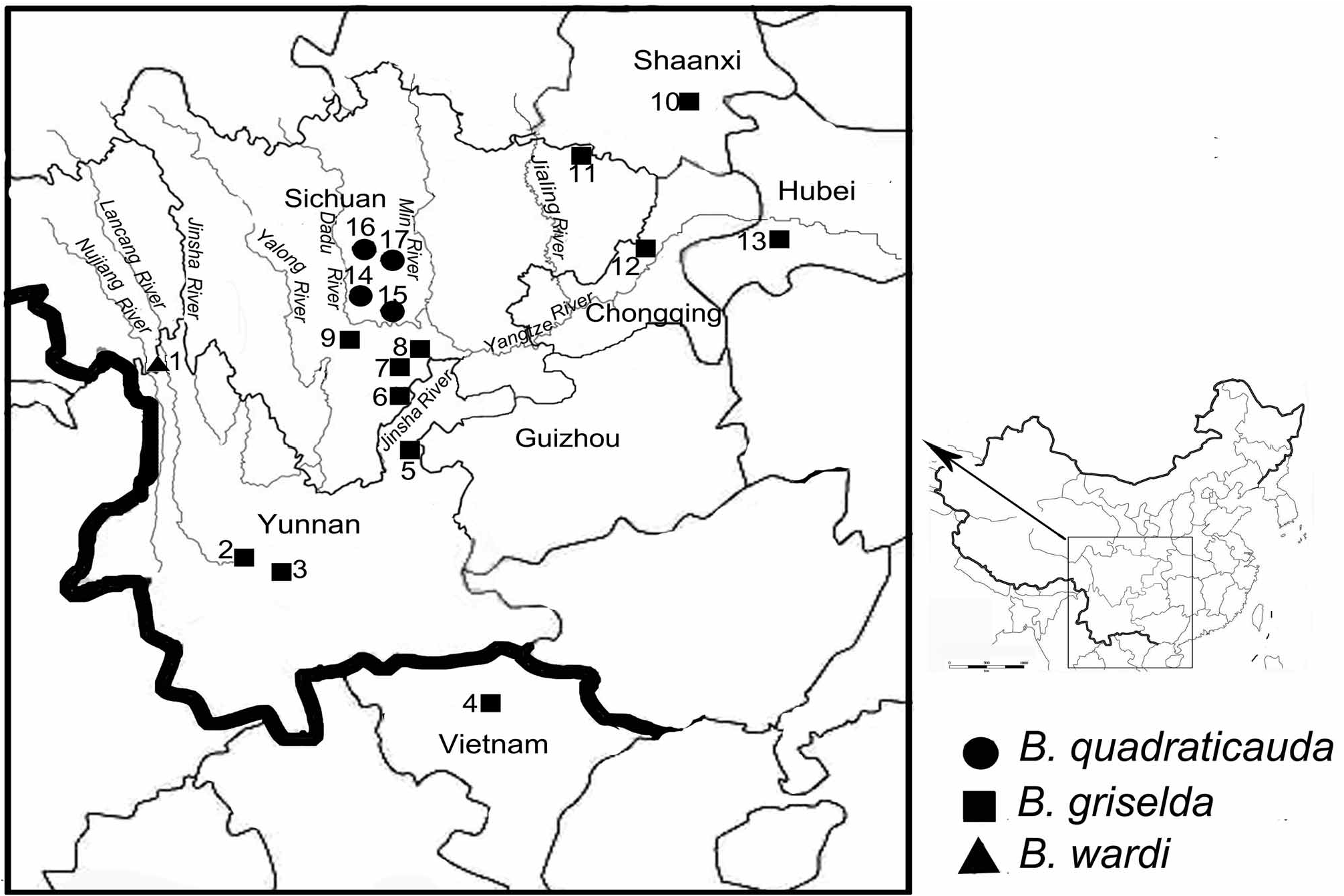
Blarinella is a small genus of shrews in the subfamily Soricinae of the family Soricidae. It contains the following two species:
Anourosorex
genus of mammals
Amblysomus
Amblysomus (also narrow-headed golden mole or South African golden mole) is a genus of the golden mole family, Chrysochloridae, comprising five species of the small, insect-eating, burrowing mammals endemic to Southern Africa. All five species can be found in South Africa and some are also found in Eswatini and Lesotho.
Notiosorex
Notiosorex is a genus of shrew from the subfamily Soricinae.
Hemitragus
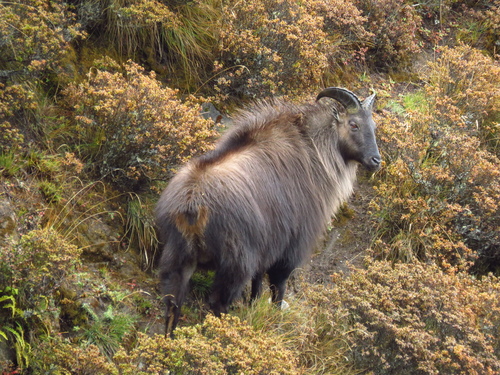
Hemitragus is a genus of bovids that currently contains a single living species, the Himalayan tahr. Two extinct species are also known from the Pleistocene.
Episoriculus
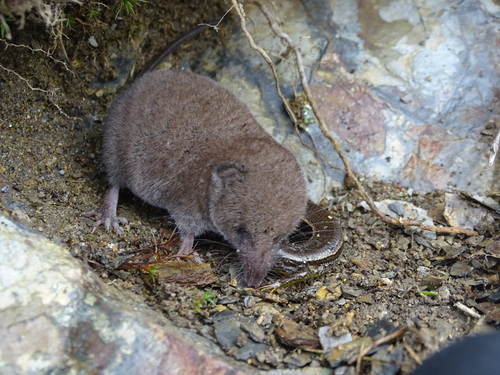
Episoriculus is a genus of shrew in the red-toothed shrew subfamily. Its common name is brown-toothed shrew. It has been described as a subgenus to Soriculus in the past. The genus occurs at a number of locations in Asia, including Nepal and China.
large-headed shrew
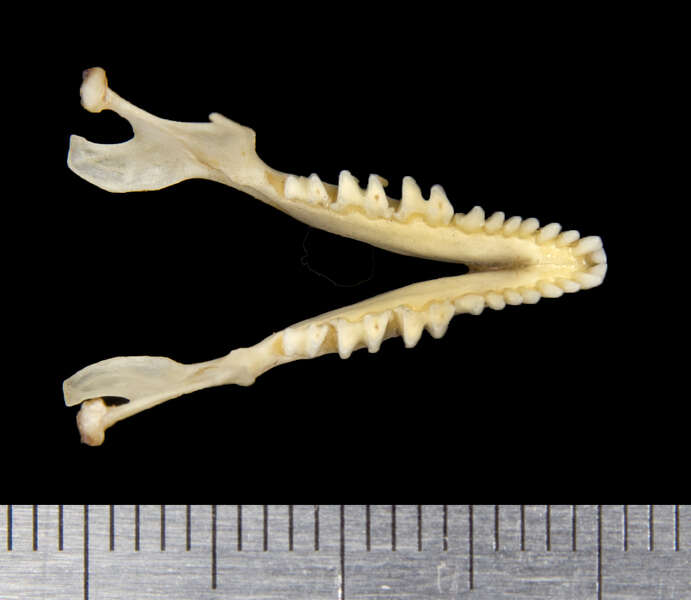
Paracrocidura is a genus of shrews. They are mammals in the family Soricidae. The vernacular name large-headed shrews is sometimes collectively applied to the genus, but has also been applied to the species Crocidura grandiceps.
Scapanus
Scapanus is a genus of moles in the family Talpidae. They live in North America from west of the Rockies south to Baja California del Norte, and north to British Columbia, wherever conditions permit a mole population; that is to say, apart from the most sandy, rocky, or developed places. As they are one genus, they are very closely related, but as species, they rarely if ever interbreed successfully.
Macroscelides
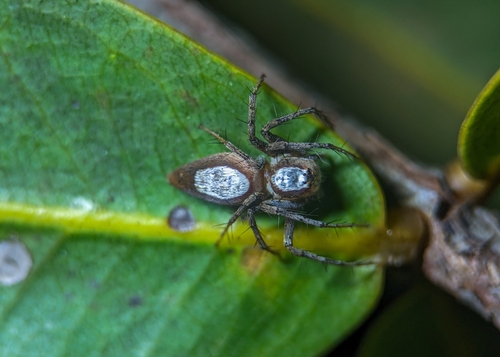
Macroscelides is a genus of small shrew-like animals, the round-eared elephant shrews, found in western Namibia and in South Africa; they are members of the clade Afrotheria.
Chodsigoa
Chodsigoa is a genus of shrews in the tribe Nectogalini.
Surdisorex

Surdisorex is a genus of mammals in the family Soricidae. Surdisorex is one of three genera of African shrews, which, in turn, are one of three living subfamilies of shrews. Species in the genus Surdisorex are called African mole shrews because of their similarity to moles, to which they are not closely related.

Syncerus
Syncerus is a genus of African bovid that contains the living Cape buffalo (Syncerus caffer), including the distinct African forest buffalo.
Calcochloris
Calcochloris is a genus of mammal in the family Chrysochloridae.
It contains the following species:
Yellow golden mole (Calcochloris obtusirostris)
Somali golden mole (Calcochloris tytonis)

Oreamnos
Oreamnos is a genus of North American caprines. The mountain goat (Oreamnos americanus) is the only living species. Until the end of the Pleistocene, another species, Oreamnos harringtoni, was distributed to the south of the recent form.

Scutisorex
Scutisorex is a genus of African shrews, mammals of the family Soricidae. Members of the genus are the only known mammal species whose vertebrae interlock, a feature which, along with the general enlargement and strengthening of the backbone and ribs, allows them to bear remarkable loads. They also have well-developed muscles for flexing their spine in the sagittal plane. It is thought that these adaptations allow the shrews to wedge open spaces between the trunks of palm trees and the stems of dead leaves, as well underneath logs and rocks, allowing them to partake of a reliable source of ins
Neamblysomus
Neamblysomus is a genus of golden moles containing two species:
Antilope
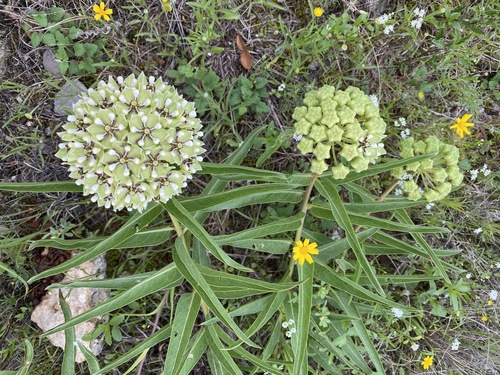
Antilope is a genus of twisted-horn bovid that contains a single living species, the blackbuck of South Asia. Two extinct species are also known.
Dicerorhinus
Dicerorhinus (Greek: "two" (dio), "horn" (keratos), "nose" (rhinos)) is a genus of the family Rhinocerotidae, consisting of a single extant species, the two-horned Sumatran rhinoceros (D. sumatrensis), and several extinct species. The genus likely originated from the Late Miocene of central Myanmar. Many species previously placed in this genus probably belong elsewhere.
Nesiotites
Nesiotites is an extinct genus of large red-toothed shrews belonging to the tribe Nectogalini that inhabited the Balearic Islands from the latest Miocene/Early Pliocene (from around 5.3 million years ago) up until the arrival of humans on the islands during the late Holocene (around 2500-2300 BC). It was present on Mallorca and Menorca. It represented one of only 3 native land mammals to the islands at the time of human arrival, alongside the dwarf goat-antelope Myotragus and the giant dormouse Hypnomys. The genus is closely related to the also recently extinct Corsican-Sardinian shrews belong

Diceros
Diceros (Greek: "two" (dio), "horn" (keratos)) is a genus of rhinoceros containing the extant black rhinoceros (Diceros bicornis) and several extinct species.
Smutsia
Smutsia ("Smuts's animal") or African ground pangolin is a genus of pangolins from subfamily Smutsiinae within family Manidae. It was formerly considered a subgenus of genus Manis. Its members are the more terrestrial of the African pangolins. In the past, this genus was also present in Europe.
Phataginus
African tree pangolin (Phataginus) is a genus of African pangolins from subfamily Phatagininae, within family Manidae. Its members are the more arboreal of the African pangolins.
Procavia
Procavia is a genus of hyraxes. The rock hyrax (P. capensis) is currently the only extant species belonging to this genus, though other species were recognized in the past, including P. habessinica and P. ruficeps, both now relegated to subspecific rank.

Antidorcas
Antidorcas is a genus of antelope that includes the living springbok and several fossil species.

Oryctolagus
Oryctolagus () is a genus of lagomorph that today contains the European rabbit and its descendant, the domestic rabbit, as well as several fossil species.
Aepyceros
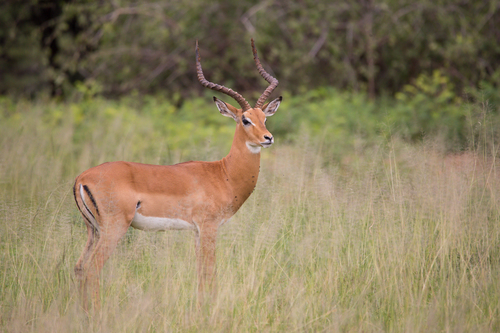
Aepyceros is a genus of African antelope that contains a single living species, the impala (Aepyceros melampus). It is the only known member of the tribe Aepycerotini.
Nesotragus
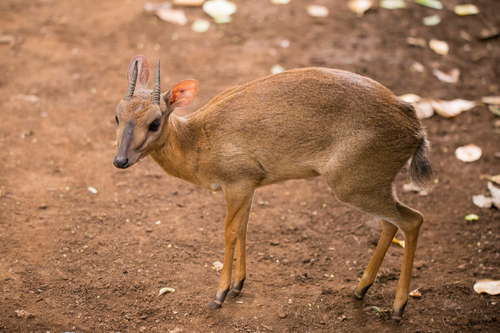
Nesotragus is a genus of dwarf antelope comprising two species, endemic to Africa, and formerly but incorrectly considered a synonym of the similarly named genus Neotragus. Recent nucleic acid studies demonstrate that the two species of Nesotragus are not closely related to the genus Neotragus. Members of the Nesotragus are the only members of the subfamily Nesotraginae or tribe Nesotragini and are more closely related to the impala, while the royal antelope remains a member of the subfamily Antilopinae or tribe Antilopini. The genus name comes from Ancient Greek νῆσος (nêsos), meaning "island
Soriculus
Soriculus is a genus of shrew native to the Himalayas, the adjacent Hengduan Mountains and surrounding areas. There was historically only one recognised species, Soriculus nigrescens (as other extant species previously assigned to the genus had been transferred to other genera), though in 2023 and 2024 additional living species of the genus were proposed.
Hydrodamalis
Hydrodamalis is a genus of extinct herbivorous sirenian marine mammals. It included the Steller's sea cow (Hydrodamalis gigas), the Cuesta sea cow (Hydrodamalis cuestae), and the Takikawa sea cow (Hydrodamalis spissa). The fossil genus Dusisiren is regarded as the sister taxon of Hydrodamalis: together, the two genera form the dugong subfamily Hydrodamalinae. They were the largest member of the order Sirenia, whose only extant members are the dugong (Dugong dugon) and the manatees (Trichechus spp.). They reached up to in length, making the Steller's sea cow among the largest mammals other than
Boselaphus
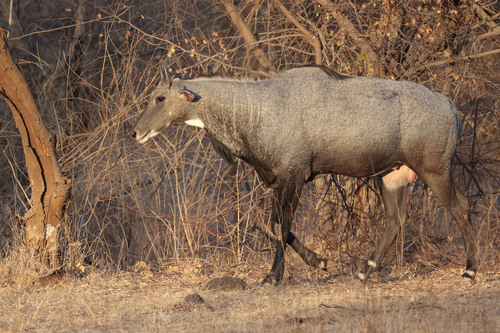
Boselaphus is a genus of bovid. The nilgai is the sole living representative, although one other species is known from the fossil record.
Ptilocercus
Ptilocercus is a genus of treeshrew and the sole member of the family Ptilocercidae.
Elaphurus
Elaphurus is a genus of deer. E. davidianus is the only extant species and several fossil species are described.
Beatragus
Beatragus is a genus of alcelaphine antelope. The hirola (Beatragus hunteri) is the only living representative, and three extinct species are known, all from Africa.
Budorcas
Budorcas is a genus of bovid that contains a single living species, the takin (Budorcas taxicolor). Two extinct species are known from the Pliocene, B. teilhardi from China and B. churcheri from Ethiopia. The presence of the genus in Africa indicates that it was far more widespread in the past.
Urotrichus
Urotrichus is a genus of talpid that contains a single living species, the Japanese shrew mole (Urotrichus talpoides). Two fossil species (Urotrichus dolichochir and Urotrichus giganeus) are also known.
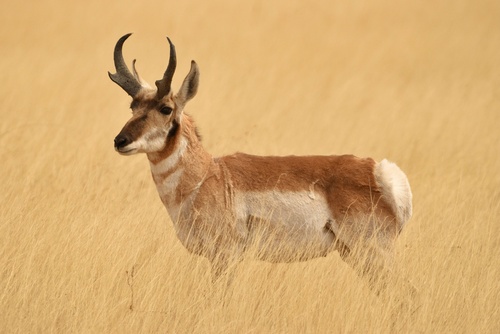
Antilocapra
Antilocapra is a genus of the family Antilocapridae, which contains only a single living species, the pronghorn (Antilocapra americana). Another species, the Pacific pronghorn, lived in California during the Late Pleistocene and survived as recently as 12,000 BP. The name means "antelope-goat".
Neurotrichus
Neurotrichus is a genus of shrew-like moles. It is classified, together with the fossil genus Quyania, in the tribe Neurotrichini of the subfamily Talpinae. The only living species is the American shrew-mole (N. gibbsii) of the northwestern United States and British Columbia. A fossil species, Neurotrichus columbianus from the Hemphillian of Oregon, was placed in the genus in 1968, but this animal is now thought to be more closely related to the Chinese fossil genus Yanshuella.
Pudella
Pudella is a genus of New World deer containing the following two species:
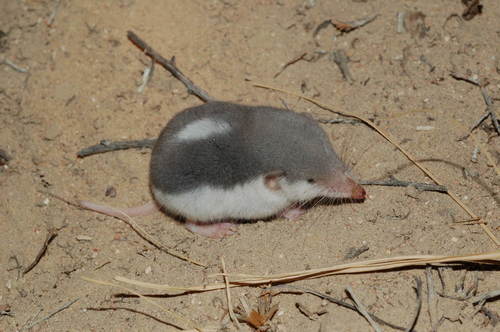
Diplomesodon
Diplomesodon is a genus of shrew that contains a single extant species, the piebald shrew (Diplomesodon pulchellus).
Desmana
Desmana is a genus of mole that contains a single living species, the Russian desman (Desmana moschata). A number of fossil species are known from throughout Eurasia.
Galegeeska
Galegeeska is a genus of elephant shrew (or sengi) in the family Macroscelididae.
Galemys
Galemys is a genus of mole containing the living Pyrenean desman (Galemys pyrenaicus) and several fossil species.
Catagonus
Catagonus is a genus of peccaries that contains the living Chacoan peccary, C. wagneri, and several extinct species. The genus has always been restricted to South America.