Category
page 1Materials

glass
thumb|300px|A glass building facade|alt=Refer to caption

rock
naturally occurring solid aggregate of one or more minerals or mineraloids

wood

gemstone
thumb|upright=1.1|Group of precious and semiprecious stones—both uncut and faceted—including (clockwise from top left) diamond, uncut synthetic [[sapphire, ruby, uncut emerald, and amethyst crystal cluster.]]

tar
right|thumb|One can produce a tar-like substance from corn stalks by heating them in a microwave oven. This process is known as pyrolysis.
Tar is a dark brown or black viscous liquid of hydrocarbons and free carbon, obtained from a wide variety of organic materials through destructive distillation. Tar can be produced from carbon-rich materials such as coal, wood, petroleum, peat, and other organic matter.

fiber
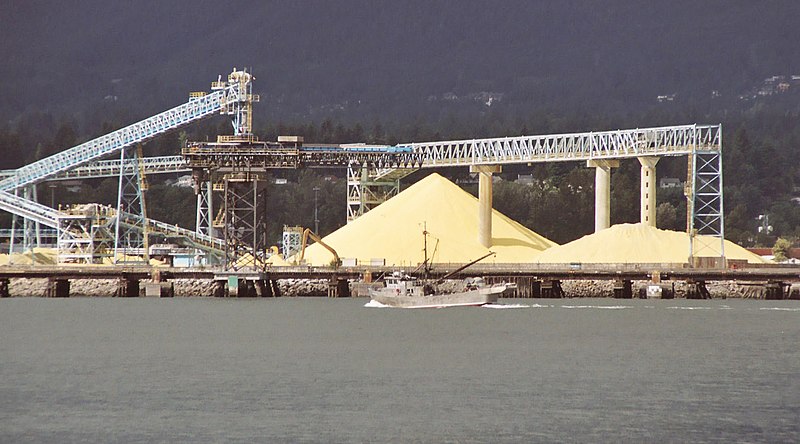
raw material
material which has not been through a manufacturing process

material
A material is a substance or mixture of substances that constitutes an object. Materials can be pure or impure, living or non-living matter. Materials can be classified on the basis of their physical and chemical properties, or on their geological origin or biological function. Materials science is the study of materials, their properties, and their applications.

insulator
material whose internal electric charges do not flow freely, and which therefore does not conduct an electric current

latex
thumb|rubber tapping|Tapping of latex from [[Hevea brasiliensis, for use in rubber production]]
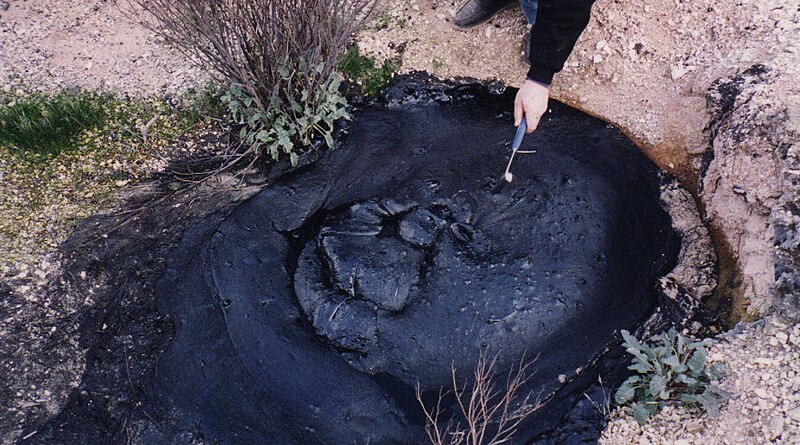
pitch
mixture of aromatic organic compounds, black, tar-like, super viscous liquid

ebonite
thumb|Ebonite applications from the 19th century

safety data sheet
standardized data sheet describing a substance or product's hazards and safe handling procedures
mineral wool
fiber made from spun molten minerals
putty
Putty is a material with high plasticity, similar in texture to clay or dough, typically used in domestic construction and repair as a sealant or filler. Although some types of putty (typically those using linseed oil) slowly polymerise and become stiff, many putties can be reworked indefinitely, in contrast to other types of filler which typically set solid relatively rapidly.

refractory
thumb|Refractory bricks in a Ladle transfer car|torpedo car used for hauling molten iron
ferrous hydroxide
chemical compound
coal tar
chemical mixture

aramid
thumb|right|Spools of aramid yarn destined for body armor
thumb|right|Fiberglass–aramid hybrid cloth
Aramid, or aromatic polyamide fibers are a class of strong, heat-resistant, synthetic fibers, commonly used in aerospace and military applications - e.g., ballistic-rated body armor fabric and ballistic composites, marine cordage and hull reinforcement - as a substitute for asbestos, and in lightweight consumer items, such as phone cases and tennis rackets.
plastic bottle
bottle constructed of plastic
seal
device that completely prevents the flow of air or other fluids
baby powder
astringent powder used for preventing diaper rash or for cosmetic uses

tortoise shell
thumb|Palau|Palauan Toluk made from tortoiseshell
thumb|upright|Cabinet with tortoiseshell wikt:veneer|veneers
thumb|French singing bird box with a case made out of tortoiseshell.Tortoiseshell or tortoise shell is a material produced from the shells of the larger species of tortoise and turtle, mainly the hawksbill sea turtle, which is a critically endangered species according to the IUCN Red List largely because of its exploitation for this trade. The large size, fine color, and unusual form of the hawksbill's scutes make it especially suitable. The distinctive patterning is referred to in na

sealant
300px|thumb|Self-leveling silicone [[firestop system used around pipe through-penetration in a two-hour fire-resistance rated concrete floor assembly.]]
space blanket
aluminized plastic sheet used to protect against heat in space

slurry
right|thumb|A slurry composed of glass beads in silicone oil flowing down an inclined plane
thumb|Potato starch slurry
A slurry is a mixture of denser solids suspended in liquid, usually water. The most common use of slurry is as a means of transporting solids or separating minerals, the liquid being a carrier that is pumped on a device such as a centrifugal pump. The size of solid particles may vary from 1 micrometre up to hundreds of millimetres.
The particles may settle below a certain transport velocity and the mixture can behave like a Newtonian or non-Newtonian fluid. Depending on the mi

Auxetics
thumb|400px

semimetal
A semimetal is a material with a small energy overlap between the bottom of the conduction band and the top of the valence band, but they do not overlap in momentum space. According to electronic band theory, solids can be classified as insulators, semiconductors, semimetals, or metals. In insulators and semiconductors the filled valence band is separated from an empty conduction band by a band gap. For insulators, the magnitude of the band gap is larger (e.g., > 4 eV) than that of a semiconductor (e.g., < 4 eV). Because of the slight overlap between the conduction and vale
stone paper
strong, durable paper-like product manufactured from calcium carbonate bonded with high-density polyethylene
wattle
lightweight construction material made by weaving thin branches or slats between upright stakes to form a woven lattice
Thermal oxidation
process creating a thin layer of silicon dioxide
porous medium
material containing pores
Bingham plastic
material that behaves as a rigid body at low stresses but flows as a viscous fluid at high stress
filler
particles added to a matrix material, usually to improve its properties or reduce cost
mesoporous material
material with pores between 2 and 50 nm
paste
substance that behaves as a solid until a sufficiently large load or stress is applied, at which point it flows like a fluid

cellulose fiber
natural or regenerated fibers containing cellulose

rice hulls
husk of rice grains
Radar-absorbent material
RAM Technology
orthotropic material
type of anisotropic material
solid surface
man-made material usually composed of a combination of marble dust, bauxite, acrylic, epoxy or polyester resins and pigments
food contact material
materials that are intended to be in contact with food
structural material
material whose primary purpose is to transmit or support a force
devoré
thumb|Devoré – or burnout technique – applied to green velvet fabric
Devoré (also called burnout) is a fabric technique particularly used on velvets, where a mixed-fibre material undergoes a chemical process to dissolve the cellulose fibres to create a semi-transparent pattern against more solidly woven fabric. The same technique can also be applied to textiles other than velvet, such as lace or the fabrics in burnout t-shirts.
D3o
D3O is the namesake ingredient brand of British company D3O Lab, specializing in rate-sensitive impact protection technologies based on dilatant materials, also known as viscoelastic or shear thickening materials.
ground granulated blast-furnace slag
Granular slag by-product of iron and steel-making used as supplementary cementitious material
materials for use in vacuum
milk fibre
synthetic fibre made from casein extracted from milk
Intumescent
thumb|A charred marshmallow is a familiar example of intumescence
An intumescent substance is one that swells as a result of heat exposure, leading to an increase in volume and decrease in density. Intumescence refers to the process of swelling. Intumescent materials are typically used in passive fire protection and require listing, approval, and compliance in their installed configurations in order to comply with the national building codes and laws.
chemical purity grade
qualitative signifier of chemical purity level
transverse isotropy
Geological concept
Hybrid wood
multilayer composite material
agricultural lime
soil additive containing calcium carbonate and other ingredients
layered double hydroxides
class of ionic solids characterized by a layered structure
monocrystalline whisker
high aspect ratio, microscopic, single crystal particles
stamped concrete
concrete that has been imprinted, or that is patterned, textured, or embossed to resemble oher materials
radiant barrier
building material that reflects thermal radiation and reduces heat transfer
microporous material
material with pores less than 2 nm wide
Aggregation-induced emission
luminescent phenomenon discovered by Ben Zhong Tang et al. in 2001
Friedel's salt
Calcium chloroaluminate formed by reaction of AFm hydrates with chloride ions