Category
page 1Medieval Islamic world
.jpg)
al-Andalus
Al-Andalus () was the Muslim-ruled area of the Iberian Peninsula. The name refers to the different Muslim states that controlled these territories at various times between 711 and 1492. At its greatest geographical extent, it occupied most of the peninsula as well as Septimania under Umayyad rule. These boundaries changed through a series of conquests that Western historiography has traditionally characterised as the Reconquista, eventually shrinking to the south and finally to the Emirate of Granada.
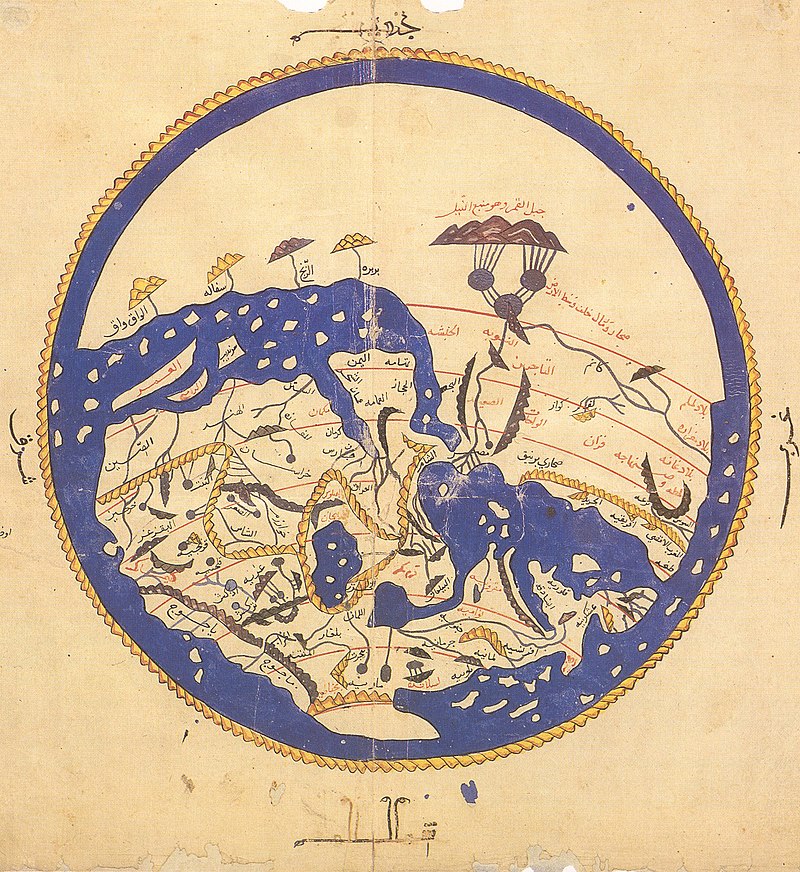
Islamic Golden Age
period of cultural flourishing in the 8th to 13th centuries

Qara Qoyunlu
Persianate Muslim Turkoman monarchy (1374–1468)

Alodia
Alodia, also known as Alwa (Greek: Ἀρούα, Aroua; , ʿAlwa), was a medieval kingdom in what is now central Sudan. Its capital was the city of Soba, located near modern-day Khartoum at the confluence of the Blue and White Nile rivers.

Alids
Alids () are the descendants of Ali, the fourth Rashidun caliph and the first Imam in Shia Islam. He was also the cousin and son-in-law of the Islamic prophet Muhammad.
Muslim conquest in the Indian subcontinent
12th to 16th century Muslim conquests across Indian subcontinent
Sankore Madrasah
ancient center of learning in Timbuktu, Mali
Takrur
Takrur, Tekrur or Tekrour ( 500 – c. 1456) was a state based in the Senegal River in modern-day Senegal which was at its height in the 11th and 12th centuries, roughly parallel to the Ghana Empire. It lasted in some form into the 18th century.
Kaysanites Shia
The Kaysanites () were a Shi'i sect of Islam that formed from the followers of Al-Mukhtar. They traced Imamate from Muhammad ibn al-Hanafiyyah and his descendants. The name Kaysaniyya was most likely derived from the name of Mukhtar's chief guard, Abu Amra Kaysan.
Islamic contributions to Medieval Europe
influence of Islamic civilisation on Medieval Europe
Historiography of early Islam
Islamic history and it's validity
Nizari Ismaili state
Nizari Ismaili government with the center of Alamut Castle (1090–1273)
Prophetic medicine
advice given by the prophet Muhammad
%20British%20Library.png)
Termagant
thumb|Text from a manuscript of the Chanson de Guillaume: Tresque il vendreit de aurer Tervagant
In the Middle Ages, Termagant or Tervagant was the name of a god that some European Christians believed Muslims worshipped. It originates in the eleventh-century Song of Roland.
Barid
The barīd (, often translated as "the postal service") was the state-run courier service of the Umayyad and later Abbasid Caliphates. A major institution in the early Islamic states, the barid was not only responsible for the overland delivery of official correspondence throughout the empire, but it additionally functioned as a domestic intelligence agency, which informed the caliphs on events in the provinces and the activities of government officials. A new barīd was established during the Mamluk period.
Böszörmény
Böszörmény, Izmaelita, Hysmaelita ("Ishmaelites") or Szerecsen ("Saracens"), were names used to refer to the Muslims who lived in medieval Hungary. They constituted a significant part of the population from the foundation of the state at end of the 9th century until the Mongol invasions at the end of the 13th century
history of medieval Tunisia
aspect of history