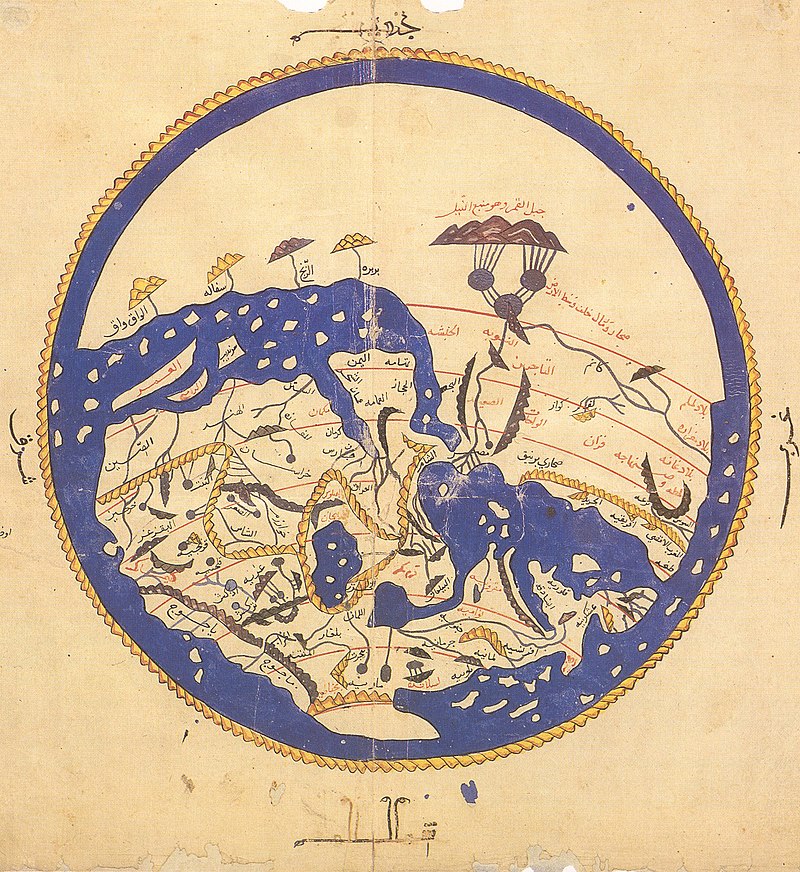
File:Al-Idrisi's_world_map.JPG · Wikimedia Commons · See Wikimedia Commons
Islamic Golden Age
Also known as medieval Islam, Golden Age of Islam, history of the Islamic Golden Age (750-1258)
period of cultural flourishing in the 8th to 13th centuries
AI overview
The Islamic Golden Age was a period from the 8th to 13th centuries when Islamic civilization experienced remarkable cultural and intellectual flourishing. This era matters because it produced significant advances in mathematics, astronomy, medicine, philosophy, and literature that influenced the development of knowledge across the world.
AI-generated from the Wikipedia summary — may contain errors.
Wikidata facts
Show 3 more facts
- Commons category
- Islamic Golden Age
- start time
- 0800-00-00
- end time
- 1258-00-00
Sources (2)
via Wikidata · CC0
~40 min read
Article
The Islamic Golden Age was a period of scientific, economic, and cultural flourishing in the history of Islam, traditionally dated from the 8th century to the 13th century.
This period is traditionally understood to have begun during the reign of the Abbasid caliph Harun al-Rashid (786–809), with the establishment of the House of Wisdom in Baghdad, one of the world’s largest cities at the time. The institution attracted scholars from across the Muslim world to translate the classical knowledge of the known world into Arabic and Persian. The intellectual and cultural activity also flourished in other urban centers of the medieval Islamic world, including Al-Andalus—especially Umayyad Córdoba, as well as Seville and, in later centuries, Nasrid Granada—along with Fatimid Cairo and other major cities linked through shared intellectual and commercial networks. The period is traditionally said to have ended with the collapse of the Abbasid caliphate following the Mongol invasions and the siege of Baghdad in 1258.