Category
page 1Meiji Restoration

Meiji restoration
reform restoring the imperial rule in Japan in the last third of the 19th century

Boshin War
civil war in Japan, fought from 1868 to 1869
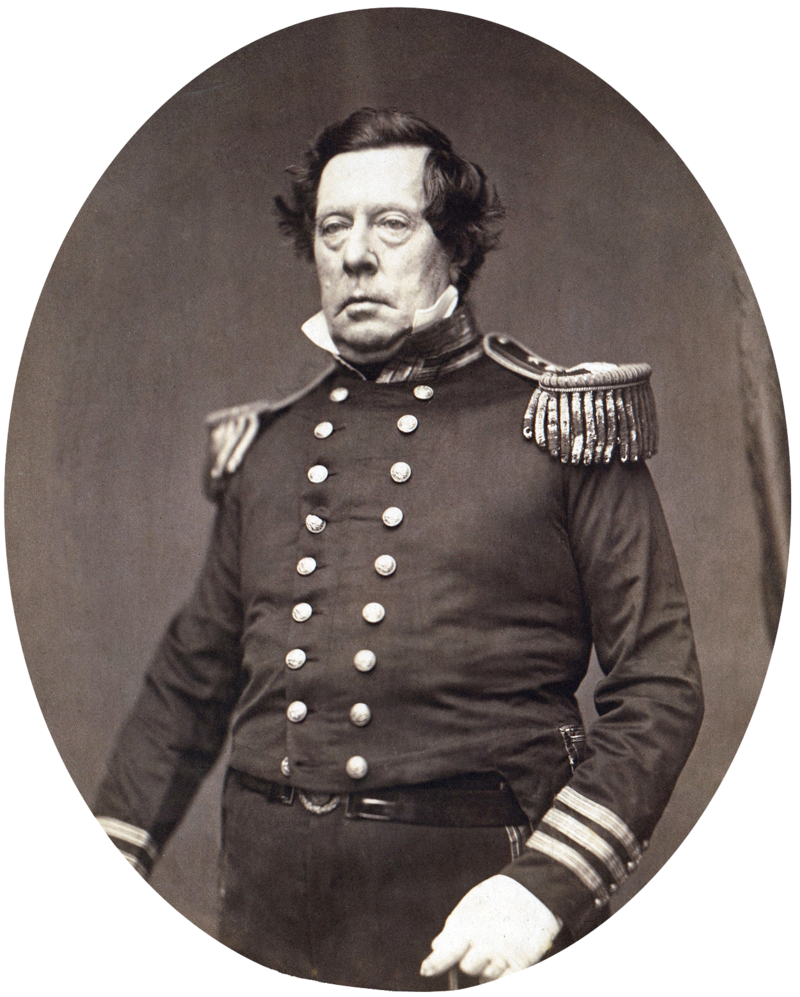
Matthew C. Perry
American naval officer (1794–1858)
Republic of Ezo
short-lived state established in 1869 by former Tokugawa retainers in what is now known as Hokkaido, notable for being the first government to attempt to institute democracy in Japan

Shinsengumi
The was a small secret police organization, an elite group of swordsmen organized by commoners and low-ranking samurai, commissioned by the (military government) during Japan's Bakumatsu period (late Tokugawa shogunate) in 1863. It was active until 1869. It was founded to protect shogunate representatives in Kyoto at a time when a controversial imperial edict to exclude foreign trade from Japan had been made and the Chōshū clan had been forced from the imperial court. They gained considerable fame from events such as the Ikedaya incident and the August 18 coup, among others. The members were d
Sonnō jōi
Japanese national slogan
abolition of the han system
1871 reform abolishing the feudal system in Japan during the Meiji restoration
Satsuma Domain
Japanese historical estate in Satsuma Domain
Charter Oath
first constitution of modern Japan, promulgated 1868
Iwakura Mission
1871–1873 Japanese diplomatic voyage

kazoku
thumb|right|300px|The House of Peers (Japan)|House of Peers in session with [[Emperor Meiji giving a speech (Ukiyo-e woodblock print by Yōshū Chikanobu, 1890)]]
Chōshū Domain
Japanese historical estate in Nagato and Suō province
Daijō-kan
The , also known as the Great Council of State, was (i) (Daijō-kan) the highest organ of Japan's premodern Imperial government under the Ritsuryō legal system during and after the Nara period or (ii) (Dajō-kan) the highest organ of Japan's government briefly restored to power after the Meiji Restoration, which was replaced by the Cabinet. In Yamato name it is also called "Ōmatsurigoto-no-Tsukasa" ().
Black Ships
historical name for European ships trading with Japan
Satchō Alliance
Sadaijin
government position in pre-modern Japanese imperial court
Udaijin
government position in pre-modern Japanese imperial court
Ernest Mason Satow
British diplomat (1843-1929)
Daijō-daijin
The was the head of the Daijō-kan (Council of State) during and after the Nara period and briefly under the Meiji Constitution. It was equivalent to the Chinese , or Grand Preceptor.
foreign government advisor in Meiji Japan
modernisation between 1868 and 1912
Meiji oligarchy
ruling class of Meiji period Japan
haibutsu kishaku
anti-Buddhist movement during the Meiji period in Japan

Genyōsha
thumb|Tōyama Mitsuru (center) and [[Yoshio Kodama (first row, second from right) among a meeting of the Dark/Black Ocean Society (Gen'yosha), 1929]]
The was an influential Pan-Asianist group and secret society active in the Empire of Japan.
Ōuetsu Reppan Dōmei
Japanese military-political coalition
Peacemaker Kurogane
Japanese manga series
Sendai Castle
castle in Sendai city, Miyagi prefecture, Japan
shishi
Japanese organization during the Edo period
Aikoku Kōtō
political party

Byakkotai
The was a group of around 305 young teenage samurai of the Aizu Domain, who fought in the Boshin War (1868–1869) on the side of the Tokugawa shogunate.
Kiheitai
The '''''' was a volunteer militia raised by Takasugi Shinsaku of the Chōshū domain during the Bakumatsu period of Japan.
shinbutsu bunri
policy of separating Shinto and Buddhism pursued by the Meiji government of Japan
Datsu-A Ron
periodical literature
Sword Abolishment Edict
sword hunt during the Meiji Restoration in Japan
Shizoku
The was a social class in Japan composed of former samurai after the Meiji Restoration from 1869 to 1947. Shizoku was a distinct class between the kazoku (a merger of the former kuge and daimyō classes) and heimin (commoners) with no special class privileges, and the title was solely on the register. The Shizoku were abolished in the revised civil code in 1947 after the Japanese defeat in World War II.

Satake clan
family

Meirokusha
right|thumb|200px|Cover of the Meiroku Zasshi, issue no. 10, 1874
The '''''' was an intellectual society in Meiji period Japan that published social-criticism journal .
Kyoto Mimawarigumi
Japanese police force

bunmei-kaika
right|thumb|350x350px|Horse-drawn streetcars in Ginza, woodblock print by [[Hiroshige III (1882)]]
ee ja nai ka
carnivalesque celebrations, communal activities, and protests in Japan in 1867–68

Kan'ei-ji Temple
(also spelled Kan'eiji or Kaneiji) is a Tendai Buddhist temple in Tokyo, Japan, founded in 1625 during the Kan'ei era by Tenkai, in an attempt to emulate the powerful religious center Enryaku-ji, in Kyoto. The main object of worship is .

Yangmingism
thumb|Portrayal of Wang Yangming
Charles Chanoine
French army officer (1835–1915)
Sakai clan
family
Nanbu clan
clan in modern day Japan
Sakamoto Ryōma Memorial Museum
museum in Kōchi, Japan
Kaientai
thumb|right|Flag of Kaientai
thumb|right|Kameyama Shachū Memorial Museum
Ministry of the Military
8th-century Japanese government department
Ogasawara clan
Japanese samurai clan
Hoshina clan
María Luz Incident
1872 Japan-Peru diplomatic incident
Land Tax Reform
major restructuring of the previous land taxation system in 1873 Japan
Aikokusha
The '''''' was a political party in the early Meiji-period Japan from 1875 to 1880.
Ministry of Civil Services
The was one of eight ministries of the Japanese imperial court. In wago, it is also called "Tsuri-no-Tsukasa"(乃利乃豆加佐).

Ministry of Justice
justice ministry of the 8th c. Imperial Court of Japan
Ministry of the Center
Ministry of Popular Affairs
Ministry of the Imperial Japanese Empire
André Cazeneuve
French soldier
Second Japanese Embassy to Europe
diplomatic mission led by Ikeda Nagaoki
Kyōgoku clan
Japanese clan. descend from the Uda Genji through the Sasaki clan
Fuhanken sanchisei
governmental Structure