Category
page 1Men's health

testicle
thumb|right|202px| Animation of the migration of spermatozoa from their origin as germ cells to their exit from the vas deferens. A) Blood vessels; B) Head of [[epididymis; C) Efferent ductules; D) Seminiferous tubules; E) Parietal lamina of tunica vaginalis; F) Visceral lamina of tunica vaginalis; G) Cavity of tunica vaginalis; H) Tunica albuginea; I) Lobule of testis; J) Tail of epididymis; K) Body of epididymis; L) Mediastinum testis; M) Vas deferens.]]
A testicle, also called testis ( testes) is the male gonad in all gonochoric animals, including humans, and is homologous to the ovary, whi

semen
thumb|right|287px|spermatozoon|Spermatozoa, in this case human, are a primary component of normal semen, and the agents of fertilization of female ova.

ejaculation
Ejaculation is the discharge of semen (the ejaculate; normally containing sperm) from the penis through the urethra. It is the final stage and natural objective of male sexual stimulation, and an essential component of natural conception. After forming an erection, many men emit pre-ejaculatory fluid during stimulation prior to ejaculating. Ejaculation involves involuntary contractions of the pelvic floor and is normally linked with orgasm. It is a normal part of male human sexual development.
%20na%20sajmu%20MESAP%202015.jpg)
penile erection
An erection (clinically: penile erection or penile tumescence) is a physiological phenomenon in which the penis becomes firm, engorged, and enlarged. Penile erection is the result of a complex interaction of psychological, neural, vascular, and endocrine factors, and is often associated with sexual arousal, sexual attraction or libido, although erections can also be spontaneous. The shape, angle, and direction of an erection vary considerably between humans.

Human penis
In human anatomy, the penis is an external sex organ through which males ejaculate and urinate. Together with the testes and surrounding structures, the penis functions as part of the male reproductive system.

prostate cancer
male reproductive organ cancer
nocturnal emission
spontaneous sleep orgasm

erectile dysfunction
form of sexual dysfunction in males

gynecomastia

seminal vesicula
pair of simple tubular glands posteroinferior to the urinary bladder of male mammals
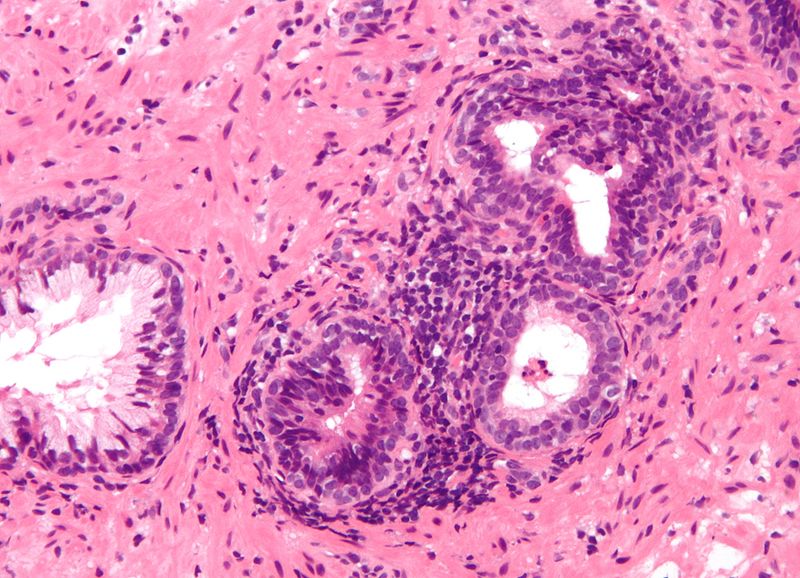
prostatitis
Prostatitis is an umbrella term for a variety of medical conditions that incorporate bacterial and non-bacterial origin illnesses in the pelvic region. In contrast with the plain meaning of the word (which means "inflammation of the prostate"), the diagnosis may not always include inflammation. Prostatitis is classified into acute, chronic, asymptomatic inflammatory prostatitis, and chronic pelvic pain syndrome.

prostatic hypertrophy
noncancerous increase in size of the prostate

pre-seminal
thumb|Pre-ejaculate on the Glans penis|glans of the penis
testicular cancer
male sex reproductive system cancer that is located in the testicles

orchitis
Orchitis is inflammation of the testicles. It can also involve swelling, pains, and frequent infection, particularly of the epididymis, as in epididymitis. The term is from the Ancient Greek ὄρχις meaning "testicle"; same root as orchid.

Movember
thumb|A group of men displaying moustaches for Movember
toxic masculinity
cultural norms associated with men that are harmful to society and to men themselves
spermatic cord torsion
spermatic cord (from which the testicle is suspended) twists, cutting off the testicle's blood supply

epididymitis
Epididymitis is a medical condition characterized by inflammation of the epididymis, a curved structure at the back of the testicle. Onset of pain is typically over a day or two. The pain may improve with raising the testicle. Other symptoms may include swelling of the testicle, burning with urination, or frequent urination. Inflammation of the testicle is commonly also present.
castration anxiety
fear of emasculation in both the literal and metaphorical sense
abdominal aortic aneurysm
aortic aneurysm that is located in the abdominal aorta
Men's Health
magazine
men's rights movement
social movement concerned with discrimination against men
chemical castration
castration via anaphrodisiacal drugs, whether to reduce libido and sexual activity, to treat cancer, or otherwise
violence against men
violent acts committed against males
prostate massage
massage of the prostate gland via the rectum or perineum
human male sexuality
sexual feelings and behavior of male humans
testicular pain
urological symptom
spermarche
Spermarche, also known as semenarche, is the time at which a male experiences his first ejaculation. It is considered to be the male counterpart of menarche in females. Depending on upbringing, cultural differences, and prior sexual knowledge, males may have different reactions to spermarche, ranging from fear to excitement. Spermarche is one of the first events in the life of a male leading to sexual maturity. It occurs at the time when the secondary sex characteristics are just beginning to develop. Researchers have had difficulty determining the onset of spermarche because it is reliant on
hydrocele testis
medical condition
men's health
physical, mental, and social well-being, as experienced by boys and men
penile prosthesis
medical device, implanted for the surgical treatment of organic erectile dysfunction
spermatorrhea
Spermatorrhea, or spermatorrhoea, is a condition of excessive, involuntary seminal discharge. In several cultures, spermatorrhea referred to ejaculation outside of certain approved sexual practices and was thus a subjective term. A more modern medical definition is the excessive release of semen with no accompanying erection or orgasm.
Commotio cordis
heart injury

gender differences in suicide
male contraceptive
method of preventing pregnancy that solely involves the male physiology
HIV and men who have sex with men
HIV among gay, bisexual and other men who have sex with men
circumcision controversies
controversies regarding circumcision
testicular self-examination
medical intervention
Testicular microlithiasis
human disease
penile discharge
medical condition
forced circumcision
circumcision performed without consent
male bonding
formation of close personal relationship between men
prevalence of circumcision
overview of prevalence of circumcision
Distinguished Gentleman's Ride
global motorcycle fund-raising event
ectopic testis
medical condition
gender disparities in health
Hard flaccid syndrome
medical condition
prostate cancer screening
medical examination
Male infertility crisis
study of infertility in men
Macroorchidism
Macroorchidism is a disorder found in males, specifically in children, where a subject has abnormally large testes. The condition is commonly inherited in connection with fragile X syndrome (FXS), which is also the second most common genetic cause of intellectual disability. The condition is also a rare sign of McCune–Albright syndrome. The opposite of macroorchidism is called microorchidism, which is the condition of abnormally small testes.
Testicular trauma
medical condition