Category
page 1Metamorphoses into animals in Greek mythology

Odysseus
In Greek and Roman mythology, Odysseus (; , ), also known by the Latin variant Ulysses (, ; ), is a legendary Greek king of Ithaca and the hero of Homer's epic poem, the Odyssey. Odysseus also plays a key role in Homer's Iliad and other works in that same epic cycle.

Circe
<!--

Cadmus
In Greek mythology, Cadmus (; ) was the legendary Phoenician founder of Boeotian Thebes. He was, alongside Perseus and Bellerophon, the greatest hero and slayer of monsters before the days of Heracles. Commonly stated to be a prince of Phoenicia, the son of king Agenor and queen Telephassa of Tyre, the brother of Phoenix, Cilix and Europa, Cadmus traced his origins back to Poseidon and Libya.

Io
nymph seduced by Zeus in Greek mythology

Atalanta
thumb|Atalanta surrounded by three Erotes, Attic white-ground [[lekythos, c. 500–470 BC]]

Hecuba
In Greek mythology, Hecuba (; also Hecabe; , ) was the wife of King Priam and queen of Troy during the Trojan War. With Priam, she was the mother of the warriors Hector and Troilus; Helen's suitor Paris; and the prophetess Cassandra.

Harmonia
thumb|250px|Statue of Harmonia in the Harmony Society gardens in Old Economy Village, Pennsylvania.

Callisto
nymph in Greek mythology
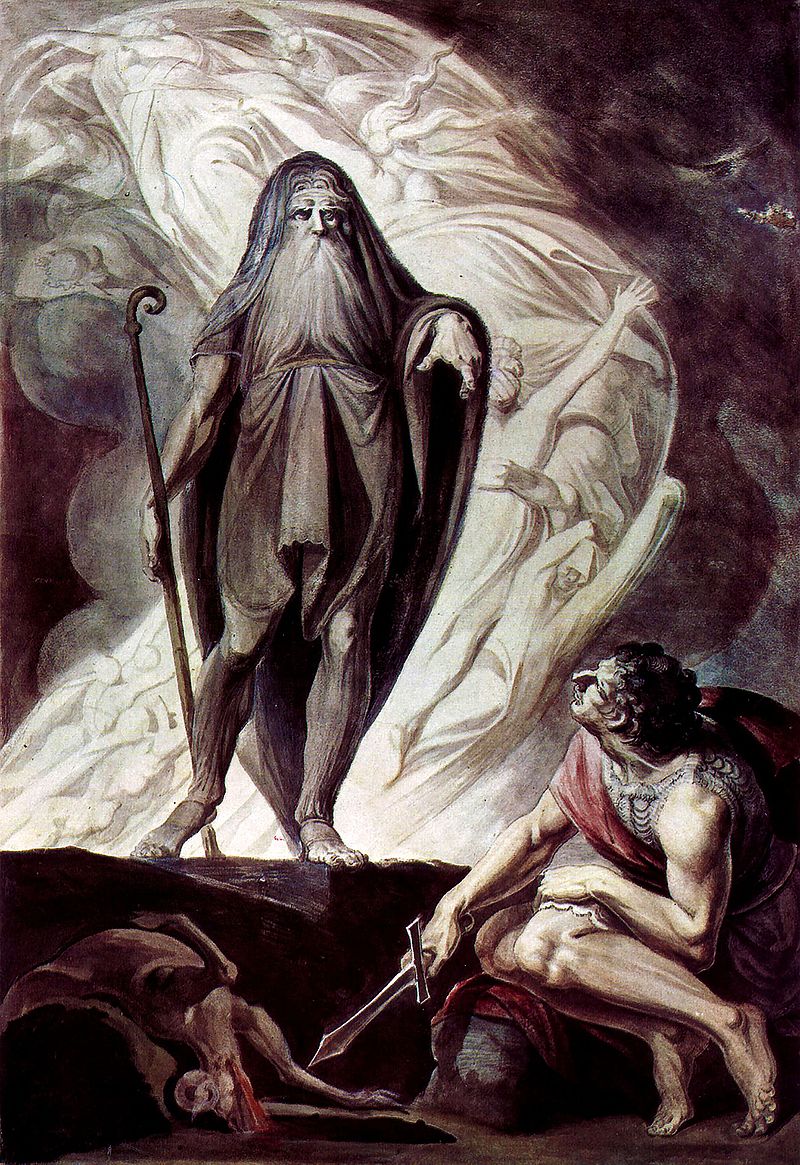
Tiresias
thumb|300px|right|alt=A person with flowing robes holding a staff strikes two intertwined snakes on the ground|Tiresias strikes two snakes with a stick, and is transformed into a woman by Hera. Engraving by Johann Ulrich Kraus c. 1690. Taken from Die Verwandlungen des Ovidii (The Metamorphoses of Ovid).
thumb|300px|alt=A baroque painting showing a male and female figure together|Pietro della Vecchia, Tiresias Transformed into a Woman, 17th century.
In Greek mythology, Tiresias (; ) was a blind prophet of Apollo in Thebes, famous for clairvoyance and for being transformed into a woman for seven

Actaeon
thumb|The death of Actaeon on Red-figure pottery|red-figure [[skyphos from Paestum, 4th century BC (Karlsruhe, Badisches Landesmuseum).]]
Taygete
In Classical Greek mythology, Taygete (; , , ) was a nymph, one of the Pleiades according to the Bibliotheca (3.10.1) and a companion of Artemis, in her archaic role as potnia theron, "Mistress of the animals", with its likely roots in prehistory. Mount Taygetos in Laconia, dedicated to the goddess, was her haunt.

Pentheus
In Greek mythology, Pentheus (; ) was a king of Thebes. His father was Echion, the wisest of the Spartoi. His mother was Agave, the daughter of Cadmus, the founder of Thebes, and grandson of the goddess Harmonia. His sister was Epeiros and his son was Menoeceus.
Lycaon
Greek mythical character, king of Arcadia, son of Pelasgus and Meliboea

Arcas
thumb | right | alt=Arcas and Callisto, Sebastiano Ricci (1659–1734). | Arcas and Callisto, Sebastiano Ricci (1659–1734).
In Greek mythology, Arcas (; Ancient Greek: Ἀρκάς) was a hunter who became king of Arcadia. He was remembered for having taught people the arts of weaving and baking bread and for spreading agriculture to Arcadia.
%2004%20crop.jpg)
Korybantes
According to Greek mythology, the Korybantes (; ), also spelled Corybantes or Corybants, were the armed and crested dancers who worshipped the Phrygian goddess Cybele with drumming and dancing. They are also called the Kurbantes in Phrygia.

Phineus
thumb|250px|Phineus with the Boreads.
.jpg)
Hippomenes
The name Hippomenes may also refer to the father of Leimone.
thumb|Marble statue of Hippomenes by Guillaume Coustou. Louvre museum in Paris, France

Galanthis
thumb|right|250px|Birth of Heracles by [[Jean Jacques Francois Le Barbier.]]

Cercopes
thumb|Heracles and the Cercopes (Metope in [[Paestum)]]
In Greek mythology, the Cercopes (, plural of Κέρκωψ, from κέρκος (n.) kerkos "tail") were mischievous forest creatures who lived in Thermopylae or on Euboea but roamed the world and might turn up anywhere mischief was afoot. They were two brothers, but their names are given variously:

Mestra
right|thumb|240px|Erysichthon sells his daughter Mestra. An engraving from among Johann Wilhelm Baur's illustrations of Ovid's Metamorphoses. Poseidon can be seen in the lower-left background.
In Greek mythology, Mestra (, Mēstra) was a daughter of Erysichthon of Thessaly. Antoninus Liberalis called her Hypermestra and Erysichthon Aethon. According to Ovid, she was married to the thief Autolycus.

Minyades
The Minyades () were three Orchomenian (Arcadian) princesses in Greek mythology. These sisters were protagonists of a myth about the perils of neglecting the worship of Dionysus.
Medon
list of mythical and historical people

Melanippe
The name Melanippe is the feminine counterpart of Melanippus.
thumb|300px|Amazon Melanippe on a late antique mosaic
Chelone
character in Greek mythology
Theophane
In Greek mythology, Theophane (Ancient Greek: Θεοφάνη) was a daughter of Bisaltes.

Abas
set of mythological Greek characters
Ascalabus
Ascalabus (Ancient Greek: Ἀσκάλαβος), in Greek mythology, was a son of Misme.
Euphorion
figure of Greek mythology; son of Achilles
Cephisus
river gods in Greek mythology
%20-%201690.jpg)
Lyncus
thumb|280px|Demeter transforms Lyncus into a lynx
Damarchus
thumb|The Boxer of Quirinal (Museo delle Terme, Rome)
Helike
group of Greek mythical characters
Melanion
mythical son of Amphidamas
Ocyrhoe
thumb|Ocyrhoë verteld haar vader Cheiron het lot van Aesculapius (Ocyrhoe tells her father Cheiron the fate of Aesculapius). 19th-century etching of a print by Willem van Mieris, 1694
Ocyrhoe (; Ancient Greek: Ὠκυρόη) or Ocyrrhoe (Ὠκυρρόη) refers to at least five characters in Greek mythology.
Proetids
thumb|Melampus and the Proetids in the temple of Artemis, by Aubin-Louis Millin (1759–1818).
Dictys
Dictys () was a name attributed to four men in Greek mythology.
Alcimedon
Alcimedon (; Ancient Greek: Ἀλκιμέδων) can refer to a number of people in Greek mythology and history:
Lykaia
In Ancient Greece, the Lykaia () was an archaic festival with a secret ritual on the slopes of Mount Lykaion ("Wolf Mountain") in Arcadia. The rituals and myths of this primitive rite of passage centered upon an ancient threat of cannibalism and the possibility of a werewolf transformation for the epheboi (adolescent males) who were the participants. The festival occurred yearly, probably at the beginning of May.
Melas
name of eight different characters in Greek mythology