Category
page 1Methanobacteriati

Halobacteria
Haloarchaea (halophilic archaea, halophilic archaebacteria, halobacteria) are a class of archaea under the phylum Euryarchaeota, found in water saturated or nearly saturated with salt. 'Halobacteria' are now recognized as archaea rather than bacteria and are one of the largest groups of archaea. The name 'halobacteria' was assigned to this group of organisms before the existence of the domain Archaea was realized, and while valid according to taxonomic rules, should be updated. Halophilic archaea are generally referred to as haloarchaea to distinguish them from halophilic bacteria.
Thermoplasma
Thermoplasma is a genus of archaeans. It belongs to the class Thermoplasmata, which thrive in acidic and high-temperature environments. Thermoplasma are facultative anaerobes and respire using sulfur and organic carbon. They do not contain a cell wall but instead contain a unique membrane composed mainly of a tetraether lipoglycan containing atypical archaeal tetraether lipid attached to a glucose- and mannose-containing oligosaccharide. This lipoglycan is presumably responsible for the acid and thermal stability of the Thermoplasma membrane.

Halobacterium
Halobacterium (common abbreviation Hbt.), from Ancient Greek ἅλς (háls), meaning "salt", and "bacterium", is a genus in the family Halobacteriaceae.
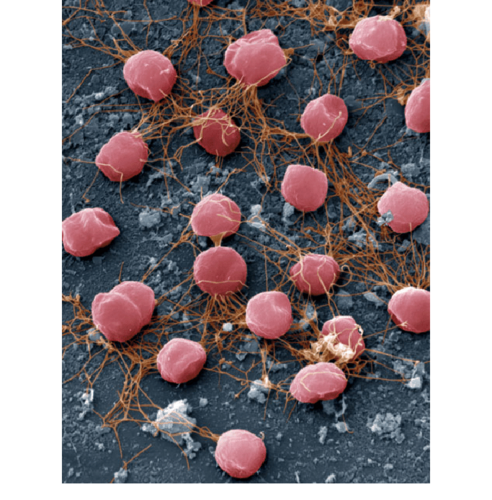
Pyrococcus furiosus
species of Thermococci
Methanopyrus
Methanopyrus is a genus of methanogen, with a single described species, Methanopyrus kandleri (type strain AV19). It is a rod-shaped hyperthermophile, discovered on the wall of a black smoker from the Gulf of California at a depth of 2,000 m, at temperatures of 84–110 °C. Strain 116 was discovered in black smoker fluid of the Kairei hydrothermal field; it can survive and reproduce at 122 °C. M. kandleri also requires a high ionic concentration (>1 M) in order for growth and cellular activity. Due to the species' high resilience and extreme environment, M. kandleri is also classi
Methanosarcina
Methanosarcina is a genus of euryarchaeote archaea that produce methane. These single-celled organisms are known as anaerobic methanogens that produce methane using all three metabolic pathways for methanogenesis. They live in diverse environments where they can remain safe from the effects of oxygen, whether on the earth's surface, in groundwater, in deep sea vents, and in animal digestive tracts. Methanosarcina grow in colonies.
Archaeoglobus
Archaeoglobus is a genus of archaeans in the phylum Euryarchaeota. Archaeoglobus can be found in high-temperature oil fields where they may contribute to oil field souring.
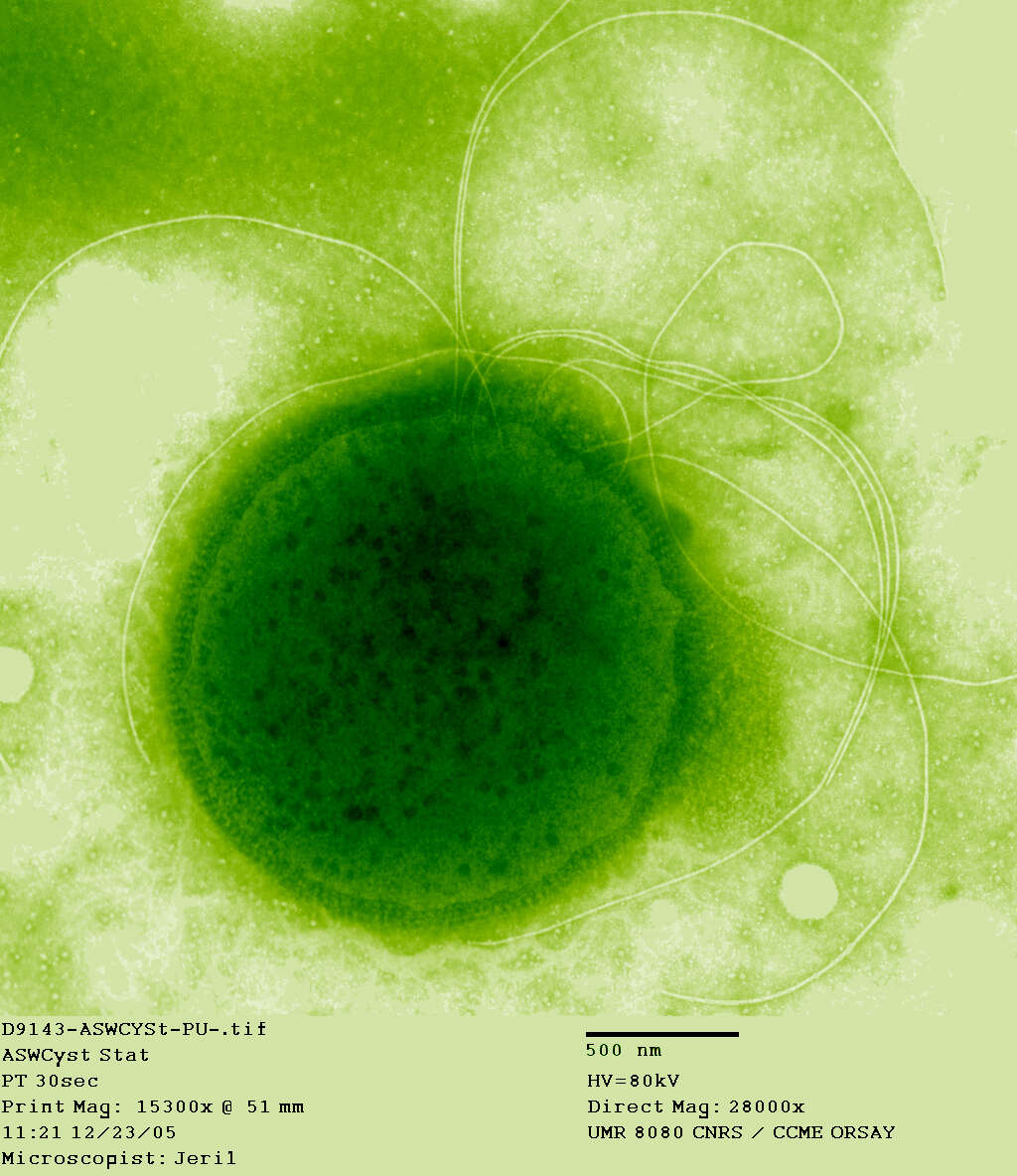
Thermococcus
Thermococcus is a genus of thermophilic Archaea in the family the Thermococcaceae.
Thermoplasmata
Thermoplasmata is a class of archaeans in the phylum Thermoplasmatota.

Ferroplasma
Ferroplasma is a genus of Archaea that belong to the family Ferroplasmaceae. Members of the Ferroplasma are typically acidophilic, pleomorphic, irregularly shaped cocci.
Haloquadratum
Haloquadratum (common abbreviation: Hqr.) is a genus of archaean, belonging to the family Haloferacaceae. The first species to be identified in this group, Haloquadratum walsbyi, is unusual in that its cells are shaped like square, flat boxes.
Methanobacteria
Methanobacteria is a class of archaeans in the kingdom "Euryarchaeota". Several of the classes of the "Euryarchaeota" are methanogens and the Methanobacteria are one of these classes.
Methanosarcinales
Methanosarcinales is an order of Archaea in the class Methanomicrobia, phylum Methanobacteriota. The order Methanosarcinales contains both methanogenic and methanotrophic lineages, although the latter have so far no pure culture representatives. Methanotrophic lineages of the order Methanosarcinales were initially abbreviated as ANME (anaerobic methanotrophs) to distinguich from aerobic methanotrophic bacteria. Currently, those lineages receive their own names such as Ca. Methanoperedens, Ca. Methanocomedens (ANME-2a), Ca.Methanomarinus (ANME-2b), Ca. Methanogaster (ANME-2c), Ca. Methanovorans

Halobacteriaceae
thumb | right
Halobacteriaceae, from Ancient Greek ἅλς (háls), meaning "salt", and "bacterium", is a family in the order Halobacteriales and the domain Archaea. Halobacteriaceae represent a large part of halophilic Archaea, along with members in two other methanogenic families, Methanosarcinaceae and Methanocalculaceae. The family consists of many diverse genera that can survive extreme environmental niches. Most commonly, Halobacteriaceae are found in hypersaline lakes and can even tolerate sites polluted by heavy metals. They include neutrophiles, acidophiles (ex. Halarchaeum acidiphilum), a
Methanomicrobia
"Methanomicrobia" is a class of archaeans in the phylum Methanobacteriota.

Picrophilus
thumb|Schematic map of the pPO1 plasmid from the hyperacidophile Picrophilus oshimae
Thermoplasmatales
Thermoplasmatales is an order of archaeans in the class Thermoplasmata. All are acidophiles, growing optimally at pH below 2. Picrophilus is currently the most acidophilic of all known organisms, being capable of growing at a pH of -0.06. Many of these organisms do not contain a cell wall, although this is not true in the case of Picrophilus. Most members of the Thermotoplasmata are thermophilic.
Pyrococcus
Pyrococcus is a genus of Thermococcaceaen archaeans.

Thermococci
thumb|Schematic diagram of the Thermococcus gammatolerans cell pictured above.
thumb|Pyrococcus furiosus
Ferroglobus
Ferroglobus is a genus of the Archaeoglobaceae.

Methanobacteriales
Methanobacteriales is an order of archaeans in the class Methanobacteria. Species within this order differ from other methanogens in that they can use fewer catabolic substrates and have distinct morphological characteristics, lipid compositions, and RNA sequences. Their cell walls are composed of pseudomurein. Most species are Gram-positive with rod-shaped bodies and some can form long filaments. Most of them use formate to reduce carbon dioxide, but those of the genus Methanosphaera use hydrogen to reduce methanol to methane.
Methanococcus
Methanococcus is a genus of coccoid methanogens of the family Methanococcaceae. They are all mesophiles, except the thermophilic M. thermolithotrophicus and the hyperthermophilic M. jannaschii. The latter was discovered at the base of a "white smoker" chimney at 21°N on the East Pacific Rise and it was the first archaeal genome to be completely sequenced, revealing many novel and eukaryote-like elements.
Methanopyri
Methanopyri is a class of archaeans in the phylum Methanobacteriota.
Methanosarcina acetivorans
species of Methanomicrobia

Methanococci
thumb|
Methanobacterium
Methanobacterium (from Latin methanum, meaning "methane", and bactērium) is a genus of the Methanobacteria class in the Archaea domain, which produce methane as a metabolic byproduct. Despite the name, this genus belongs not to the bacterial domain but the archaeal domain (for instance, they lack peptidoglycan in their cell walls). Methanobacterium are nonmotile and live without oxygen, which is toxic to them, and they only inhabit anoxic environments.
Methanomicrobium
Methanomicrobium is a genus of archaeans in the family Methanomicrobiaceae. The cells are shaped like short bars and do not form endospores. They produce methane via the reduction of carbon dioxide with hydrogen or formate. They cannot metabolize acetate, methylamines, or methanol.
Archaeoglobaceae
Archaeoglobaceae are a family of the Archaeoglobales. All known genera within the Archaeoglobaceae are hyperthermophilic and can be found near undersea hydrothermal vents. Archaeoglobaceae are the only family in the order Archaeoglobales, which is the only order in the class Archaeoglobi.
Methanobrevibacter
Methanobrevibacter is a genus of archaeans in the family Methanobacteriaceae. The species within Methanobrevibacter are strictly anaerobic archaea that produce methane, for the most part through the reduction of carbon dioxide via hydrogen. Most species live in the intestines of larger organisms, such as termites and are responsible for the large quantities of greenhouse gases that they produce.
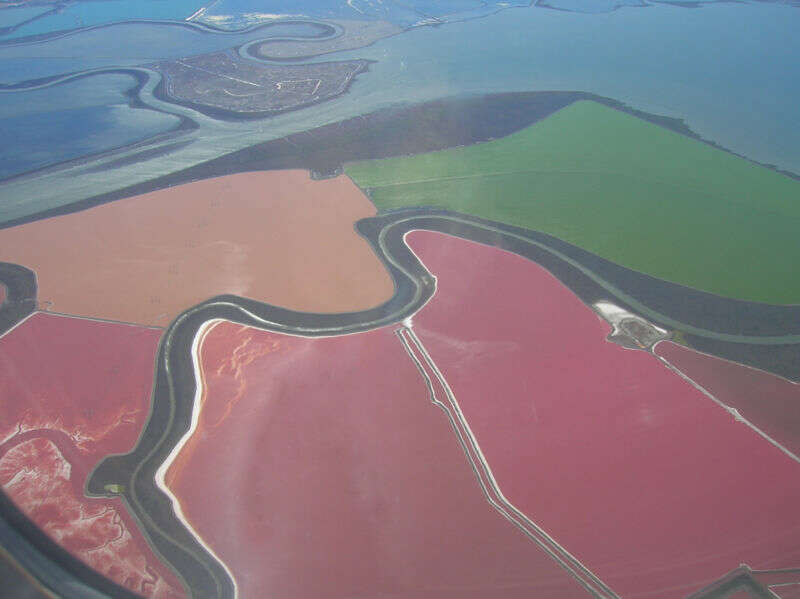
Halobacteriales
Halobacteriales, from Ancient Greek ἅλς (háls), meaning "salt", and "bacterium", are an order of the Halobacteria, found in water saturated or nearly saturated with salt. They are also called halophiles, though this name is also used for other organisms which live in somewhat less concentrated salt water. They are common in most environments where large amounts of salt, moisture, and organic material are available. Large blooms appear reddish, from the pigment bacteriorhodopsin. This pigment is used to absorb light, which provides energy to create ATP. Halobacteria also possess a second pigmen

Methanobrevibacter smithii
species of prokaryote
Methanosarcina barkeri
species of euryarchaeote archaea
Nanohalarchaeia
Nanohalarchaeota is a phylum of diminutive archaea with small genomes and limited metabolic capabilities, belonging to kingdom Nanobdellati. They are ubiquitous in hypersaline habitats, which they share with the extremely halophilic haloarchaea.
Methanococcaceae
Methanococcaceae is a family of archaeans in the order Methanococcales. These organisms produce methane from formate or through the reduction of carbon dioxide with hydrogen. They live in marshes and other coastal areas. Members of the genus Methanothermococcus have been found in deep-sea hydrothermal vents.
Methanosarcinaceae
Methanosarcinaceae is a family of archaeans in the order Methanosarcinales.
Methanomicrobiaceae
Methanomicrobiaceae are a family of archaea in the order the Methanomicrobiales.
Methanothermus
Methanothermus is a genus of microbes within the family Methanothermaceae. The species within this genes are hyperthermophiles and strictly anaerobic. They produce energy through the reduction of carbon dioxide with hydrogen to produce methane. it is found in hydrothermal vents with temperatures as high as 85 °C and pH 6.5.
Thermococcaceae
Thermococcaceae is a family of archaeans in the order Thermococcales. Almost all species within the three genera of Thermococcaceae were isolated from hydrothermal vents in the ocean. All are strictly anaerobes.
Methanomicrobiales
Methanomicrobiales is an order of archaeans in the phylum Methanobacteriota. Methanomicrobiales are strictly carbon dioxide reducing methanogens, using hydrogen or formate as the reducing agent.
As seen from the phylogenetic tree based on 'The All-Species Living Tree' Project the family Methanomicrobiaceae is highly polyphyletic within the Methanomicrobiales.
Methanoculleus
Methanoculleus is a genus of microbes within the family Methanomicrobiaceae. The species of the genus Methanoculleus live in marine environments brackish water, and are very common in bioreactors, landfills, and wastewater. Unlike other archaea, Methanoculleus and some species of related genera can use ethanol and some secondary alcohols as electron donors as they produce methane. This has implications as the production of methane as a greenhouse gas and consequences with respect to global climate change.
Thermococcales
The Thermococcales are an order of microbes within the class Thermococci. The species within the Thermococcales are used in laboratories as model organisms. All these species are strict anaerobes and can ferment sugars as sources of carbon, but they also need elemental sulfur.
Geoglobus
Geoglobus is a hyperthermophilic member of the Archaeoglobaceae within the Euryarchaeota. It consists of two species, the first, G. ahangari, isolated from the Guaymas Basin hydrothermal system located deep within the Gulf of California. As a hyperthermophile, it grows best at a temperature of 88 °C and cannot grow at temperatures below 65 °C or above 90 °C. It possess an S-layer cell wall and a single flagellum. G. ahangari is an anaerobe, using poorly soluble ferric iron (Fe3+) as a terminal electron acceptor. It can grow either autotrophically using hydrogen gas (H2) or heter
Methanocorpusculum
Methanocorpusculum is a genus of Archaea within the family Methanocorpusculaceae. The species within Methanocorpusculum were first isolated from biodisgester wastewater and activated sludge from anaerobic digestors. In nature, they live in freshwater environments. Unlike most other methanogenic archaea, they do not require high temperatures or extreme salt concentrations to live and grow.
Methanosaeta
Methanosaeta is a genus of archaeans in the family Methanosaetaceae. Like other species in this family, those of Methanosaeta metabolize acetate as their sole source of energy. The genus contains two species, Methanosaeta concilii, which is the type species (type strain GP6) and Methanosaeta thermophila. For a time, some scientists believed there to be a third species, Methanosaeta soehngenii, but because it has not been described from a pure culture, it is now called Methanothrix soehngenii.
Methanolobus
Methanolobus is a genus of methanogenic archaea within the family Methanosarcinaceae. These organisms are strictly anaerobes and live exclusively through the production of methane, but the species within Methanolobus cannot use carbon dioxide with hydrogen, acetate or formate, only methyl compounds. The cells are irregular coccoid in form and approximately 1 μm in diameter. They do not form endospores. They are Gram negative and only some are motile, via a single flagellum. They are found in lake and ocean sediments that lack oxygen.
Methanocaldococcus
Methanocaldococcus formerly known as Methanococcus is a genus of coccoid methanogen archaea. They are all thermophiles, including M. infernus and the hyperthermophilic M. jannaschii. The latter was discovered at the base of a “white smoker” chimney at 21°N on the East Pacific Rise and it was the first archaean genome to be completely sequenced, revealing many novel and eukaryote-like elements.
Methanosphaera
Methanosphaera is a genus of Archaea within the family Methanobacteriaceae. It was distinguished from other genera within Methanobacteriaceae in 1985 on the basis of the oligonucleotide sequence of its 16S RNA. Like other archaea within Methanobacteriaceae, those of Methanosphaera are methanogens, but while most use formate to reduce carbon dioxide, those of Methanosphaera use hydrogen to reduce methanol to methane.
Methanococcales
Methanococcales is an order of archaeans in the class Methanococci.
Thermococcus gammatolerans
species of Thermococci
Thermoplasmataceae
Thermoplasmataceae is a family of archaeans in the order Thermoplasmatales. It contains only one genus, Thermoplasma. All species within Thermoplasmataceae are thermoacidophiles, and they grow at a temperature of 60 °C and pH 2. They were isolated from hydrothermal vents, fumaroles and similar environments.
Methanocorpusculaceae
Methanocorpusculaceae is a family of microbes within the order Methanomicrobiales. It contains exactly one genus, Methanocorpusculum. The species within Methanocorpusculum were first isolated from anaerobic digesters and anaerobic wastewater treatment plants. In the wild, they prefer freshwater environments. Unlike many other methanogenic archaea, they do not require high temperatures or extreme salt concentrations to live and grow.
Methanofollis
Methanofollis is a genus of archaean in the family Methanomicrobiaceae.
Methanohalobium
Methanohalobium is a genus of archaeans in the family Methanosarcinaceae. Its genome has been sequenced. The genus contains one species, M. evestigatum.
Methanoplanus
Methanoplanus is a genus of archaeans in the family Methanomicrobiaceae, comprising three species of methanogenic, or methane-producing, archaea. The cells are irregular coccoid in shape, tend to stain Gram-negative and do not form endospores.
Methanothermobacter
thumb|upright=1.0| Phase contrast image of Methano­thermobacter marburgensis DSM 2133. Specimen was obtained in late exponential phase from a fed-batch fermentation. The cells are rod shaped and elongated.
Methanococcoides
Methanococcoides is a genus of archaeans in the family Methanosarcinaceae.
Methanospirillum
Methanospirillum is a genus of microbes within the family Methanospirillaceae. All its species are methanogenic archaea. The cells are bar-shaped and form filaments. Most produce energy via the reduction of carbon dioxide with hydrogen, but some species can also use formate as a substrate. They are Gram-negative and move using archaella on the sides of the cells. They are strictly anaerobic, and they are found in wetland soil and anaerobic water treatment systems.
Methanolacinia
Methanolacinia is a genus of archaeans in the family Methanomicrobiaceae. The cells are bar-shaped and irregular 0.6 μm in diameter and 1.5–2.5 μm in length. They do not form endospores. Most are non-motile, but some have a single flagellum. They are strictly anaerobic. They produce methane through the reduction of carbon dioxide with hydrogen and cannot use formate, acetate or methyl compounds as substrates.
Methanohalophilus
Methanohalophilus is a genus of archaeans in the family Methanosarcinaceae.
Methanogenium
Methanogenium is a genus of archaeans in the family Methanomicrobiaceae. The type species is Methanogenium cariaci.