Encyclopedia of Life · EOL (see source)
Thermococcus
Sign in to saveThermococcus is a genus of thermophilic Archaea in the family the Thermococcaceae.
Species
FAMILY
- KingdomArchaea
- PhylumMethanobacteriota_B
- ClassThermococci
- OrderThermococcales
- FamilyThermococcaceae
出典は列挙するだけでなく、脚注などを用いてどの記述の情報源であるかを明記してください。記事の信頼性向上にご協力をお願いいたします。(2014年2月) テルモコックス属 T. gammatolerans 分類 ドメ イン : 古細菌 Archaea 界 : ユリアーキオータ界 Euryarchaeota 門 : ユリアーキオータ門 Euryarchaeota 綱 : テルモコックス綱 Thermococci 目 : テルモコックス目 Thermococcales 科 : テルモコックス科 Thermococcaceae 属 : テルモコックス属 Thermococcus 学名 Thermococcus Zillig 1983 種 T. celer(基準種) T. kodakarensis ほか (詳細は#分類(種)参照) テルモコックス属(Thermococcus、サーモコッカス、サーモカカス)はユリアーキオータに属す超好熱性の古細菌である。同じテルモコックス科に属するPyrococcusよりもやや好熱性は低いが、幅広い温度、pHで生息が可能。Thermococcus celerを初めとして古細菌最多の27種が属す。 深海や浅瀬の熱水域によく生育している。理由は不明だが油田鉱床から分離されることもある。生育可能温度は40-103℃と幅広く、pHも3.5-10.5と広い。Thermococcus barophilusの増殖温度は48℃-100℃とかなり広く、最も生育可能温度に幅がある生物と思われる。 栄養学的には偏性嫌気性の偏性従属栄養生物で、多糖類(マルトース他)やアミノ酸を発酵している。この際生成する水素が増殖を阻害するため、硫黄などを利用して硫化水素として除去している。硫黄がなければ強い増殖阻害が起こり、種によっては増殖が停止する。窒素酸化物や鉄化合物を還元剤として利用する種もいる。 形態的には1-2μmほどの直径を持つ球菌で、細胞壁はS-レイヤーより構成される。多数の鞭毛を持つ場合が多い。 進化的にはユリアーキオータの基部付近で分岐していると考えられており、古細菌の原始的な性格を残していると思われる。Thermoplasmaの様にいくつか細胞壁を欠き、多数の細胞が集合した融合体を形成するものも知られている。T. gammatoleransなどの様に、かなり強いガンマ線に耐える種もいくつか含まれている。 利用例としてはT. kodakaraensis由来のDNAポリメラーゼがPCR用に市販されている他、古細菌や超好熱菌を対象とした研究での使用頻度が比較的高い。ゲノムは2005年にT. kodakaraensis KOD1(2,088,737bp、ORF2306)が解読されたのを始め、T. onnurineus NA1(2008年)、T. sibiricus
via GBIF
Research
1,317 papers- Thermococcus kodakarensis DNA replication.Biochemical Society transactions · 2013
- Characterization of gluten-degrading prolyl endoprotease from Thermococcus kodakarensis.FEMS microbiology letters · 2022
- Transformation Techniques for the Anaerobic Hyperthermophile Thermococcus kodakarensis.Methods in molecular biology (Clifton, N.J.) · 2022
- Thermococcus kodakarensis provides a versatile hyperthermophilic archaeal platform for protein expression.Methods in enzymology · 2021
- An overview of 25 years of research on Thermococcus kodakarensis, a genetically versatile model organism for archaeal research.Folia microbiologica · 2020
via PubMed
Wikidata facts
- Instance of
- taxon
- Parent taxon
- Thermococcaceae
- Image
- Thermococcus gammatolerans.jpg
Show 4 more facts
- taxon name
- Thermococcus
- taxon rank
- genus
- Commons category
- Thermococcus
Sources (3)
via Wikidata · CC0
~9 min read
Encyclopedic overview
9 sectionsContents
- Phylogeny
- Metabolism
- Ecology
- Transportation mechanisms
- Future technology
- See also
- References
- Further reading
- External links
Thermococcus is a genus of thermophilic Archaea in the family the Thermococcaceae.
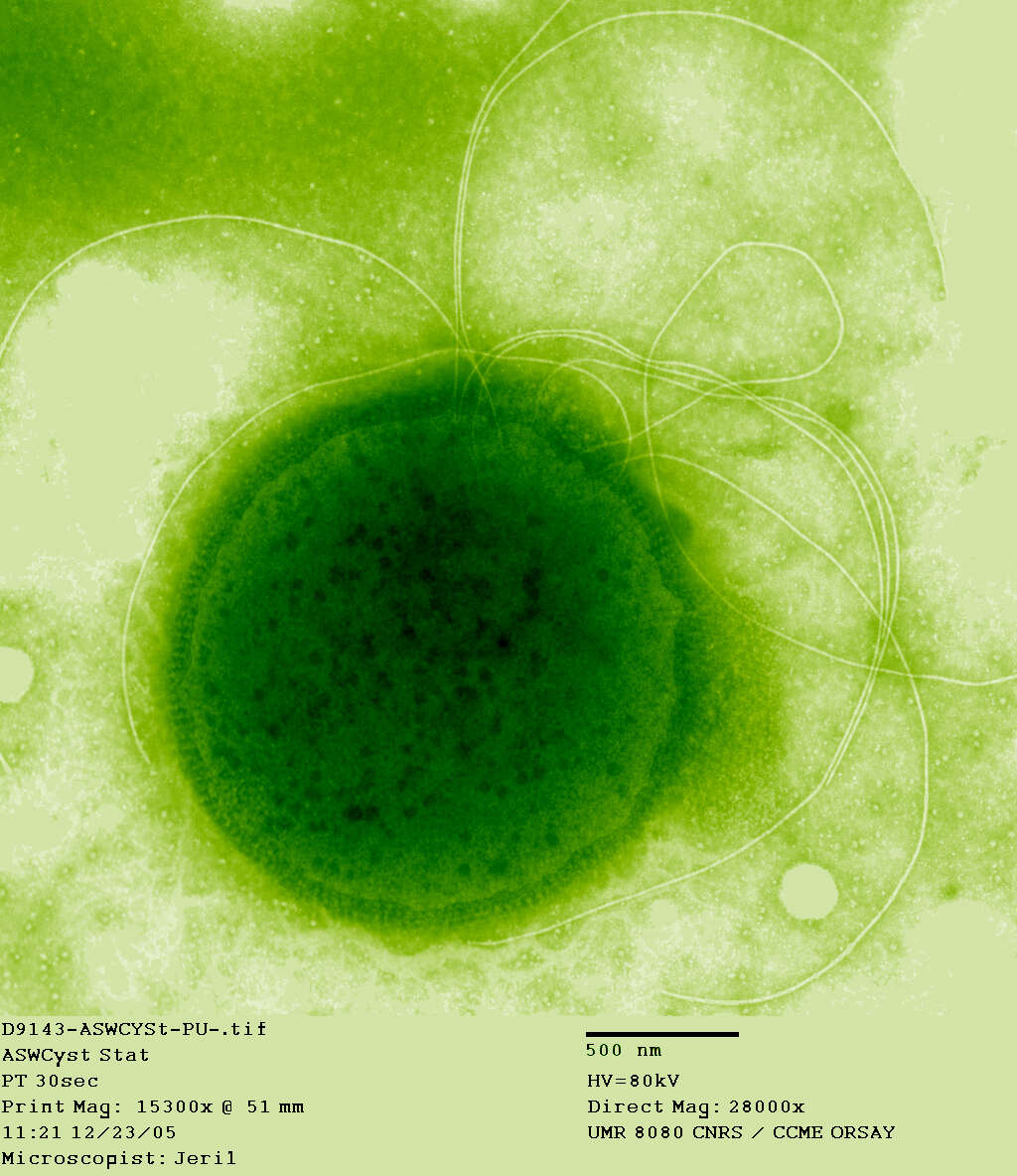
Members of the genus Thermococcus are typically irregularly shaped coccoid species, ranging in size from 0.6 to 2.0 μm in diameter. Some species of Thermococcus are immobile, and some species have motility, using flagella as their main mode of movement. These flagella typically exist at a specific pole of the organism. This movement has been seen at room or at high temperatures, depending on the specific organism. In some species, these microorganisms can aggregate and form white-gray plaques. Species under Thermococcus typically thrive at temperatures between 60 and 105 °C, either in the presence of black smokers (hydrothermal vents), or freshwater springs. Species in this genus are strictly anaerobes, and are thermophilic, found in a variety depths, such as in hydrothermal vents 2500m below the ocean surface, but also centimeters below the water surface in geothermal springs. These organisms thrive at pH levels of 5.6-7.9. Members of this genus have been found in many hydrothermal vent systems in the world, including from the seas of Japan, to off the coasts of California. Sodium Chloride salt is typically present in these locations at 1%-3% concentration, but is not a required substrate for these organisms, as one study showed Thermococcus members living in fresh hot water systems in New Zealand, but they do require a low concentration of lithium ions for growth. Thermococcus members are described as heterotrophic, chemotrophic, and are organotrophic sulfanogens; using elemental sulfur and carbon sources including amino acids, carbohydrates, and organic acids such as pyruvate.
Excerpted from Wikipedia’s “Thermococcus” article, available under the CC BY-SA 4.0 licence.