Category
page 1Metre

metre
The metre (or meter in US spelling; symbol: m) is the base unit of length in the International System of Units (SI). Since 2019, the metre has been defined as the length of the path travelled by light in vacuum during a time interval of of a second, where the second is defined by a hyperfine transition frequency of caesium.

kilometre
The kilometre (SI symbol: km; or ), spelt kilometer in American English, is a unit of length in the International System of Units (SI), equal to one thousand metres (kilo- being the SI prefix for ). It is the preferred measurement unit to express distances between geographical places on land in most of the world; notable exceptions are the United States and the United Kingdom where the statute mile is used.

centimetre
thumb|upright=1.35|Different lengths as in respect to the electromagnetic spectrum, measured by the metre and its derived scales. The [[microwave is in-between 1 metre to 1 millimetre.]]

millimetre
thumb|330px|Different lengths with respect to the electromagnetic spectrum. The [[microwave spans from 1 metre to 1 millimetre.]]
nanometre
thumb|330px|Different lengths as in respect to the electromagnetic spectrum, measured by the metre and its derived scales. The nanometre is often used to express dimensions on an atomic scale and mostly in the molecular scale.
The nanometre (international spelling as used by the International Bureau of Weights and Measures; SI symbol: nm), or nanometer (American spelling), is a unit of length in the International System of Units (SI), equal to one billionth (short scale) or one thousand millionth (long scale) of a metre (0.000000001 m) and to 1000 picometres. One nanometre can be exp

micrometre
The micrometre (or micrometer in US spelling; symbol: μm) is a unit of length in the International System of Units (SI) equalling (SI standard prefix "micro-" = ); that is, one millionth of a metre (or one thousandth of a millimetre, , or about ). Also known as a micron.

decimetre
The decimetre (' in American English; symbol: dm') is a unit of length in the International System of Units, equal to one tenth of a metre, ten centimetres, one hundred millimetres, and 3.937 inches.

picometre
The picometre (international spelling as used by the International Bureau of Weights and Measures; SI symbol: pm) or picometer (American spelling) is a unit of length in the International System of Units (SI), equal to , or one trillionth of a metre, which is the SI base unit of length.

femtometre
The femtometre (American spelling femtometer), symbol fm, (derived from the Danish and Norwegian word 'fifteen', ) is a unit of length in the International System of Units (SI) equal to 10−15 metres, which means a quadrillionth of one metre. This distance is sometimes called a fermi and was so named in honour of Italian naturalized to American physicist Enrico Fermi, as it is a typical length-scale of nuclear physics.
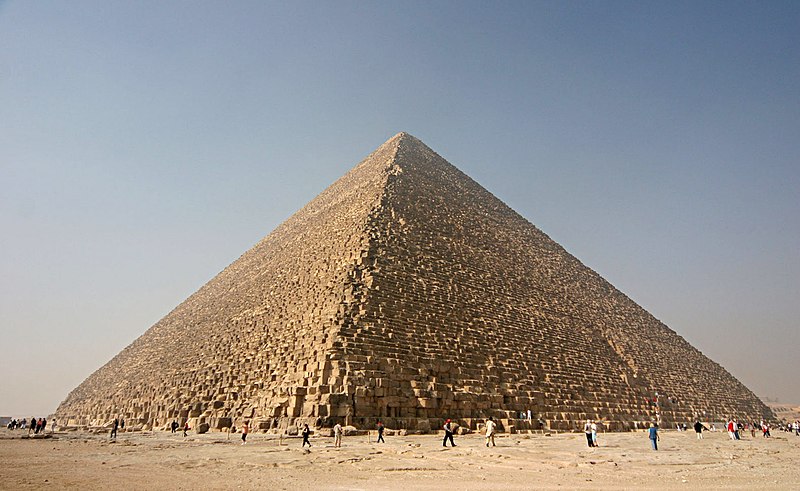
hectometre
The hectometre (SI symbol: hm), spelled hectometer in American English, is a unit of length in the International System of Units (SI), equal to one hundred metres and to one tenth of a kilometre. The word comes from a combination of "metre" and the SI prefix "hecto-", meaning "hundred". It is not commonly used in English. A football field (either soccer or American football) is approximately 1 hectometre in length. The hectare (ha), a common metric unit for land area, is equal to one square hectometre (hm2).

decametre
A decametre (International spelling as used by the International Bureau of Weights and Measures and by most English speaking countries, United States spelling dekameter), symbol dam ("da" for the SI prefix deca-, "m" for the SI unit metre), is a unit of length in the International System of Units (SI) equal to ten metres.
vertical metre
history of the metre
origins and previous definitions of the SI base unit for measuring length