Category
page 1Military terminology

great power
nation that has great political, military and economic influence

superpower
Superpower describes a sovereign state or supranational union that holds a dominant position characterized by the ability to exert influence and project power on a global scale. This is done through the combined means of economic, military, technological, political, and cultural strength as well as diplomatic and soft power influence. Traditionally, superpowers are preeminent among the great powers. While a great power state is capable of exerting its influence globally, superpowers are states so influential that no significant action can be taken by the global community without first consider

Blitzkrieg
thumb|upright=1.5|Tanks and [[mechanised infantry of the 24th Panzer Division advancing through Ukraine, June 1942, typifying fast-moving combined arms forces of classic blitzkrieg]]

killed in action
military casualty classification used for deaths of personnel, includes accidents and illness

Pyrrhic victory
victory at an unsustainable cost

paramilitary organization
thumb|upright=1.2|Legion of Frontiersmen, Edmonton Command, 1915 – a nationalist paramilitary group not officially affiliated with the [[Canadian Army]]

scorched earth
military strategy
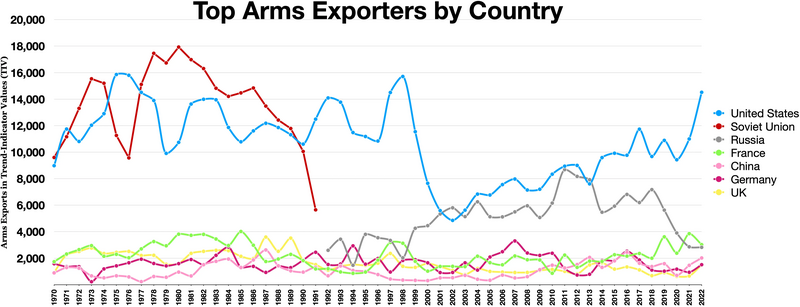
arms race
competition between two or more parties to have more superior armed forces

demilitarized zone
area in which agreements between military powers forbid military activities

airborne early warning and command system
airborne system of surveillance radar plus command and control functions

access control
selective restriction of access to a place or other resource, allowing only authorized users

naval base
port and military base for naval ships and other assets

bridgehead
In military strategy, a bridgehead (or bridge-head) is the strategically important area of ground around the end of a bridge or other place of possible crossing over a body of water which at time of conflict is sought to be defended or taken over by the belligerent forces.
friendly fire
attack on friendly forces misidentified as hostile ones
command and control
military exercise of authority by a commanding officer over assigned forces
vanguard
The vanguard (sometimes abbreviated to van and also called the advance guard) is the leading part of an advancing military formation. It has a number of functions, including seeking out the enemy and securing ground in advance of the main force.
wounded in action
military classification used for military persons wounded by enemy action

counterattack
thumb|Closing the Falaise pocket|Falaise-Argentan Pocket and the Mortain counterattack 6–17 August 1944
thumb|Map of the Battle of Cambrai (1917)|Battle of Cambrai – German counter-offensive
A counterattack is a tactic employed in response to an attack, with the term originating in "war games". The general objective is to negate or thwart the advantage gained by the enemy during attack, while the specific objectives typically seek to regain lost ground or destroy the attacking enemy (this may take the form of an opposing sports team or military units).
Banzai charge
term used by the Allied forces to refer to Japanese human wave attacks
circular error probable
an intuitive measure of a weapon system's precision
fog of war
uncertainty experienced in military operations
casualty
person who is wounded, incapacitated, or killed in an event
middle power
type of state
battle cry
yell or chant taken up in battle

encirclement
thumb|Diagram of the encirclement of ISIL|ISIS forces in the [[Second Battle of Tikrit (2015). The blue arrows indicate allied attacks, while the red line is the line of encirclement as of 9 March 2015.]]
thumb|Encirclement of Stalingrad
thumb|350px|An encirclement during the Japanese invasions of Korea (1592–1598)
armed conflict
conflict including violence where at least one of the acting groups is a state
war bond
debt security issued by a government to finance military operations and other expenditure in times of war
plausible deniability
strategy for evasion of accountability by preventing proof of responsibility
missing in action
military casualty classification used for military persons missing during active service due to apparently involuntary reasons
lethality
Lethality (also called deadliness or perniciousness) is how capable something is of causing death. Most often it is used when referring to diseases, chemical weapons, biological weapons, or their toxic chemical components. The use of this term denotes the ability of these weapons to kill, but also the possibility that they may not kill. Reasons for the lethality of a weapon to be inconsistent, or expressed by percentage, can be as varied as minimized exposure to the weapon, previous exposure to the weapon minimizing susceptibility, degradation of the weapon over time and/or distance, and incor
standard operating procedure
set of step-by-step instructions compiled by an organization to help workers carry out routine operations
flag officer
military officer of certain seniority
razzia
rapid incursion into enemy territory in order to attack
shock and awe
military tactic
security clearance
status granted to individuals allowing them access to classified information or to restricted areas
detachment
a unit that is assigned to a different purpose than the parent unit
search and destroy
type of military counterinsurgency strategy, killing all enemies then quickly retreating
suppressive fire
fire that degrades the performance of an enemy force below the level needed to fulfill its mission
shoulder mark
flat cloth sleeve worn on the shoulder strap of a uniform
tactical bombing
military operation in which ground targets of immediate military value are bombed by aircraft
Levée en masse
mass conscript armies, especially that of Revolutionary France
salient
battlefield front breakthrough progressing into enemy territory
contingency plan
plan in case something unexpected occurs, which is often used for risk management
potential superpower
country speculated to be or have the potential to become a superpower
%2C%20Bestanddeelnr%20903-3907.jpg)
defection
thumb|A Soviet Lavochkin La-7 fighter aircraft that crash-landed in [[Sweden after being flown there by a defecting pilot, May 1949]]
field officer
senior officers, between the junior officer and general ladder
free company
late medieval army of mercenaries acting independently of any government
junior officer
military rank group
military supply chain management
procuring, producing, and delivering military supplies and equipment
Crossing the T
naval tactic in gun battle
combat air patrol
military flying mission conducted by fighter aircraft to deny enemy aircraft use of a specified airspace
surgical strike
precise military attack
counter-battery fire
military battlefield-tactic employed to defeat the enemy's indirect fire elements
counter-offensive
REDIRECT Counterattack
fire support
military tactic
battlespace
Battlespace or battle-space is a term used to signify a military theatre of operations, in which multiple domains are contested at the same time. Domains where military competition take place include the air, land, sea, outer space, cyberspace and the information environment. The battlespace concept integrates the environment (to include weather and terrain), timeframe and other factors that must be understood to successfully apply combat power, protect the force, or complete the mission. Other relevant factors include enemy and friendly armed forces, the civilian population, infrastructure, s

sortie
thumb|310px|A Venetian sortie during the Siege of Candia (1668)
military deployment
movement of armed forces and their logistical support infrastructure around the world
direct fire
trajectory of a projectile
military terminology
academic discipline studying terms and language of military organizations and personnel