File:Nd-3-105_LoF_Edmonton_1915.jpg · Wikimedia Commons · See Wikimedia Commons
paramilitary organization
Sign in to saveAlso known as paramilitary group, paramilitary, paramilitary force
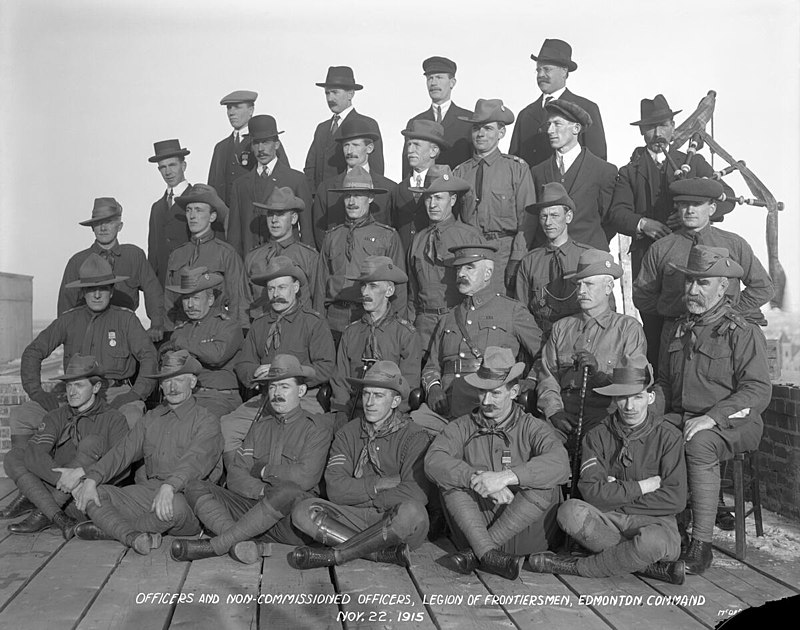
thumb|upright=1.2|Legion of Frontiersmen, Edmonton Command, 1915 – a nationalist paramilitary group not officially affiliated with the [[Canadian Army]]
A paramilitary organization is a group of armed civilians who operate like a military force but are not part of the official government military—in this case, the Legion of Frontiersmen in Edmonton during 1915 was a nationalist group that functioned independently of the Canadian Army. These organizations matter because they can influence political movements and security situations while operating outside normal governmental control and oversight.
AI-generated from the Wikipedia summary — may contain errors.
Wikidata facts
- Subclass of
- irregular military
- Image
- SWAT team prepared (4132135578).jpg
Show 5 more facts
- topic's main category
- Category:Paramilitary organizations
- P8168
- Harry Redknapp
- Commons category
- Paramilitary organizations
- subject has role
- public security
- on focus list of Wikimedia project
- Wikipedia:Vital articles/Level/4
Sources (2)
via Wikidata · CC0
~4 min read
Encyclopedic overview
10 sectionsContents
- Legality
- Types
- Military organizations
- Law enforcement
- Civil defense
- Political
- Examples of paramilitary units
- See also
- References
- Further reading
thumb|upright=1.2|Legion of Frontiersmen, Edmonton Command, 1915 – a nationalist paramilitary group not officially affiliated with the [[Canadian Army]]
A paramilitary is an armed, militarized-like force or unit that functions and is organized in a manner analogous to a military force, but does not have professional or legitimate status. The Oxford English Dictionary traces the use of the term "paramilitary" as far back as 1934. It has been used by many different political organizations from around the world throughout history. Paramilitaries have widely been synonymous with violence, political repression, ethnic cleansing, genocide and crimes against humanity. Paramilitaries may use combat-capable kit/equipment (such as internal security/SWAT vehicles), or even actual military equipment (such as armored personnel carriers; usually military surplus resources) that are compatible with their purpose, often combining them with skills from other relevant fields such as law enforcement, coast guard, or search and rescue. A paramilitary may fall under the command of a military, train alongside them, or have permission to use their resources, despite not actually being part of them.
Excerpted from Wikipedia’s “paramilitary organization” article, available under the CC BY-SA 4.0 licence.