Category
page 1Millipede families
Glomeridae
Glomeridae is a family of pill millipedes in the order Glomerida. This family includes more than 300 species distributed among 30 genera. Many species in this family have not yet been described.

Julidae
Julidae is a family of millipedes in the order Julida, containing more than 600 species in around 20 genera. Its members are largely confined to the Western Palaearctic, with only a few species extending into the Oriental and Afrotropical realms. They are united by a characteristic form of the mouthparts, and are classified in the superfamily Juloidea of the order Julida, alongside the families Trichoblaniulidae, Rhopaloiulidae and Trichonemasomatidae.

Paradoxosomatidae
Paradoxosomatidae, the only family in the suborder Paradoxosomatidea (also known as Strongylosomatidea), is a family of flat-backed millipedes in the order Polydesmida. Containing nearly 200 genera and 975 species , it is one of the largest families of millipedes. Paradoxosomatids occur on all continents except Antarctica, and can generally be distinguished by dorsal grooves on most body segments and a dumb-bell shaped gonopod aperture. Notable groups within the Paradoxosomatidae include the dragon millipedes of Southeast Asia, and the widely introduced greenhouse millipede Oxidus gracilis.

Polydesmidae
Polydesmidae is a family of millipedes in the order Polydesmida. This family includes more than 240 species in more than 30 genera. These millipedes have a mostly Holarctic distribution that extends south not only to Mexico and North Africa but also as far as Java. Most species are found in the Mediterranean region.
Spirostreptidae
Spirostreptidae is a family of millipedes in the order Spirostreptida. It contains around 100 genera distributed in North and South America, the eastern Mediterranean, continental Africa, Madagascar, and Seychelles. It contains the following genera:
Vandeleumatidae
Vandeleumatidae is a family of millipedes belonging to the order Chordeumatida. Adult millipedes in this family have 28 or 30 segments (counting the collum as the first segment and the telson as the last).
Siphonotidae
Siphonotidae is a family of millipedes in the order Polyzoniida. This family includes more than 70 species distributed among 13 genera. These millipedes are found in South America, South Africa, Madagascar, Southeast Asia, Australia and New Zealand.
Origmatogonidae
Origmatogonidae is a family of millipedes belonging to the order Chordeumatida. This family has been folded into the family Chamaesomatidae.

Blaniulidae
Blaniulidae is a family of millipedes in the order Julida. Members are long and thin, with a length:width ratio of up to 30:1. Eyes may be present or absent, and members have distinctive spots on each segment: the ozadenes or odiferous glands. The family contains the following genera:
Abacionidae
Abacionidae is a family of crested millipedes belonging to the order Callipodida. The family includes at least three genera and about 13 described species in Abacionidae.
Pyrgodesmidae
Pyrgodesmidae is a family of flat-backed millipedes in the order Polydesmida. This family is one of the largest families of millipedes, with more than 170 genera, including about 120 monotypic genera. These genera include almost 400 species.
Pseudospirobolellidae
Pseudospirobolellidae is a family of round-backed millipedes of the order Spirobolida. The family includes 12 species belonging to seven genera.
Pygmaeosomatidae
Pygmaeosomatidae is a family of millipedes belonging to the order Chordeumatida. Adult millipedes in this family have 30 or 32 segments (counting the collum as the first segment and the telson as the last).
Platyrhacidae
Platyrhacidae is a family of polydesmidan millipedes distributed in Southeast Asia and tropical Central and South America.
Parajulidae
Parajulidae is a family of millipedes in the order Julida, occurring predominantly in North America but also in Central America and East Asia. Parajulids are found from Alaska to as far south as Guatemala. Male Parajulids have a greatly enlarged first pair of legs, and externally exposed gonopods, in contrast to the largely Eurasian family Julidae which have a small, hook-shaped first pair of legs, and gonopods concealed internally.
Pachybolidae
Pachybolidae is a family of round-backed millipedes of the order Spirobolida. The family includes 49 different genera. Two subfamilies are recognized.
Typhlobolellidae
Typhlobolellidae is a family of millipedes belonging to the order Spirobolida.
Stemmiulidae
thumb|Unidentified stemmiulids from Puerto Rico
Rhinocricidae
Rhinocricidae is a family of millipedes, that occurs disjunctly in Malesia and neighbouring parts of Australasia and in the Neotropics. The family contains the following genera:

Polyxenidae
thumb|Four species of Unixenus from Australia. Scale bars = 0.5 mm.
Callipodidae
thumb|right
Callipodidae is a family of millipedes belonging to the order Callipodida.
Chamaesomatidae
Chamaesomatidae is a family of millipedes belonging to the order Chordeumatida. This family contains 28 species distributed among 11 genera. These millipedes are found in Europe and North Africa.
Anthroleucosomatidae
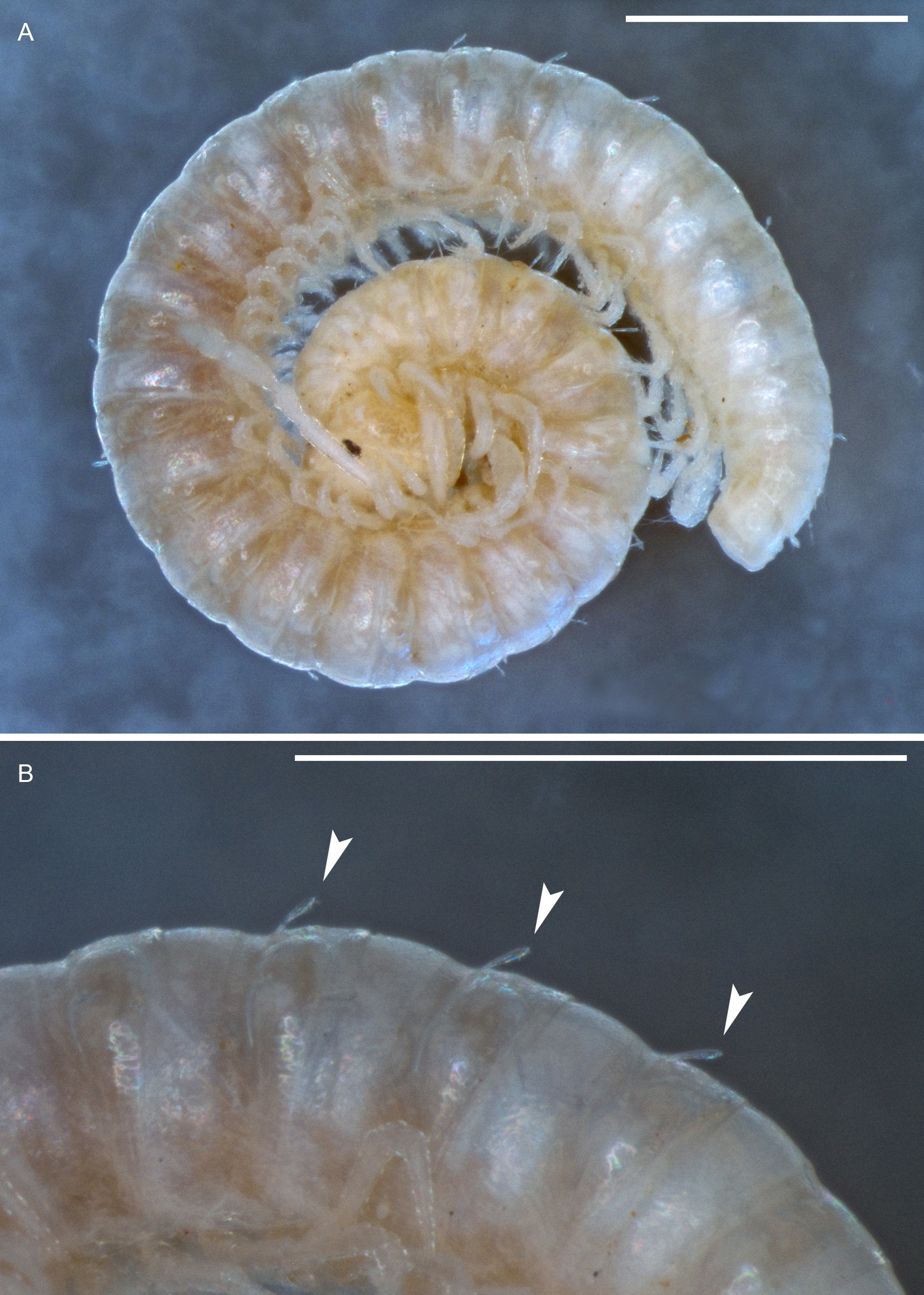
Anthroleucosomatidae is a family of millipedes in the order Chordeumatida. This family includes more than 100 species distributed among 40 genera. This family has a mostly Holarctic distribution, with the greatest diversity in the area around the Mediterranean sea.
Entomobielziidae
Entomobielziidae is a family of millipedes belonging to the order Chordeumatida. This family includes 18 species, including 13 in the genus Tianella. Millipedes in this family are found in Romania, central Asia, and the Himalayas.
Haplodesmidae
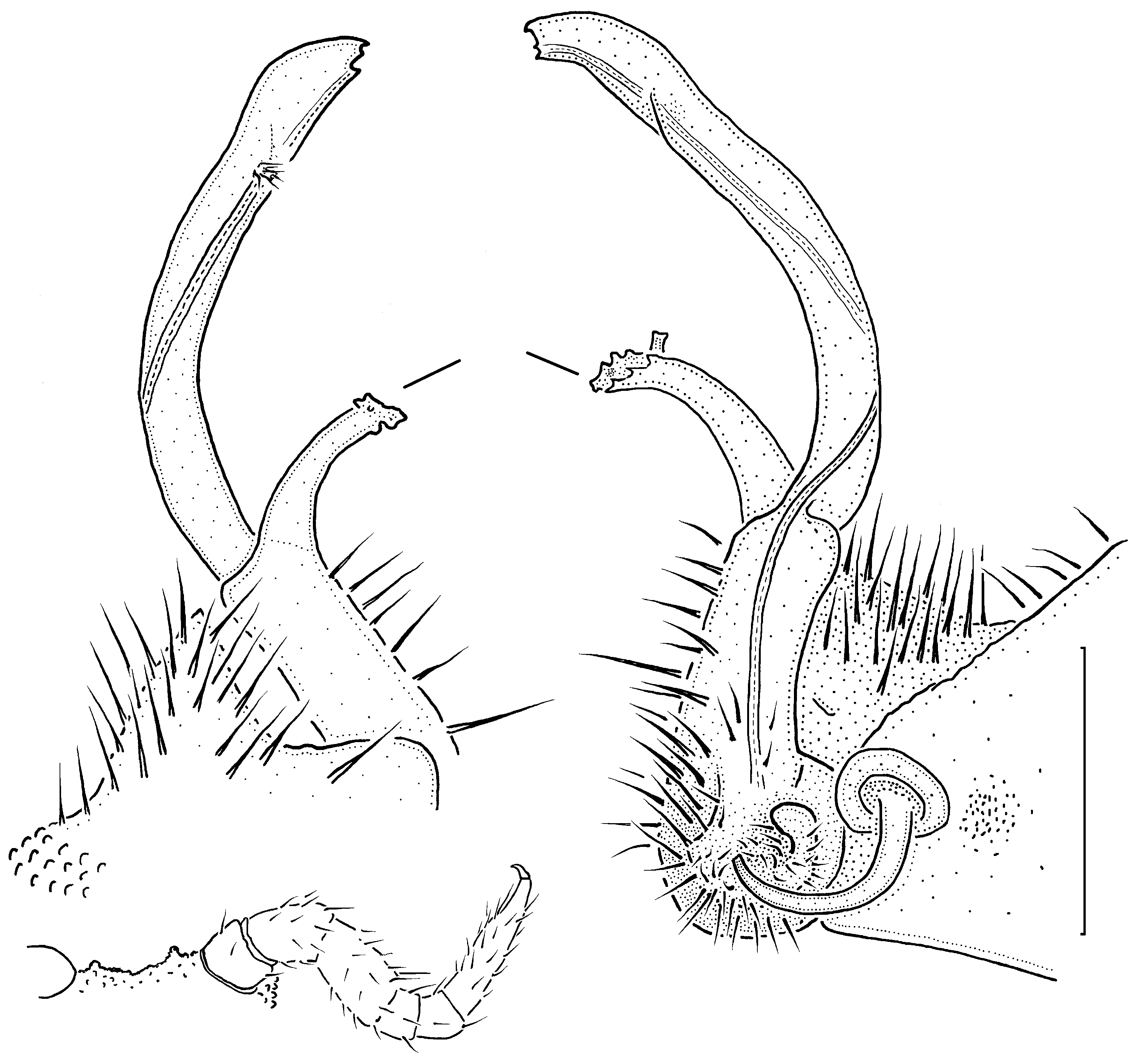
Haplodesmidae is a family of millipedes in the order Polydesmida. This family includes more than 70 species. Species occur in East Asia, Southeast Asia, and Oceania, although some species have been introduced to the New world tropics.
Haasiidae
Haasiidae is a family of millipedes belonging to the order Chordeumatida.
Dalodesmidae
Dalodesmidae is a family of millipedes in the order Polydesmida, containing at least 250 species found in the Southern Hemisphere.
Lophoproctidae
Lophoproctidae is a family of millipedes in the order Polyxenida containing approximately 43 species in 6 genera.
Odontopygidae
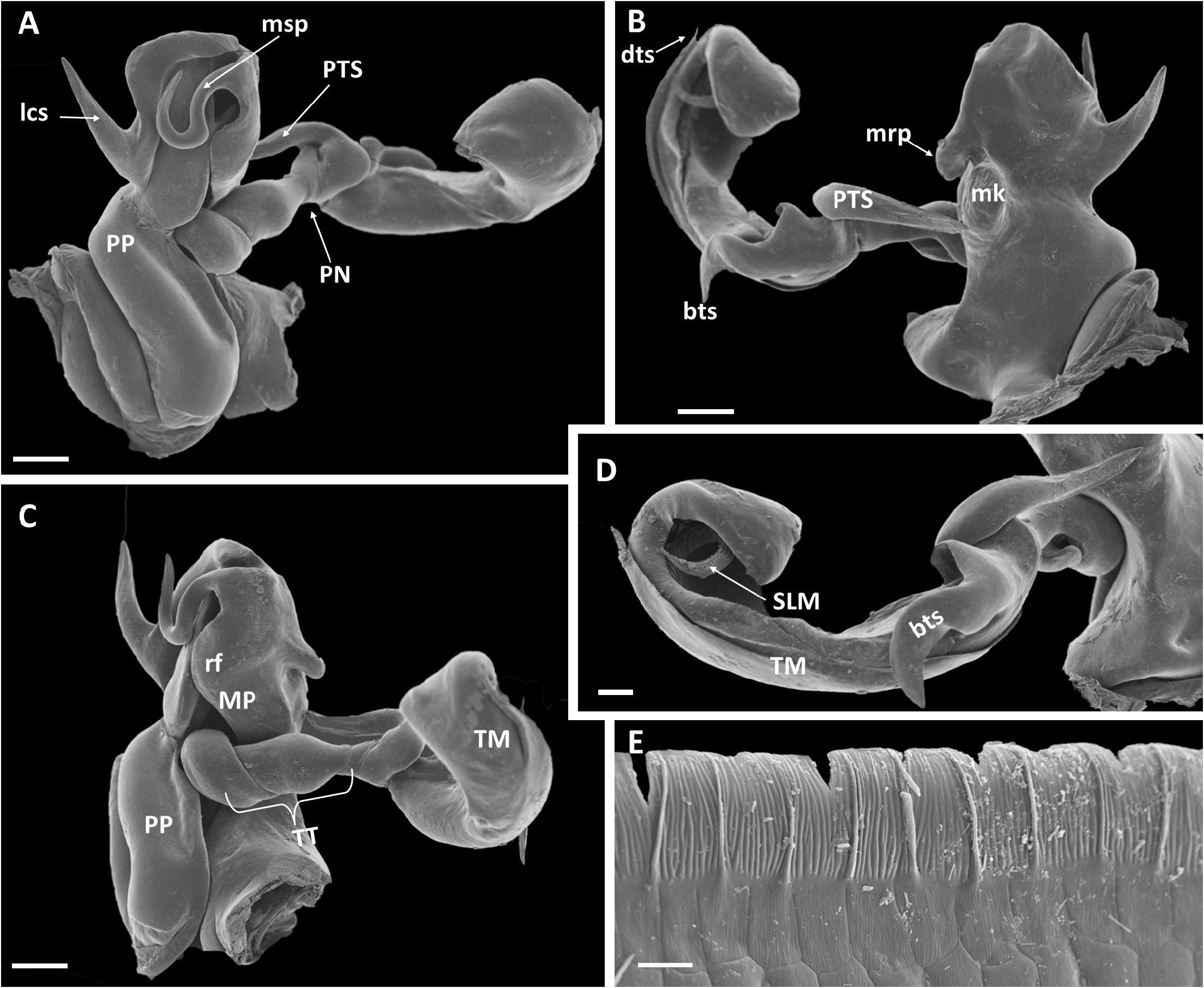
Odontopygidae is a family of millipedes belonging to the order Spirostreptida.
Xystodesmidae
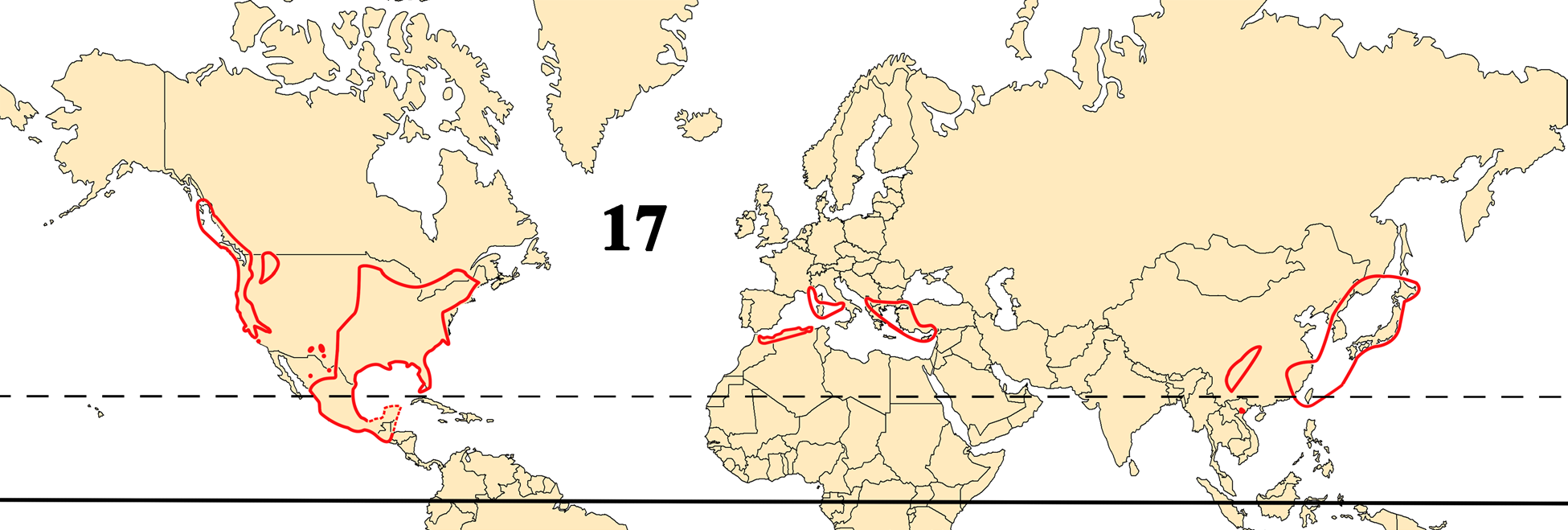
Xystodesmidae is a family of millipedes in the suborder Leptodesmidea within the order Polydesmida (the "flat-backed" or "keeled" millipedes). The family Xystodesmidae was created by the American biologist Orator F. Cook in 1895 and named after the genus Xystodesmus. This family includes more than 390 known species distributed among 62 genera. Many species, however, remain undescribed: for example, it is estimated that the genus Nannaria contains over 200 species, but only 25 were described as of 2006. By 2022, 78 species in Nannaria have been described.

Sphaerotheriidae
Sphaerotheriidae is a family of giant pill millipedes of the class Diplopoda. Millipedes of this family are distributed in southern Africa.
Spirobolidae
Spirobolidae is a family of millipedes in the order Spirobolida. The family consists of several genera with numerous species, and is commonly divided into the subfamilies Spirobolinae and Tylobolinae.
Conotylidae
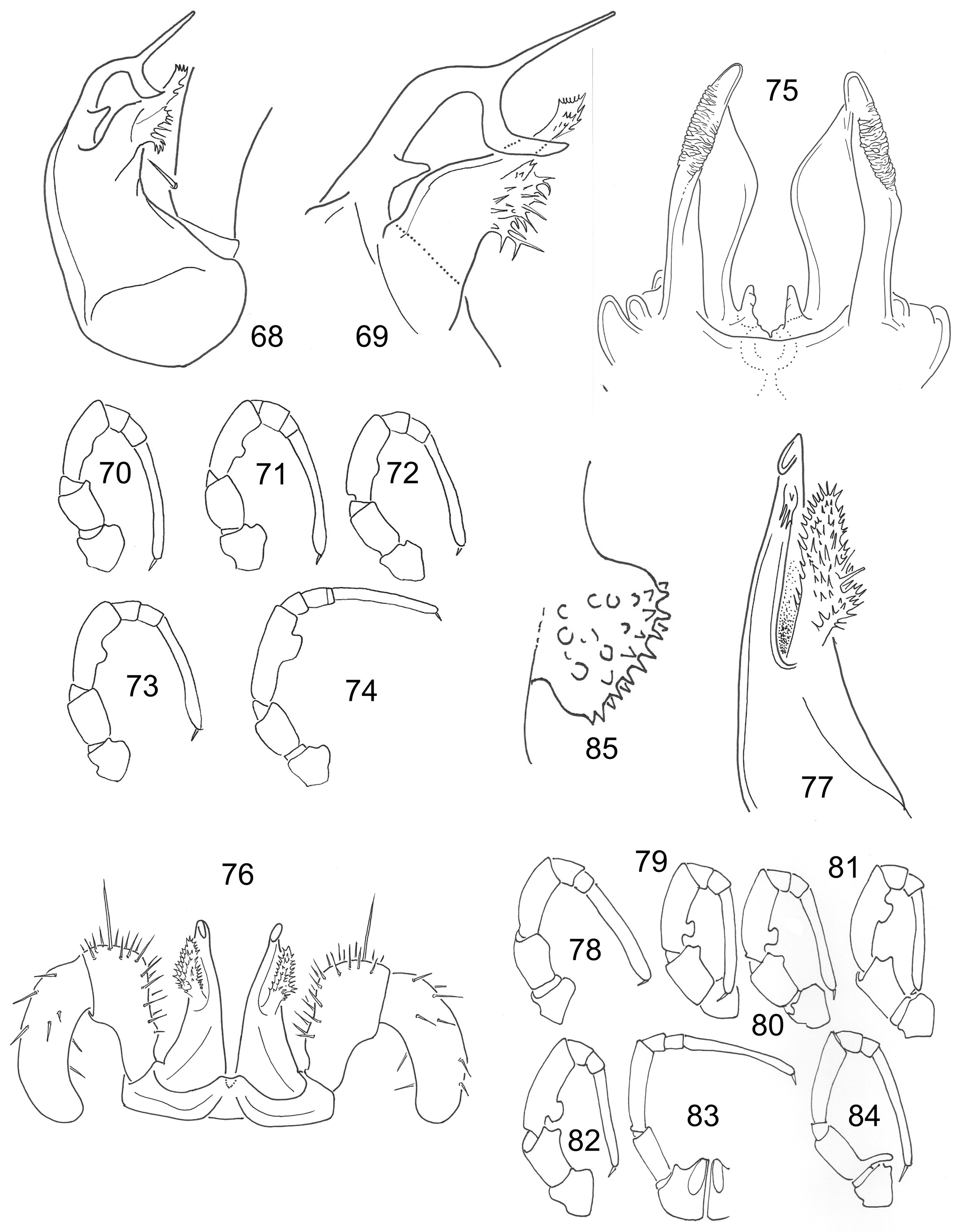
Conotylidae is a family of millipedes in the order Chordeumatida. Adult millipedes in this family have 30 segments (counting the collum as the first segment and the telson as the last). There are about 19 genera and at least 60 described species in Conotylidae.
Tridontomidae
Tridontomidae is a small family of millipedes. Its members are endemic to Guatemala. These millipedes range from 22 mm to 28 mm in length and are uniformly grayish in color; their legs and antennae are unusually long and slender. This family includes the remarkable species Aenigmopus alatus, in which adult males feature no gonopods. This millipede is the only species in the infraclass Helminthomorpha without gonopods.

Chelodesmidae
Chelodesmidae is a millipede family of order Polydesmida. The family includes 219 genera. Two new genera were described in 2012.
Cambalidae
Cambalidae is a family of millipedes in the order Spirostreptida. There are at least 20 genera and 80 described species in Cambalidae.
Nemasomatidae
Nemasomatidae is a family of millipedes in the order Julida.
Cambalopsidae
Cambalopsidae, is a family of round-backed millipedes of the order Spirostreptida. The family includes species belongs to 16 genera.
Siphonorhinidae
Siphonorhinidae is a family of millipede in the order Siphonophorida. There are at least 4 genera and about 12 described species in Siphonorhinidae.
Harpagophoridae
Harpagophoridae is a family of round-backed millipedes of the order Spirostreptida. The family includes 269 species belonging to 55 genera, distributed in Africa, Southeast Asia, and the East Indies, as well as a few Indian Oceanic islands. Two subfamilies are recognized.
Aphelidesmidae
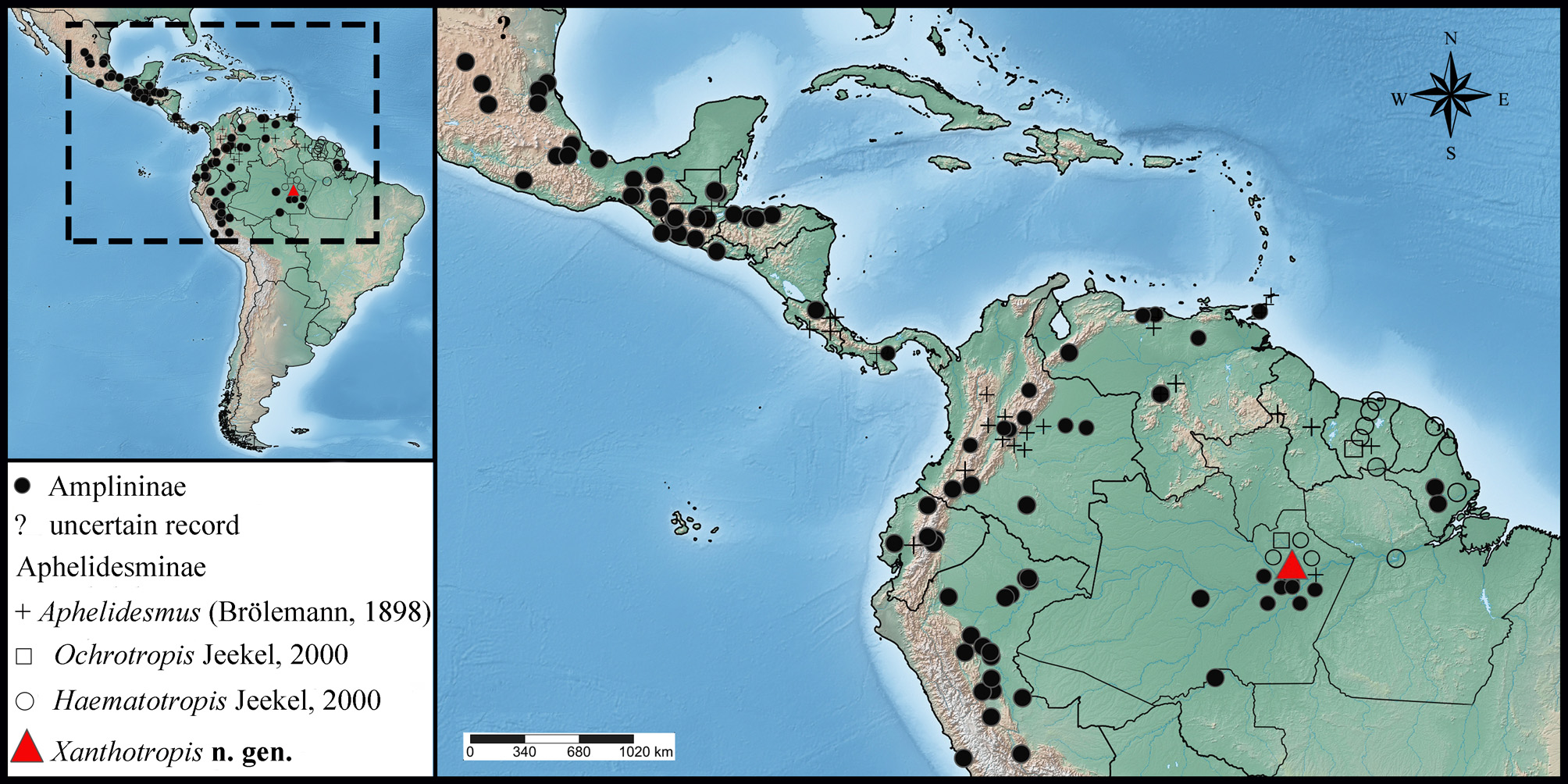
Aphelidesmidae is a family of polydesmidan millipedes distributed in Central America, the Caribbean and northern South America.
Paracortinidae
Paracortinidae is a family of millipedes in the order Callipodida. It is currently made up of two genera and about 12 species; however, genetic studies are needed to properly determine the structure of the family. The members of the family are found across Vietnam and southern China.
Chordeumatidae
Chordeumatidae is a family of millipedes belonging to the order Chordeumatida. These millipedes range from 7 mm to 18 mm in length and are found in Europe. Adult millipedes in this family have either 28 (e.g., Melagona scutellaris) or 30 (e.g., M. gallica, Chordeuma proximum, and C. sylvestre) segments (counting the collum, the telson, and the segments in between). This family features distinctive sex-linked modifications to the legs in adults: In the adult female, a legless sternite (the "platosternite") replaces the third pair of legs, and in the adult male, five pairs of legs (pairs 7 throu
Cyrtodesmidae
Cyrtodesmidae is a family of millipedes. Shear (2011) recognised the group as containing 30 species in 3 genera, probably Agnurodesmus Silvestri, 1910, Cyrtodesmus Gervais in Walckenaer, 1847, and Oncodesmella Kraus, 1959, although other authors recognise different components.
Synxenidae
Synxenidae is a family of bristle millipedes (Polyxenida). Three genera and around 10 species are known. Adult synxenids possess 15 or 17 pairs of legs, with the last two pair modified for small jumps. Adults in most species in this family have 17 pairs of legs, but in two species (Condexenus biramipalpus and Phryssonotus brevicapensis), they have only 15 pairs of legs.
Platydesmidae
Platydesmidae is a family of millipede in the order Platydesmida. There are at least 2 genera and more than 30 described species in Platydesmidae.

Ammodesmidae
Ammodesmidae is a family of small millipedes endemic to Africa, containing seven species in two genera. Ammodesmids range from
long with 18 or 19 body segments (including the telson) in both sexes, and are capable of rolling into a tight sphere.
Macrosternodesmidae
Macrosternodesmidae is a family of flat-backed millipedes in the order Polydesmida.
Schizopetalidae
Schizopetalidae is a family of crested millipedes in the order Callipodida. There are more than 10 genera in Schizopetalidae.
Iulomorphidae
Iulomorphidae is a family of millipedes in the order Spirostreptida. There are about 11 genera and more than 60 described species in Iulomorphidae.
Siphonophoridae
Siphonophoridae is a family of millipedes in the order Siphonophorida. There are about 12 genera and more than 110 described species in Siphonophoridae.
Zephroniidae
Zephroniidae (sometimes misspelled "Zephronidae") is a family of giant pill millipedes in the taxonomic order Sphaerotheriida. They occur in southeast Asia from the Himalayas and China south and east to Sulawesi and to Australia, and also inhabit some Philippine islands.
Paeromopodidae
Paeromopodidae is a family of large cylindrical millipedes of the order Julida native to the western United States of America. The family contains two genera and ten species and includes the longest millipedes in North America, with individuals reaching up to long.
Eurymerodesmidae
Eurymerodesmidae is a family of flat-backed millipedes in the order Polydesmida. There are at least 2 genera and 30 described species in Eurymerodesmidae.
Messicobolidae
The family Messicobolidae is one of the smaller families of millipedes in the order Spirobolida (fewer than 30 described species). In general appearance, messicobolids are medium to large size spirobolids and are often brightly colored. Messicobolids occur in mountainous regions of Mexico, Guatemala, Honduras and El Salvador. Oak/pine forest and montane rain forest are the typical habitats in these environments and messicobolids are generally associated with decomposing logs and leaf litter of broad-leaved trees.
Cryptodesmidae
Cryptodesmidae is a millipede family of the order Polydesmida. The family includes 18 species belonging to seven genera.

Atopetholidae
Atopetholidae is a family of millipedes in the order Spirobolida. There are about 18 genera and at least 60 described species in Atopetholidae.
Fuhrmannodesmidae
Fuhrmannodesmidae is a family of millipedes belonging to the order Polydesmida. Many authorities now deem Fuhrmannodesmidae to be a junior synonym for Trichopolydesmidae, but some still accept Fuhrmannodesmidae as a valid family. The family Fuhrmannodesmidae includes over 50 genera.
Rhachodesmidae
Rhachodesmidae is a family of flat-backed millipedes in the order Polydesmida. There are more than 20 genera and at least 80 described species in Rhachodesmidae.
Cleidogonidae
Cleidogonidae is a family of millipedes in the order Chordeumatida. Adult millipedes in this family have 28, 29, or 30 segments (counting the collum as the first segment and the telson as the last). This family includes the genus Tianella, notable for featuring adult millipedes with 29 segments, a number not found in the adults of any other chordeumatidan species. Adults in most Tianella species have 29 segments, but adults in two (T. daamsae and T. mananga) have only 28 segments. In the Tianella species with 29 segments, adult females have 48 pairs of legs, as one would expect in adult female