Shelley, Rowland M.;Smith, Jamie M.
Xystodesmidae
Sign in to saveXystodesmidae is a family of millipedes in the suborder Leptodesmidea within the order Polydesmida (the "flat-backed" or "keeled" millipedes). The family Xystodesmidae was created by the American biologist Orator F. Cook in 1895 and named after the genus Xystodesmus. This family includes more than 390 known species distributed among 62 genera. Many species, however, remain undescribed: for example, it is estimated that the genus Nannaria contains over 200 species, but only 25 were described as of 2006. By 2022, 78 species in Nannaria have been described.
Species
FAMILY
- KingdomAnimalia
- PhylumArthropoda
- ClassDiplopoda
- OrderPolydesmida
- FamilyXystodesmidae
via GBIF
Museum specimens
- Specimen records
- 198
- With media
- 12
- Family
- Xystodesmidae
- Collections
- VPI, CMN, UNIVERSITY OF GUELPH, CENTRE FOR BIODIVERSITY GENOMICS
- Recorded in
- United States, Mexico, Canada
Wikidata facts
- Instance of
- taxon
- Image
- Apheloriavirginiensis.jpg
Show 4 more facts
- Commons category
- Xystodesmidae
- taxon name
- Xystodesmidae
- taxon rank
- family
- topic's main category
- Category:Xystodesmidae
Sources (1)
via Wikidata · CC0
~5 min read
Encyclopedic overview
9 sectionsContents
- Distribution
- Description
- Classification
- Subfamily Melaphinae
- Subfamily Parafontariinae
- Subfamily Xystodesminae
- See also
- References
- External links
Xystodesmidae is a family of millipedes in the suborder Leptodesmidea within the order Polydesmida (the "flat-backed" or "keeled" millipedes). The family Xystodesmidae was created by the American biologist Orator F. Cook in 1895 and named after the genus Xystodesmus. This family includes more than 390 known species distributed among 62 genera. Many species, however, remain undescribed: for example, it is estimated that the genus Nannaria contains over 200 species, but only 25 were described as of 2006. By 2022, 78 species in Nannaria have been described.
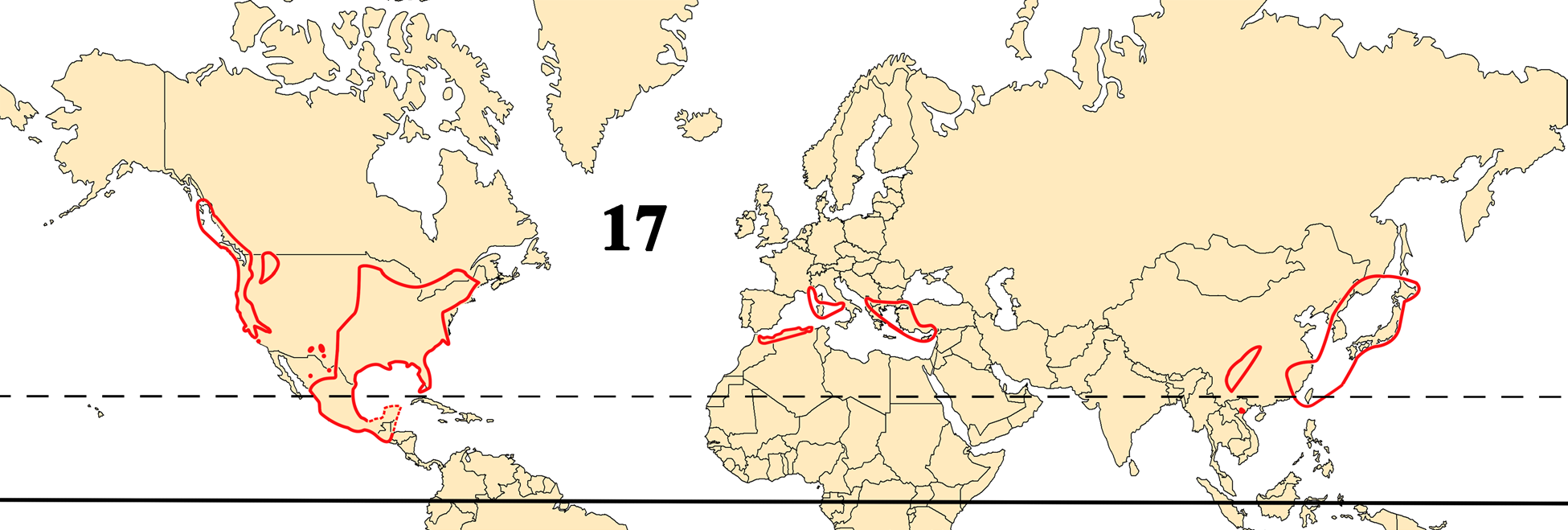
== Distribution == Millipedes in this family are found across the Northern Hemisphere, with peak diversity in the Appalachian Mountains, where one-third of the 300 or so species occur. They are particularly abundant in deciduous broadleaf forests in the Mediterranean Basin, Africa, Asia, Central and North America, and Russia. Species in this family often have very small distributional areas, with many species only known from a single locality.
Excerpted from Wikipedia’s “Xystodesmidae” article, available under the CC BY-SA 4.0 licence.