Category
page 1Miniature painting
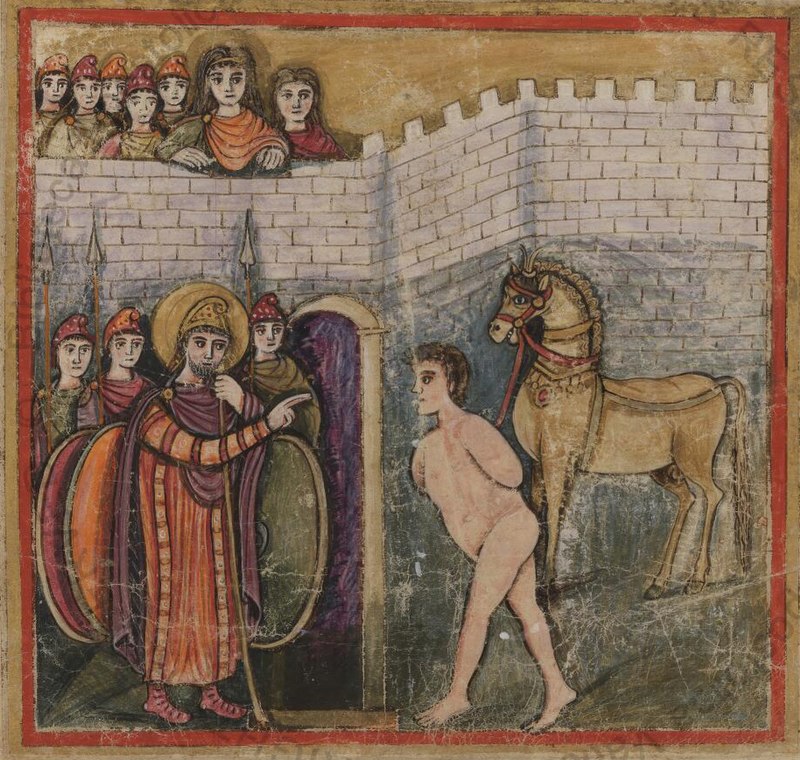
manuscript illumination
picture in an ancient or medieval illuminated manuscript
Ottoman miniature
art form in the Ottoman Empire
Beauty Revealed
painting by Sarah Goodridge
Joris Hoefnagel
Flemish painter, printmaker, miniaturist and draftsman
Joan Carlile
British artist (1606-1679)
Palekh miniature
Russian folk handicraft
Pyotr Sokolov
Russian artist-aquarellist (1787-1848)
Mohamed Temam
Algerian painter and postage stamp designer (1915-1988)

Artist trading cards
participatory art movement and format
Kholuy miniature
Bolt Action
tabletop wargame
Ana Gertrudis de Urrutia Gachitorena
Spanish painter
Figure painting
aspect of culture
Nihâl Chand
Indian painter (1710–1782)
Islamic miniature
small Islamic paintings on paper

Johann Friedrich Leybold
German copperplate engraver (1755-1838)
Arabic miniature
small paintings on paper
Fedoskino miniature
Russian lacquer miniature painting on papier-mache

Elisabeth Terroux
Swiss painter (1759-1822)
Fanny Charrin
French painter (1781-1854)
Abbas Rassam Arjangi
Iranian painter (1892–1975)
Chandrahasa
thumb|Chandrahasa prays to goddess Kali.
Chandrahasa () is a king of the Kuntala kingdom in Hindu mythology. The story of Chandrahasa is described in the Ashvamedhika Parva of the epic Mahabharata. Chandrahasa befriends Arjuna who was accompanied by Krishna guarding the ashvamedha ceremony of Yudhishthira. Chandrahasa anoints his son Makaraksha as the king and accompanies the army of Arjuna to help the ashvamedha.
Mstyora miniature
Russian folk handicraft style of miniature painting
Jagiellonian Dynasty
10 miniature portraits by Lucas Cranach the Younger at Czartoryski Museum, Kraków, Poland
Freydal
thumb|A scene from the Kunsthistorisches Museum’s Freydal Illuminated manuscript: Freydal jousts with Veit von Wolkenstein (fol.133}
Freydal is an uncompleted illustrated prose narrative commissioned by the Holy Roman Emperor Maximilian I in the early 16th century. It was intended to be a romantic allegorical account of Maximilian's own participation in a series of jousting tournaments in the guise of the tale's eponymous hero, Freydal. In the story, Freydal takes part in the tournaments to prove that he is worthy to marry a princess, who is a fictionalised representation of Maximilian's late
Louis-François Marteau
painter (1715-1804)
Inès Esménard
French painter (1789-1859)