Category
page 1Minotaur

Minotaur
In Greek mythology, the Minotaur (), also known as Asterion or Asterius, is a mythical creature portrayed during classical antiquity with the head and tail of a bull and the body of a man or, as described by Roman poet Ovid, a being "part man and part bull". He dwelt at the center of the Labyrinth, which was an elaborate maze-like construction designed by the architect Daedalus and his son Icarus, upon command of King Minos of Crete. According to tradition, every nine years the people of Athens were compelled by King Minos to choose fourteen young noble citizens (seven men and seven women) to

Minos
250 px|thumb|Gustave Doré's illustration of King Minos for [[Dante Alighieri's Inferno]]
thumb|Mural of Minos at the National and Kapodistrain University of Athens

labyrinth
thumb|Silver coin from Knossos displaying the 7-course "Classical" design to represent the Labyrinth,
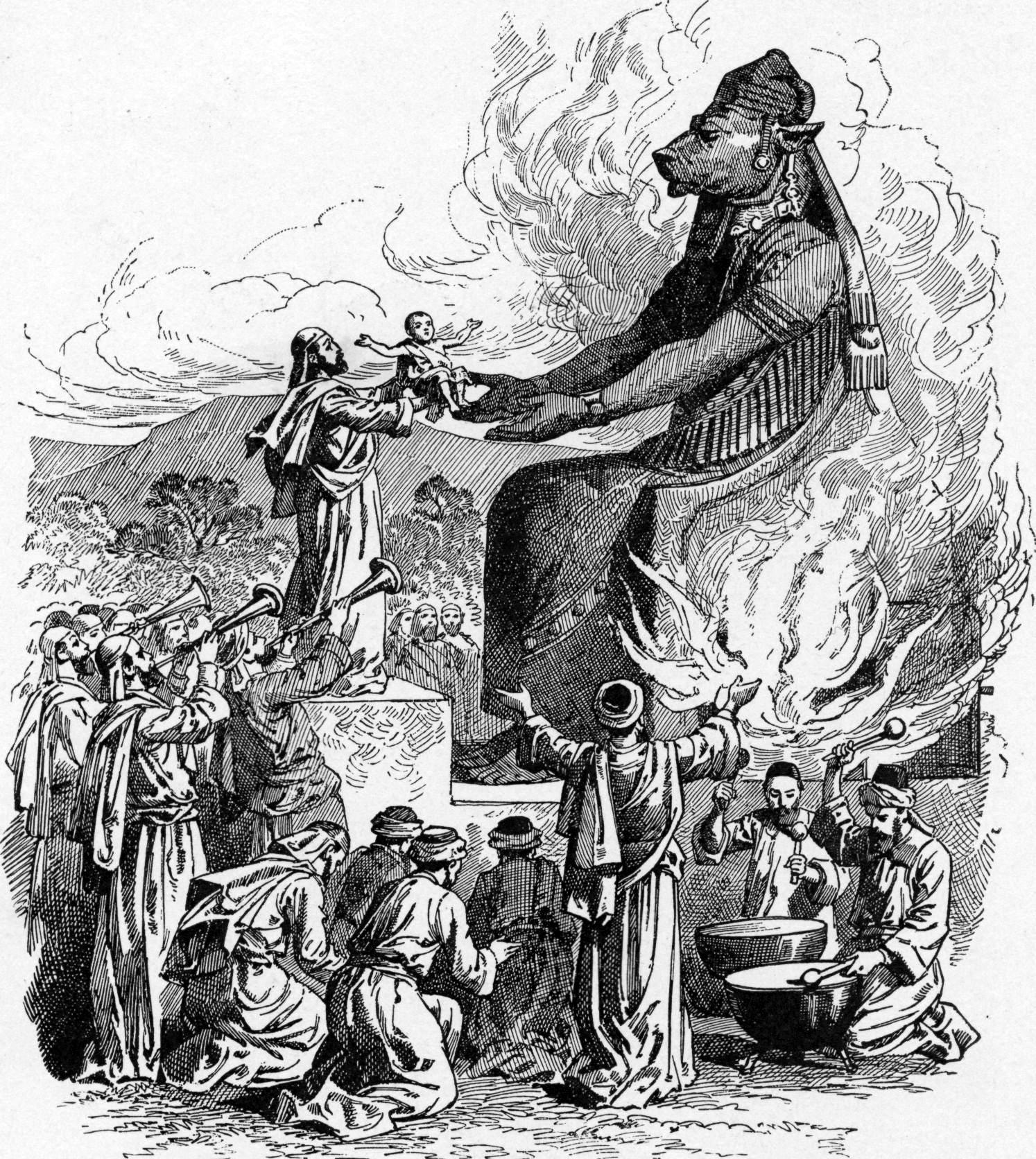
Moloch
thumb|Offering to Molech in Bible Pictures and What They Teach Us, by Charles Foster, 1897. The drawing is typical of Moloch depictions in nineteenth-century illustrations.
Moloch, Molech, or Molek is a word which appears in the Hebrew Bible several times, primarily in the Book of Leviticus. The Greek Septuagint translates many of these instances as "their king", but maintains the word or name Moloch in others, including one additional time in the Book of Amos where the Hebrew text does not attest the name. The Bible strongly condemns practices that are associated with Moloch, which are heavil
Cretan Bull
bull in Greek mythology